
Catalogue Search | MBRL


Are you sure you want to remove the book from the shelf?

{{itemTitle}}
34
result(s) for
"Rusten, Jeffrey S"
Sort by:


...: An 'Imaginary Earthquake' on Delos in Herodotus and Thucydides
Thucydides' and Herodotus' comments on a portentous (and unique) Delian earthquake contain the same phrase, but date the event almost 60 years apart and mutually rule out each other's datings. Two additional problems in these passages -- geology demonstrates that Delos has never in fact had an earthquake of any significance and ... is not the word for an earthquake -- point to an explanation for the historians' treatment. They are based on the Delphic oracle quoted by Herodotus which promised to 'move unmoved Delos', a paradox based on the island's mythical transition from floating to fixed (Pindar), but liable to confusion with its equally well-known aseismicity. Normally ... is used of interfering with religious sites; but the oracle's prediction was interpreted as an earthquake, that was assumed to have occurred in due course (although it had not). Both historians accepted the interpretation, but followed different datings since they invested it with different symbolism, Herodotus of the evils of the Persian and subsequent Greek wars, Thucydides of excited anticipation on the eve of the Peloponnesian War, since for him ... meant 'mobilization' (1.1). (ProQuest: ... denotes formulae/symbols omitted.)
Journal Article

ΔΗΛΟΣ ἘΚΙΝΉΘΗ: An ‘Imaginary Earthquake’ on Delos in Herodotus and Thucydides
Thucydides' and Herodotus' comments on a portentous (and unique) Delian earthquake contain the same phrase, but date the event almost 60 years apart and mutually rule out each other's datings. Two additional problems in these passages – geology demonstrates that Delos has never in fact had an earthquake of any significance and κινεῖν is not the word for an earthquake – point to an explanation for the historians' treatment. They are based on the Delphic oracle quoted by Herodotus which promised to ‘move unmoved Delos’, a paradox based on the island's mythical transition from floating to fixed (Pindar), but liable to confusion with its equally well-known aseismicity. Normally κινεῖν τὰ ἀκίνητα is used of interfering with religious sites; but the oracle's prediction was interpreted as an earthquake, that was assumed to have occurred in due course (although it had not). Both historians accepted the interpretation, but followed different datings since they invested it with different symbolism, Herodotus of the evils of the Persian and subsequent Greek wars, Thucydides of excited anticipation on the eve of the Peloponnesian War, since for him κίνησις meant ‘mobilization’ (1.1).
Journal Article


Who \Invented\ Comedy? The Ancient Candidates for the Origins of Comedy and the Visual Evidence
The formal beginning of comedy is firmly dated to the Dionysia of 486 B.C.E. For what preceded it there were at least three ancient candidates: phallic processions, Doric comedy and Susarion. Each is supported by visual evidence of the sixth century B.C.E., each explains certain features of Old Comedy, but all have some anomalies as well. Striking is how many forms of performance attested in the sixth century contained comic elements. All these other forms ceased with the introduction of comedies to the Dionysia in 486 B.C.E., which coincides with the ascendancy of the demos; yet it was not until forty years later that comedy becomes unabashedly political.
Journal Article
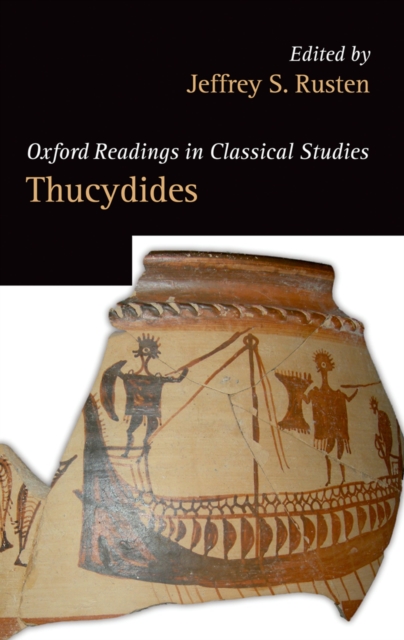
Thucydides
A collection of essays on the first great work of political history - Thucydides' account of the war between Athens and Sparta. All Greek is translated, and an introductory chapter surveys the various ways in which Thucydides has been read and interpreted, from antiquity to the present.
eBook

