
Catalogue Search | MBRL


Are you sure you want to remove the book from the shelf?

{{itemTitle}}
3
result(s) for
"Ryan, Martin J., author"
Sort by:

The Anglo-Saxon world
In this authoritative work, the authors re-examine Anglo-Saxon England in light of new research in disciplines as wide-ranging as historical genetics, paleobotany, archaeology, literary studies, art history, and numanistics. The result is a definitive introduction to the Anglo-Saxon world, enhanced with a rich array of photographs, maps, genealogies, and other illustrations.
Book

Rilke, Modernism and Poetic Tradition
If the rise of modernism is the story of a struggle between the burden of tradition and a desire to break free of it, then Rilke's poetic development is a key example of this tension at work. Taking a sceptical view of Rilke's own myth of himself as a solitary genius, Judith Ryan reveals how deeply his writing is embedded in the culture of its day. She traces his often desperate attempts to grapple with problems of fashion, influence and originality as he shaped his career during the crucial decades in which modernism was born. This 1999 book was the first systematic study of Rilke's trajectory from aestheticism to modernism as seen through the lens of his engagement with poetic tradition and the visual arts. It is full of surprising discoveries about individual poems. Above all, it shifts the terms of the debate about Rilke's place in modern literary history.
eBook
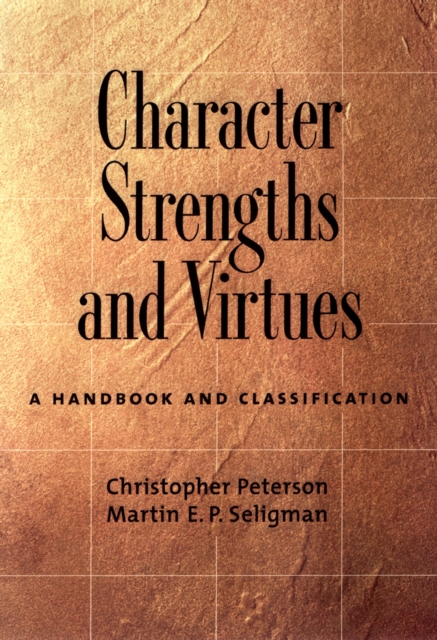
Character strengths and virtues : a handbook and classification
This groundbreaking handbook of human strengths and virtues is the first progress report from a prestigious group of researchers in the Values in Action Classification Project, which has undertaken a systematic classification and measurement of universal strengths and virtues. This landmark work makes possible for the first time a science of human strengths that goes beyond armchair philosophy and political science. The handbook begins with the background of the VIA classification scheme and defines terms before describing in thorough detail the current state of knowledge with respect to each of the 24 character strengths in the classification. Addressing issues of assessment and measurement, practical applications, and directions for future research, this work will demand the attention of any psychologist who is interested in positive psychology and its relevance to clinical, personality, and social psychology.
eBook