
Catalogue Search | MBRL


Are you sure you want to remove the book from the shelf?

{{itemTitle}}
243
result(s) for
"Rye, David"
Sort by:

1001 طريقة لتطوير مؤسستك-فريقك-نفسك
يولد كل طفل بسمات شخصية متفردة والتي عادة ما تميزه عن أشقائه وأقرانه. فقد يكون أحدهم شديد التعلق بوالديه بينما يؤثر الآخر الاعتماد على نفسه، فالشخصية ليست بيضاء أو سوداء ولا يمكننا تغييرها كالنظارات ولا يسعنا إلا أن نفهم شخصياتنا بأن نفتح أعيننا على طرق جديدة لفهم أنفسنا والآخرين. من هذا المنطلق يأتي هذا الكتاب في إحدى عشر فصلا فسنجد أن الفصل الأول يتناول استخدام اختبار الشخصية مبينا أنماط الشخصية وأساسيات التحفيز ويعرض الفصل الثاني بالتفصيل إدراك شخصيتك مبينا الأنماط المختلفة والشخصيات المختلطة والتحليل النهائي ويقدم الفصل الثالث أساليب تحفيز شخصية مبينا ماذا تفعل إذا كنت تعاني من ضغوط نفسية ويبين الفصل الرابع تحفيز الموظفين مبينا أصحاب الإنتاج المنخفض ويوضح الفصل الخامس تحفيز الموظفين أثناء تعرضهم لمشكلات شخصية. ويتضمن الفصل السادس تحفيز الموظفين خلال التغيير ويشتمل الفصل السابع على تحفيز نظراتك. ويتناول الفصل الثامن تحفيز رئيسك ويأتي الفصل التاسع ليلقي الضوء على تحفيز الإدارة العليا ويقدم الفصل العاشر تحفيز الأفراد خارج الشركة ويؤكد الفصل الحادي عشر ضرورة البقاء دائما متحفز. ثم يأتي كشاف الموضوعات.
Book

Regional brain metabolism differs between narcolepsy type 1 and idiopathic hypersomnia
Abstract
Study Objectives
Daytime sleepiness is a manifestation of multiple sleep and neurologic disorders. Few studies have assessed patterns of regional brain metabolism across different disorders of excessive daytime sleepiness. One such disorder, idiopathic hypersomnia (IH), is particularly understudied.
Methods
People with IH, narcolepsy (NT1), and non-sleepy controls underwent [18F]-fluorodeoxyglucose (FDG) positron emission tomography (PET) with electroencephalography (EEG). Participants were instructed to resist sleep and were awoken if sleep occurred. Voxel-wise parametric analysis identified clusters that significantly differed between each pair of groups, with a minimum cluster size of 100 voxels at a cluster detection threshold of p < 0.005. Correlations between glucose metabolism and sleep characteristics were evaluated.
Results
Participants (77% women) had IH (n = 16), NT1 (n = 14), or were non-sleepy controls (n = 9), whose average age was 33.8 (±10.7) years. Compared to controls, NT1 participants demonstrated hypermetabolism in fusiform gyrus, middle occipital gyrus, superior and middle temporal gyri, insula, cuneus, precuneus, pre- and post-central gyri, and culmen. Compared to controls, IH participants also demonstrated hypermetabolism in precuneus, inferior parietal lobule, superior and middle temporal gyri, and culmen. Additionally, IH participants demonstrated altered metabolism of the posterior cingulate. Most participants fell asleep. Minutes of N1 during uptake was significantly negatively correlated with metabolism of the middle temporal gyrus.
Conclusion
NT1 and IH demonstrate somewhat overlapping, but distinct, patterns of regional metabolism.
Journal Article
الحارس في حقل الشوفان
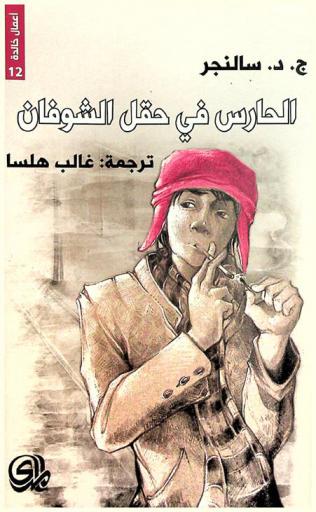
تعتبر رواية \"الحارس في حقل الشوفان\" بداية وأنموذجا للكتابات التي عرفت فيما بعد بكتابات الغاضبين. ولقد عبر جيل الرفض في أمريكا عن تبنيه لهذه الرواية حين رفع شعار \"كلنا هولدن كولفيلد\" وهو اسم بطل هذه الرواية. تعبر هذه الرواية عن الاشمئزاز والتقزز الأخلاقيين اللذين يعاني منهما صبي في السادس عشر من عمره تجاه المجتمع الأمريكي. الجميع مثيرون للتقزز والسخط عدا الأطفال وخاصة الأطفال الذين ماتوا. إن مفتاح هذه الرواية هو كلمة \"الزيف\" التي تتردد خلال الرواية كلها. باستثناء الأطفال، الكل مزيفون. لقد كان حلم البطل هولدن كولفيلد أن يعيش في كوخ على طرف غابة. حيث لا يلقى أحدا من البشر. والأمر المثير للتأمل أن المؤلف قد حقق هذا الحلم فيما بعد. لقد انتزع نفسه من المجتمع الأمريكي ليعيش في كوخ على طرف غابة، لا يرى أحدا من البشر.وحتى زوجته لا تتصل به إلا من خلال التليفون.
Book

Genome-wide meta-analyses of restless legs syndrome yield insights into genetic architecture, disease biology and risk prediction
Restless legs syndrome (RLS) affects up to 10% of older adults. Their healthcare is impeded by delayed diagnosis and insufficient treatment. To advance disease prediction and find new entry points for therapy, we performed meta-analyses of genome-wide association studies in 116,647 individuals with RLS (cases) and 1,546,466 controls of European ancestry. The pooled analysis increased the number of risk loci eightfold to 164, including three on chromosome X. Sex-specific meta-analyses revealed largely overlapping genetic predispositions of the sexes (
r
g
= 0.96). Locus annotation prioritized druggable genes such as glutamate receptors 1 and 4, and Mendelian randomization indicated RLS as a causal risk factor for diabetes. Machine learning approaches combining genetic and nongenetic information performed best in risk prediction (area under the curve (AUC) = 0.82–0.91). In summary, we identified targets for drug development and repurposing, prioritized potential causal relationships between RLS and relevant comorbidities and risk factors for follow-up and provided evidence that nonlinear interactions are likely relevant to RLS risk prediction.
Pooled and sex-specific genome-wide association analyses identify new risk loci for restless legs syndrome and candidates for drug repurposing. Machine learning models combining genetic and other information show improved risk prediction performance.
Journal Article

الحارس في حقل الشوفان
كثيرا ما تقارن هذه الرواية برواية جيمس جويس (يوليسيز). لأن الروايتين من العلامات الهامة التي أشرت الطريق إلى التحولات التي طرأت على كتابة الرواية في الغرب. وتعتبر رواية \"الحارس في حقل الشوفان\" بداية وأنموذجا للكتابات التي عرفت فيما بعد بكتابات الغاضبين. ولقد عبر جيل الرفض في أمريكا عن تبنيه لهذه الرواية حين رفع شعار \"كلنا هولدن كولفيلد\" وهو اسم بطل هذه الرواية. تعبر هذه الرواية عن الاشمئزاز والتقزز الأخلاقيين اللذين يعاني منهما صبي في السادس عشر من عمره تجاه المجتمع الأمريكي. الجميع مثيرون للتقزز والسخط عدا الأطفال وخاصة الأطفال الذين ماتوا. إن مفتاح هذه الرواية هو كلمة \"الزيف\" التي تتردد خلال الرواية كلها. باستثناء الأطفال، الكل مزيفون. لقد كان حلم البطل هولدن كولفيلد أن يعيش في كوخ على طرف غابة. حيث لا يلقى أحدا من البشر. والأمر المثير للتأمل أن المؤلف قد حقق هذا الحلم فيما بعد. لقد انتزع نفسه من المجتمع الأمريكي ليعيش في كوخ على طرف غابة، لا يرى أحدا من البشر.وحتى زوجته لا تتصل به إلا من خلال التليفون.
Book

Modafinil Versus Amphetamine-Dextroamphetamine For Idiopathic Hypersomnia and Narcolepsy Type 2: A Randomized, Blinded, Non-inferiority Trial
Background and Objective
Although there are several treatments for narcolepsy type 2 and idiopathic hypersomnia, studies that assess amphetamines, symptoms beyond sleepiness, and comparative effectiveness are needed. We performed a randomized, fully blinded, noninferiority trial of modafinil versus amphetamine–dextroamphetamine in these disorders.
Methods
Forty-four adults were randomized to modafinil or amphetamine–dextroamphetamine, individually titrated to a maximum of modafinil 200 mg twice daily or amphetamine–dextroamphetamine 20 mg twice daily, for 12 weeks. Primary outcome was change in Epworth from baseline to week 12, with a noninferiority threshold of 2 points. Secondary outcomes were (1) patient global impression of change measures of disease severity, sleepiness, sleep inertia, and cognition; (2) change from baseline in Hypersomnia Severity Index; and (3) change from baseline in Sleep Inertia Questionnaire. Adverse events were compared between groups.
Results
Epworth improved 5.0 [± standard deviation (SD) 2.7] points with modafinil and 4.4 (± SD 4.7) with amphetamine–dextroamphetamine; noninferiority of amphetamine–dextroamphetamine was not demonstrated (
P
= 0.11). Noninferiority of amphetamine-dextroamphetamine was demonstrated for change scores of severity, sleepiness, sleep inertia, Hypersomnia Severity Index, and Sleep Inertia Questionnaire. Dropouts due to adverse events were 31.8% for modafinil (including two severe events) and 9.1% for amphetamine–dextroamphetamine,
P
= 0.13. Anxiety was more common with modafinil and appetite suppression with amphetamine-dextroamphetamine.
Conclusion
Noninferiority of amphetamine–dextroamphetamine to modafinil was not demonstrated for the primary outcome. However, amphetamine–dextroamphetamine was noninferior on multiple secondary measures of disease severity and symptomatology. These data may inform shared decision-making regarding treatment for idiopathic hypersomnia and narcolepsy type 2.
Registration
Clinicaltrials.gov Registration (NCT03772314) 12/10/18.
.
Journal Article

Chronic Interferon-α Decreases Dopamine 2 Receptor Binding and Striatal Dopamine Release in Association with Anhedonia-Like Behavior in Nonhuman Primates
Neuroimaging studies in humans have demonstrated that inflammatory cytokines target basal ganglia function and presynaptic dopamine (DA), leading to symptoms of depression. Cytokine-treated nonhuman primates also exhibit evidence of altered DA metabolism in association with depressive-like behaviors. To further examine cytokine effects on striatal DA function, eight rhesus monkeys (four male, four female) were administered interferon (IFN)-α (20 MIU/m(2) s.c.) or saline for 4 weeks. In vivo microdialysis was used to investigate IFN-α effects on DA release in the striatum. In addition, positron emission tomography (PET) with [(11)C]raclopride was used to examine IFN-α-induced changes in DA2 receptor (D2R) binding potential before and after intravenous amphetamine administration. DA transporter binding was measured by PET using [(18)F]2β-carbomethoxy-3β-(4-chlorophenyl)-8-(2-fluoroethyl)nortropane. Anhedonia-like behavior (sucrose consumption) was assessed during saline and IFN-α administration. In vivo microdialysis demonstrated decreased release of DA after 4 weeks of IFN-α administration compared with saline. PET neuroimaging also revealed decreased DA release after 4 weeks of IFN-α as evidenced by reduced displacement of [(11)C]raclopride following amphetamine administration. In addition, 4 weeks of IFN-α was associated with decreased D2R binding but no change in the DA transporter. Sucrose consumption was reduced during IFN-α administration and was correlated with decreased DA release at 4 weeks as measured by in vivo microdialysis. Taken together, these findings indicate that chronic peripheral IFN-α exposure reduces striatal DA release in association with anhedonia-like behavior in nonhuman primates. Future studies examining the mechanisms of cytokine effects on DA release and potential therapeutic strategies to reverse these changes are warranted.
Journal Article

Sleep/Wake Behavior and EEG Signatures of the TgF344-AD Rat Model at the Prodromal Stage
Transgenic modification of the two most common genes (APPsw, PS1ΔE9) related to familial Alzheimer’s disease (AD) in rats has produced a rodent model that develops pathognomonic signs of AD without genetic tau-protein modification. We used 17-month-old AD rats (n = 8) and age-matched controls (AC, n = 7) to evaluate differences in sleep behavior and EEG features during wakefulness (WAKE), non-rapid eye movement sleep (NREM), and rapid eye movement sleep (REM) over 24-h EEG recording (12:12h dark–light cycle). We discovered that AD rats had more sleep–wake transitions and an increased probability of shorter REM and NREM bouts. AD rats also expressed a more uniform distribution of the relative spectral power. Through analysis of information content in the EEG using entropy of difference, AD animals demonstrated less EEG information during WAKE, but more information during NREM. This seems to indicate a limited range of changes in EEG activity that could be caused by an AD-induced change in inhibitory network function as reflected by increased GABAAR-β2 expression but no increase in GAD-67 in AD animals. In conclusion, this transgenic rat model of Alzheimer’s disease demonstrates less obvious EEG features of WAKE during wakefulness and less canonical features of sleep during sleep.
Journal Article
Inter-rater agreement for visual discrimination of phasic and tonic electromyographic activity in sleep
The objective of this study was to determine the confidence of expert raters in discriminating phasic and tonic electromyographic (EMG) activity. We undertook this study because we suspected that even expert scorers may disagree on whether a given EMG segment contained phasic activity, tonic activity, or both.
Six individuals holding either Fellowship status in the American Academy of Sleep Medicine or Board Certification in Sleep Medicine with at least 5 years experience in interpreting polysomnography visually examined 60 segments containing EMG activity. Raters determined their relative confidence that each segment contained phasic and tonic activity by noting whether they were highly certain or somewhat certain that the segment contained such activity or somewhat certain or highly certain that each segment did not contain such activity. Every segment was rated by every rater twice, once for phasic and once for tonic activity.
Substantial differences among raters existed in certainty regarding presence/absence of both phasic and tonic activity, although raters agreed on segments far above chance. Consensus was higher on certainty regarding presence of phasic, relative to tonic, activity.
These findings indicate the limitations of visual analyses for discriminating abnormal muscle activity during sleep. Conversely, when expert judgments are combined with digitized measurements of EMG activity in sleep (e.g. REM atonia index), some allowance must be made for the unique contribution of visual analyses to such judgments, most notably for short duration EMG signals. These results may have relevance for polysomnographic interpretation in suspected synucleinopathies.
Journal Article