
Catalogue Search | MBRL


Are you sure you want to remove the book from the shelf?

{{itemTitle}}
68
result(s) for
"SECHREST, WES"
Sort by:
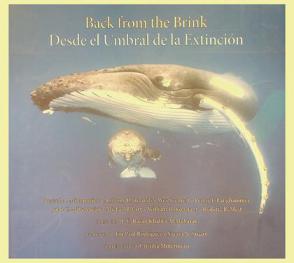
Back from the brink : 25 conservation success stories = Desde el umbral de la extinción : 25 historias de éxito en la conservación
\"Back from the Brink, written by leading international conservationists, presents species that have been saved from the \"brink of extinction\" through the resolve and collaborative initiatives of individuals, communities, organizations, and governments over the past decades.Along with awe-inspiring photographs, the book presents in-depth profiles of 25 threatened species and in all includes the stories of nearly 100 species - some formerly believed extinct but now successfully rescued. The detailed information underscores the urgent need to work together to prevent further loss of nature's diversity and beauty and to mitigate the causes of climate change. As ongoing destruction, degradation, and fragmentation of the planet's natural ecosystems increase to make way for human populations, this volume clearly demonstrates every society's obligation to ensure the right balance between urban growth and natural ecosystems.The beauty in these pages serves as an aspiration for our collective work and our shared future.\"--Book jacket.
Book

Multiple Causes of High Extinction Risk in Large Mammal Species
Many large animal species have a high risk of extinction. This is usually thought to result simply from the way that species traits associated with vulnerability, such as low reproductive rates, scale with body size. In a broad-scale analysis of extinction risk in mammals, we find two additional patterns in the size selectivity of extinction risk. First, impacts of both intrinsic and environmental factors increase sharply above a threshold body mass around 3 kilograms. Second, whereas extinction risk in smaller species is driven by environmental factors, in larger species it is driven by a combination of environmental factors and intrinsic traits. Thus, the disadvantages of large size are greater than generally recognized, and future loss of large mammal biodiversity could be far more rapid than expected.
Journal Article

Human Population Density and Extinction Risk in the World's Carnivores
Understanding why some species are at high risk of extinction, while others remain relatively safe, is central to the development of a predictive conservation science. Recent studies have shown that a species' extinction risk may be determined by two types of factors: intrinsic biological traits and exposure to external anthropogenic threats. However, little is known about the relative and interacting effects of intrinsic and external variables on extinction risk. Using phylogenetic comparative methods, we show that extinction risk in the mammal order Carnivora is predicted more strongly by biology than exposure to high-density human populations. However, biology interacts with human population density to determine extinction risk: biological traits explain 80% of variation in risk for carnivore species with high levels of exposure to human populations, compared to 45% for carnivores generally. The results suggest that biology will become a more critical determinant of risk as human populations expand. We demonstrate how a model predicting extinction risk from biology can be combined with projected human population density to identify species likely to move most rapidly towards extinction by the year 2030. African viverrid species are particularly likely to become threatened, even though most are currently considered relatively safe. We suggest that a preemptive approach to species conservation is needed to identify and protect species that may not be threatened at present but may become so in the near future.
Journal Article

Persistence of Large Mammal Faunas as Indicators of Global Human Impacts
Large mammals often play critical roles within ecosystems by affecting either prey populations or the structure and species composition of surrounding vegetation. However, large mammals are highly vulnerable to extirpation by humans and consequently, severe contractions of species ranges result in intact large mammal faunas becoming increasingly rare. We compared historical (AD 1500) range maps of large mammals with their current distributions to determine which areas today retain complete assemblages of large mammals. We estimate that less than 21% of the earth's terrestrial surface still contains all of the large (>20 kg) mammals it once held, with the proportion varying between 68% in Australasia to only 1% in Indomalaya. Although the presence of large mammals offers no guarantee of the presence of all smaller animals, their absence represents an ecologically based measurement of human impacts on biodiversity. Given the ecological importance of large mammals and their vulnerability to extinction, better protection and extension of sites containing complete assemblages of large mammals is urgently needed.
Journal Article
Putting Beta-Diversity on the Map: Broad-Scale Congruence and Coincidence in the Extremes
Beta-diversity, the change in species composition between places, is a critical but poorly understood component of biological diversity. Patterns of beta-diversity provide information central to many ecological and evolutionary questions, as well as to conservation planning. Yet beta-diversity is rarely studied across large extents, and the degree of similarity of patterns among taxa at such scales remains untested. To our knowledge, this is the first broad-scale analysis of cross-taxon congruence in beta-diversity, and introduces a new method to map beta-diversity continuously across regions. Congruence between amphibian, bird, and mammal beta-diversity in the Western Hemisphere varies with both geographic location and spatial extent. We demonstrate that areas of high beta-diversity for the three taxa largely coincide, but areas of low beta-diversity exhibit little overlap. These findings suggest that similar processes lead to high levels of differentiation in amphibian, bird, and mammal assemblages, while the ecological and biogeographic factors influencing homogeneity in vertebrate assemblages vary. Knowledge of beta-diversity congruence can help formulate hypotheses about the mechanisms governing regional diversity patterns and should inform conservation, especially as threat from global climate change increases.
Journal Article

Comparative Tests of Parasite Species Richness in Primates
Some hosts harbor diverse parasite communities, whereas others are relatively parasite free. Many factors have been proposed to account for patterns of parasite species richness, but few studies have investigated competing hypotheses among multiple parasite communities in the same host clade. We used a comparative data set of 941 host‐parasite combinations, representing 101 anthropoid primate species and 231 parasite taxa, to test the relative importance of four sets of variables that have been proposed as determinants of parasite community diversity in primates: host body mass and life history, social contact and population density, diet, and habitat diversity. We defined parasites broadly to include not only parasitic helminths and arthropods but also viruses, bacteria, fungi, and protozoa, and we controlled for effects of uneven sampling effort on per‐host measures of parasite diversity. In nonphylogenetic tests, body mass was correlated with total parasite diversity and the diversity of helminths and viruses. When phylogeny was taken into account, however, body mass became nonsignificant. Host population density, a key determinant of parasite spread in many epidemiological models, was associated consistently with total parasite species richness and the diversity of helminths, protozoa, and viruses tested separately. Geographic range size and day range length explained significant variation in the diversity of viruses.
Journal Article

Parasite species richness in carnivores: effects of host body mass, latitude, geographical range and population density
Aim: Comparative studies have revealed strong links between ecological factors and the number of parasite species harboured by different hosts, but studies of different taxonomic host groups have produced inconsistent results. As a step towards understanding the general patterns of parasite species richness, we present results from a new comprehensive data base of over 7000 host-parasite combinations representing 146 species of carnivores (Mammalia: Carnivora) and 980 species of parasites. Methods: We used both phylogenetic and non-phylogenetic comparative methods while controlling for unequal sampling effort within a multivariate framework to ascertain the main determinants of parasite species richness in carnivores. Results: We found that body mass, population density, geographical range size and distance from the equator are correlated with overall parasite species richness in fissiped carnivores. When parasites are classified by transmission mode, body mass and home range area are the main determinants of the richness of parasites spread by close contact between hosts, and population density, geographical range size and distance from the equator account for the diversity of parasites that are not dependent on close contact. For generalist parasites, population density, geographical range size and latitude are the primary predictors of parasite species richness. We found no significant ecological correlates for the richness of specialist or vector-borne parasites. Main conclusions: Although we found that parasite species richness increases instead of decreases with distance from the equator, other comparative patterns in carnivores support previous findings in primates, suggesting that similar ecological factors operate in both these independent evolutionary lineages.
Journal Article

Latitudinal gradients of parasite species richness in primates
Infectious disease risk is thought to increase in the tropics, but little is known about latitudinal gradients of parasite diversity. We used a comparative data set encompassing 330 parasite species reported from 119 primate hosts to examine latitudinal gradients in the diversity of micro and macroparasites per primate host species. Analyses conducted with and without controlling for host phylogeny showed that parasite species richness increased closer to the equator for protozoan parasites, but not for viruses or helminths. Relative to other major parasite groups, protozoa reported from wild primates were transmitted disproportionately by arthropod vectors. Within the protozoa, our results revealed that vector-borne parasites showed a highly significant latitudinal gradient in species richness. This higher diversity of vector-borne protozoa near the tropics could be influenced by a greater abundance or diversity of biting arthropods in the tropics, or by climatic effects on vector behaviour and parasite development. Many vector-borne diseases, such as leishmaniasis, trypanosomiasis, and malaria pose risks to both humans and wildlife, and nearly one-third of the protozoan parasites from free-living primates in our data set have been reported to infect humans. Because the geographical distribution and prevalence of many vector-borne parasites are expected to increase because of global warming, these results are important for predicting future parasite-mediated threats to biodiversity and human health.
Journal Article

Hotspots and the Conservation of Evolutionary History
Species diversity is unevenly distributed across the globe, with terrestrial diversity concentrated in a few restricted biodiversity hotspots. These areas are associated with high losses of primary vegetation and increased human population density, resulting in growing numbers of threatened species. We show that conservation of these hotspots is critical because they harbor even greater amounts of evolutionary history than expected by species numbers alone. We used supertrees for carnivores and primates to estimate that nearly 70% of the total amount of evolutionary history represented in these groups is found in 25 biodiversity hotspots.
Journal Article
Parasites and the Evolutionary Diversification of Primate Clades
Coevolutionary interactions such as those between hosts and parasites have been regarded as an underlying cause of evolutionary diversification, but evidence from natural populations is limited. Among primates and other mammalian groups, measures of host diversification rates vary widely among lineages, but comparative studies have not yet identified a reliable explanation for this variation. In this study, we used a comprehensive data set of disease‐causing organisms from free‐living primates to illustrate how phylogenetic comparative methods can be used to examine mammalian lineage diversity in relation to parasite species richness. Our results provide evidence that the phylogenetic diversity of primate clades is correlated positively with the number of parasite species harbored by each host and that this pattern is largely independent of other host traits that have been shown to influence diversification rates and parasite species richness in primates. We investigated two possible mechanisms that could explain this association, namely that parasites themselves drive host evolutionary diversification through processes linked with sexual selection and that host shifts or host sharing increases parasite species richness among diverse primate clades. Neither parasite species richness nor host diversification is related to measures of sexual selection in primates. Further, we found only partial evidence that more rapidly diversifying host lineages produced increased opportunities for host sharing or host shifting by parasites through mechanisms involving species’ geographic range overlap. Thus, our analyses provide evidence for an important link between the evolutionary diversification of primates and the richness of their parasite communities, but other mechanisms, particularly those related to reciprocal selection or coextinction of hosts and parasites, require further investigation.
Journal Article