
Catalogue Search | MBRL


Are you sure you want to remove the book from the shelf?

{{itemTitle}}
294
result(s) for
"STANDING, GUY"
Sort by:

A precariat charter : from denizens to citizens
\"Guy Standing's immensely influential 2011 book introduced the Precariat as an emerging mass class, characterized by inequality and insecurity. Standing outlined the increasingly global nature of the Precariat as a social phenomenon, especially in the light of the social unrest characterized by the Occupy movements. He outlined the political risks they might pose, and at what might be done to diminish inequality and allow such workers to find a more stable labour identity. His concept and his conclusions have been widely taken up by thinkers from Noam Chomsky to Zygmunt Bauman, by political activists and by policy-makers. This new book takes the debate a stage further-looking in more detail at the kind of progressive politics that might form the vision of a Good Society in which such inequality, and the instability it produces is reduced. A Precariat Charter discusses how rights - political, civil, social and economic - have been denied to the Precariat, and at the importance of redefining our social contract around notions of associational freedom, agency and the commons. The ecological imperative is also discussed - something that was only hinted at in Standing's original book but has been widely discussed in relation to the Precariat by theorists and activists alike\"-- Provided by publisher.
Book

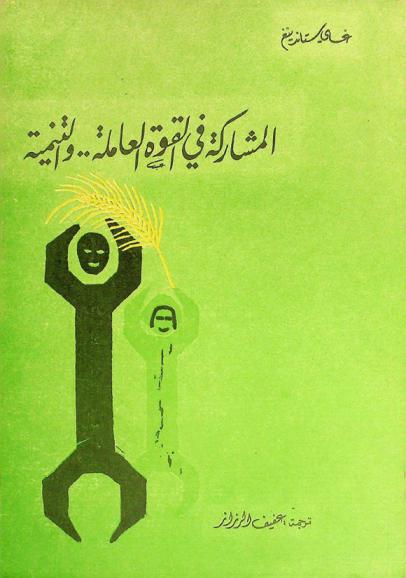
المشاركة في القوى العاملة والتنمية
تتعلق هذه الدراسة بالعوامل الاقتصادية المحددة للمشاركة في القوة العاملة في الاقتصادات قيد التصنيع وذات الدخل المنخفض. وهي تركز إلى حد كبير على العوامل المؤثرة في الدور الاقتصادي المتغير للنساء نظرا لأن مشاركتهن في القوة العاملة كانت هي الأكثر حساسية تجاه التأثيرات الاقتصادية والاجتماعية. ولكن الدراسة تأخذ في اعتبارها أيضا العوامل المؤثرة على مشاركة الأطفال والذكور الشباب والمسنين.
Book

The Precariat: From Denizens to Citizens?
Liberalized markets promoted by the Washington Consensus under globalization have resulted in a global class structure in which new groups have emerged, including a precariat consisting of millions of people subject to flexible, insecure labor relations. The precariat is a class-in-the-making, in that the global market system wants most workers to be flexible and insecure, even if it is not yet a class-for-itself, having a clear vision of what type of society it wishes to see emerge. It is not an underclass. This article traces the factors explaining its growth and considers which demographic groups have the highest probability of being in it. The essay then considers two possible political scenarios—a politics of inferno, if current negative trends are allowed to continue, and a politics of paradise, a set of policies that would be essential to arrest those negative trends.
Journal Article
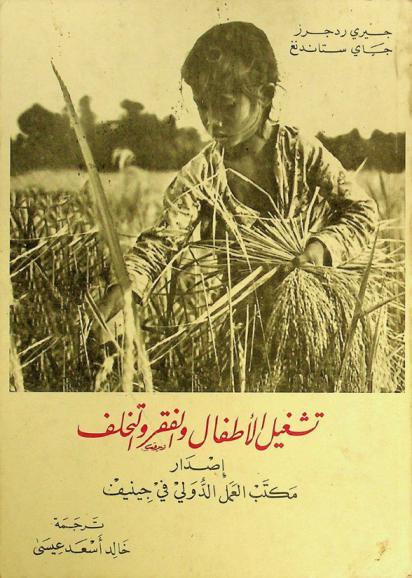
تشغيل الأطفال والفقر والتخلف
الكتاب يتناول واحدة من أكثر القضايا الاجتماعية والاقتصادية تأثيرا في المجتمعات، وهي مشكلة عمالة الأطفال وعلاقتها بالفقر والتخلف الاقتصادي، يسلط الكتاب الضوء على الآثار السلبية لعمالة الأطفال، حيث يستعرض الجوانب الاقتصادية والاجتماعية التي تدفع الأسر الفقيرة إلى إرسال أطفالها للعمل في سن مبكرة. يربط المؤلفان بين ظاهرة تشغيل الأطفال والبيئات الاقتصادية المتخلفة، ويظهران كيف أن الفقر وعدم توفر فرص التعليم الجيد يدفعان الأطفال إلى العمل بدلا من الدراسة، مما يعمق دائرة الفقر.
Book

Basic Income Pilots: Uses, Limitations and Design Principles
The position underlying this article is that while pilots are not strictly required to justify moving in the direction of a basic income system, nevertheless they can play several useful functions in the debate. These include rebutting common preconceptions, for instance that basic income will make people ‘lazy’, indicating non-monetary benefits such as improved health and wellbeing, and testing how a basic income might best be introduced in a given region, country or city. In that context the article goes on to present 19 guiding principles for the design, implementation and evaluation of basic income pilots, with examples of selected experiments and pilots past and present.
Journal Article

Calypso
Personal essays share the author's adventures after buying a vacation house on the Carolina coast and his reflections on middle age and mortality.
Book
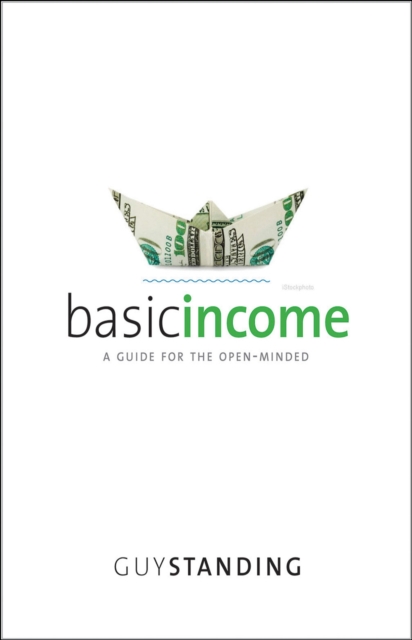
Basic Income
Shouldn't everyone receive a stake in society's wealth?
Could we create a fairer world by guaranteeing income to all? What
would this mean for our health, wealth, and happiness?
Basic income is a revolutionary idea that guarantees regular,
unconditional cash transfers from the government to all citizens.
It is an acknowledgement that everyone plays a part in generating
the wealth currently enjoyed by only a few and would rectify the
recent breakdown in income distribution. Political parties across
the world are now adopting this innovative policy and the idea
generates headlines every day. Guy Standing has been at the
forefront of thought surrounding basic income for the past thirty
years, and in this book he covers in authoritative detail its
effects on the economy, poverty, work, and labor; dissects and
disproves the standard arguments against basic income; explains
what we can learn from pilots across the world; and illustrates
exactly why basic income has now become such an urgent necessity.
eBook

The Precariat: Today’s Transformative Class?
Since 1980, the global economy has undergone a dramatic transformation, with the globalization of the labour force, the rise of automation, and—above all—the growth of Big Finance, Big Pharma, and Big Tech. The social democratic consensus of the immediate postwar years has given way to a new phase of capitalism that is leaving workers further behind and reshaping the class structure. The precariat, a mass class defined by unstable labour arrangements, lack of identity, and erosion of rights, is emerging as today’s ‘dangerous class.’ As its demands cannot be met within the current system, the precariat carries transformative potential. To realize that potential, however, the precariat must awaken to its status as a class and fight for a radically changed income distribution that reclaims the commons and guarantees a livable income for all. Without transformative action, a dark political era looms.
Journal Article

Economic Insecurity and Global Casualisation: Threat or Promise?
Casualisation has both negative and positive sides, for both workers and employers. This article considers how the positive sides could be developed while allowing casual work to continue to grow. In reviewing the advantages and disadvantages of casual labour for employers, the paper depicts casualisation (and the related process of 'informalisation') as usually involving seven forms of economic insecurity for the worker. The modern casualisation that is taking place as part of globalisation involves a steady restructuring of social income and labour recommodification, in which many workers are finding that an increasing share of their remuneration is coming from money wages, which are a relatively insecure part of their social income. As a result, there is a need to find new ways of providing income security that could allow workers to accept the more casual work arrangements without excessive anxiety and alienation. The article is, essentially, an argument for a re-assertion of a common sense of social solidarity, in which casual work can be a normal part of a flexible labour and work system.
Journal Article