
Catalogue Search | MBRL


Are you sure you want to remove the book from the shelf?

{{itemTitle}}
69
result(s) for
"Sachs, Mendel"
Sort by:

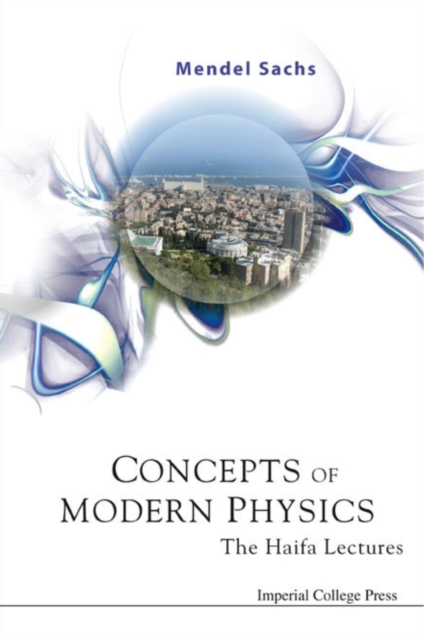
Concepts Of Modern Physics
This book highlights foundational issues in theoretical physics in an informal, open style of lecture. It expresses the flow of ideas in physics - from the period of Galileo and Newton to the contemporary ideas of the quantum and relativity theories, astrophysics and cosmology - as explanations for the laws of matter. Rather than presenting the ideas of physics as a fait accompli, the book leaves it up to the reader to decide which of these 20th-century ideas in science will carry over to the 21st century for our further comprehension of the laws of nature in all domains, from that of elementary particles to cosmology.It is the contention of the author that our future progress in physics comprehension will only take place when the foundational controversies between the quantum and relativity theories are recognized and discussion is given to their resolution. The book, therefore, presents an attitude not normally taken in other present-day books on subjects in contemporary theoretical physics and cosmology.Sample Chapter(s)Lecture I: Philosophy of Science (83 KB)Contents:Philosophy of ScienceClassical Precursors for the Concepts of Modern PhysicsNineteenth Century Physics: Atomism and ContinuityEarly Anomalies and Elementary ParticlesFrom the Old Quantum Theory to Quantum MechanicsQuantum Mechanics: Heisenberg's Matrix Mechanics and the Copenhagen SchoolConcepts of the Theory of RelativityFrom Special to General RelativityThe UniverseConflicts in the Foundations of the Quantum and Relativity TheoriesReadership: Academics, undergraduates, and graduates in physics and philosophy; interested general readers.
eBook
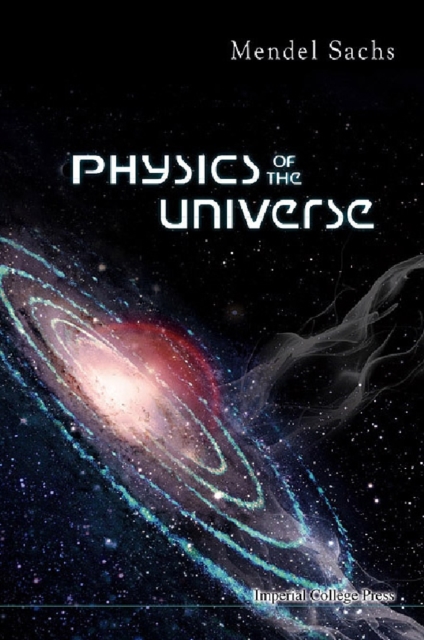
Physics of the universe
This book presents a new approach to the subject of cosmology. It fully exploits Einstein's theory of general relativity. It is found that the most general formal expression of the theory replaces the (10-component) tensor formalism with a (16-component) quaternion formalism. This leads to a unified field theory, where one field incorporates gravitation and electromagnetism. The theory predicts an oscillating universe cosmology with a spiral configuration. Dark matter is explained in terms of a sea of particle–antiparticle pairs, each in a particular (derived) ground state. This leads to an explanation for the separation between matter and antimatter in the universe. There is a brief discussion of black holes and pulsars. The final chapter delves into philosophical considerations such as the different types of ‘truth’, positivism versus realism and a discussion of the role of the Mach principle in physics and cosmology.
eBook
Concepts of modern physics
This book highlights foundational issues in theoretical physics in an informal, open style of lecture. It expresses the flow of ideas in physics — from the period of Galileo and Newton to the contemporary ideas of the quantum and relativity theories, astrophysics and cosmology — as explanations for the laws of matter. Rather than presenting the ideas of physics as a fait accompli, the book leaves it up to the reader to decide which of these 20th-century ideas in science will carry over to the 21st century for our further comprehension of the laws of nature in all domains, from that of elementary particles to cosmology.
eBook


On Hawking's A Brief History of Time and the Present State of Physics
S. W. Hawking's \"A Brief History of Time\" is discussed. Hawking's book presents a view toward a fundamental explanation of the universe based on some speculative ideas in physics.
Journal Article
Physics of the Universe
The following sections are included:
Introduction
Is Newton's Theory an Explanation of Gravity?
The Expanding Universe
The Oscillating Universe Cosmology
The Theory of General Relativity
The Role of Space and Time
Geometry and Matter
Generalization of Einstein's Field Equations
A Unified Field Theory
Book Chapter
Dark Matter
The following sections are included:
Introduction
The Field Equations and the Ground State Solution for the Bound Particle-Antiparticle Pair
Separation of Matter and Antimatter in the Universe
Olber's Paradox
Book Chapter
A Unified Field Theory in General Relativity: Extension from the Tensor to the Quaternion Language
The following sections are included:
Introduction
Factorization of Einstein's Tensor Field Equations
The Riemann Curvature Tensor in Quaternion Form
Spin-affine connection
Spin curvature
The Quaternion Metrical Field Equations
A Symmetric Tensor-Antisymmetric Tensor Representation of General Relativity — Gravity and Electromagnetism
The Einstein Field Equations from the Symmetric Tensor Part
The Maxwell Field Equations from the Antisymmetric Tensor Part
Conclusions
Book Chapter
A Language of Cosmology: The Mathematical Basis of General Relativity
The following sections are included:
Introduction
Einstein's Tensor Formulation
The Riemann Curvature Tensor
The Geodesic Equation
The Vacuum Equation
The Schwarzschild Solution
The black hole
The Crucial Tests of General Relativity
The Logic of the Spacetime Language
Book Chapter