
Catalogue Search | MBRL


Are you sure you want to remove the book from the shelf?

{{itemTitle}}
20,797
result(s) for
"Salah, Salah"
Sort by:


Predictive learning analytics using deep learning model in MOOCs’ courses videos
Analysis of learning behavior of MOOC enthusiasts has become a posed challenge in the Learning Analytics field, which is especially related to video lecture data, since most learners watch the same online lecture videos. It helps to conduct a comprehensive analysis of such behaviors and explore various learning patterns for learners and predict their performance by MOOC courses video. This paper exploits a temporal sequential classification problem by analyzing video clickstream data and predict learner performance, which is a vital decision-making problem, by addressing their issues and improving the educational process. This paper employs a deep neural network (LSTM) on a set of implicit features extracted from video clickstreams data to predict learners’ weekly performance and enable instructors to set measures for timely intervention. Results show that accuracy rate of the proposed model is 82%–93% throughout course weeks. The proposed LSTM model outperforms baseline ANNs, Super Vector Machine (SVM) and Logistic Regression by an accuracy of 93% in real used courses’ datasets.
Journal Article


Co-circulation of three camel coronavirus species and recombination of MERS-CoVs in Saudi Arabia
Outbreaks of Middle East respiratory syndrome (MERS) raise questions about the prevalence and evolution of the MERS coronavirus (CoV) in its animal reservoir. Our surveillance in Saudi Arabia in 2014 and 2015 showed that viruses of the MERS-CoV species and a human CoV 229E–related lineage co-circulated at high prevalence, with frequent co-infections in the upper respiratory tract of dromedary camels. Including a betacoronavirus 1 species, we found that dromedary camels share three CoV species with humans. Several MERS-CoV lineages were present in camels, including a recombinant lineage that has been dominant since December 2014 and that subsequently led to the human outbreaks in 2015. Camels therefore serve as an important reservoir for the maintenance and diversification of the MERS-CoVs and are the source of human infections with this virus.
Journal Article
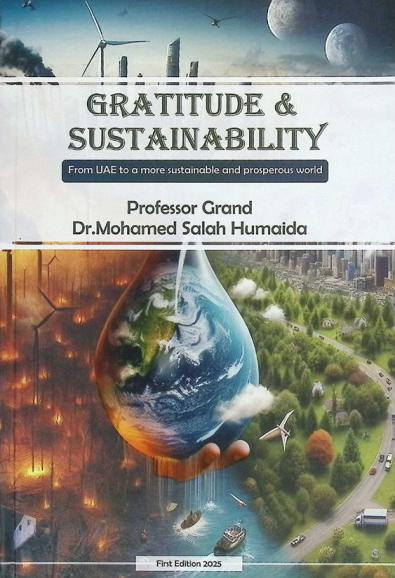
Gratitude & sustainability from UAE to a mor sustaiable and prosperous world
This scholarly work by Professor Grand Dr. Mohamed Salah Humaida serves as a strategic bridge between the traditional values of the United Arab Emirates and the global requirements for a greener, more stable future.
BOOK

Minimizing the Adversely Impacts of Water Deficit and Soil Salinity on Maize Growth and Productivity in Response to the Application of Plant Growth-Promoting Rhizobacteria and Silica Nanoparticles
The development of new approaches for sustaining soil quality, leaf health, and maize productivity are imperative in light of water deficit and soil salinity. Plant growth-promoting rhizobacteria (PGPR) and silica nanoparticles (SiNP) are expected to improve soil chemistry leading to improved plant performance and productivity. In this field experiment, water deficit is imposed by three irrigation intervals—12 (I1), 15 (I2), and 18 (I3) days. Plants are also treated with foliar and soil applications (control, PGPR, SiNP, and PGPR + SiNP) to assess soil enzymatic activity, soil physicochemical properties, plant physiological traits, biochemical analysis, nutrient uptake, and productivity of maize (Zea mays L.) plants grown under salt-affected soil during the 2019 and 2020 seasons. With longer irrigation intervals, soil application of PGPR relieves the deleterious impacts of water shortage and improves yield-related traits and maize productivity. This is attributed to the improvement in soil enzymatic activity (dehydrogenase and alkaline phosphatase) and soil physicochemical characteristics, which enhances the plants’ health and growth under longer irrigation intervals (i.e., I2 and I3). Foliar spraying of SiNP shows an improvement in the physiological traits in maize plants grown under water shortage. This is mainly owing to the decline in oxidative stress by improving the enzymatic activity (CAT, SOD, and POD) and ion balance (K+/Na+), resulting in higher photosynthetic rate, relative water content, photosynthetic pigments, and stomatal conductance, alongside reduced proline content, electrolyte leakage, lipid peroxidase, and sodium content under salt-affected soil. The co-treatment of SiNP with PGPR confirms greater improvement in yield-related traits, maize productivity, as well as nutrient uptake (N, P, and K). Accordingly, their combination is a good strategy for relieving the detrimental impacts of water shortage and soil salinity on maize production.
Journal Article

Detection of genetic divergence among some wheat (Triticum aestivum L.) genotypes using molecular and biochemical indicators under salinity stress
Wheat has remarkable importance among cereals in Egypt. Salt stress affects plant growth, development, and crop productivity. Therefore, salinity tolerance is an essential trait that must be incorporated in crops. This research aimed to investigate molecular and biochemical indicators and defence responses in seedlings of 14 Egyptian wheat genotypes to distinguish the most contrasting salt-responsive genotypes. Analysis of ISSR and SCoT markers revealed high polymorphism and reproducible fingerprinting profiles for evaluating genetic variability within the studied genotypes. The HB-10 and SCoT 1 primers had the highest values for all the studied parameters. All the tested primers generated a set of 66 polymorphic bands among tolerant and sensitive genotypes. The transcript profiles of eight TaWRKY genes showed significant induction under the salinity treatments. Moreover, the expression of TaWRKY6 for genotypes Sids 14 and Sakha 93 sharply increased and recorded the highest expression, while the expression of TaWRKY20 for Misr 1 recorded the lowest expression. Under salt stress, the total sugar, proline, and phenolic contents increased significantly, while the chlorophyll content decreased significantly. Additionally, five peroxidase and polyphenol oxidase isoforms were observed in treated leaves and clustered into five different patterns. Some isoforms increased significantly as salinity levels increased. This increase was clearer in salt-tolerant than in salt-sensitive genotypes. Eighteen protein bands appeared, most of which were not affected by salinity compared with the control, and specific bands were rare. Generally, the Sids 14, Sakha 93, Sohag 4, and Gemmeiza 12 genotypes are considered salt tolerant in comparison to the other genotypes.
Journal Article


Global dynamics of the parabolic Choquard equation with asymptotically linear nonlinearity
This article investigates the global dynamics of the semilinear parabolic Choquard equation
∂
t
u
(
x
,
t
)
−
Δ
u
(
x
,
t
)
+
u
(
x
,
t
)
=
(
I
α
∗
|
u
(
⋅
,
t
)
|
p
)
(
x
)
|
u
(
x
,
t
)
|
p
−
2
u
(
x
,
t
)
+
f
(
u
(
x
,
t
)
)
,
(
x
,
t
)
∈
R
N
×
(
0
,
∞
)
.
where
N
≥
3
,
α
∈
(
N
−
4
,
N
)
,
p
∈
(
2
,
N
+
α
N
−
2
)
, and
f
is an asymptotically linear nonlinearity. The above equation represents the natural parabolic counterpart of the elliptic Choquard equation studied recently by Wang–Lai–Guo (2025), who constructed multiple radial nodal stationary solutions using shooting–gluing methods and topological degree theory. In this work we establish the global well-posedness of the problem in
H
1
(
R
N
)
by combining optimal Hardy–Littlewood–Sobolev estimates with energy methods and dissipation identities. In particular, we show that the associated Choquard energy functional is strictly decreasing along every non-stationary trajectory. This property allows us to obtain a precise characterization of the
ω
-limit set and to prove convergence of the parabolic flow toward stationary Choquard states. A main contribution of the present paper is that it provides, to the best of our knowledge, the first rigorous analysis of the parabolic Choquard equation involving an asymptotically linear nonlinearity. Furthermore, we show that, for suitable initial data, the solution converges to the
k
-th radial nodal stationary solution obtained in the corresponding elliptic theory. Finally, numerical simulations illustrate the long-time dynamics of the flow and confirm the dynamical selection of nodal stationary structures.
Journal Article