
Catalogue Search | MBRL


Are you sure you want to remove the book from the shelf?

{{itemTitle}}
5,361
result(s) for
"Samuel, Peter A."
Sort by:
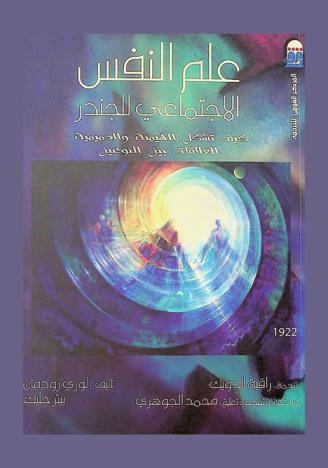
علم النفس الاجتماعي للجندر : كيف تشكل الهيمنة والحمميمية العلاقات بين النوعين
يسلط الكتاب الضوء على التجارب الحياتية المتعلقة بالجندر، وعلى المواقف الصريحة والضمنية التي ترتكز على معتقدات معينة حول الفروق بين الجنسين، بالإضافة إلى النتائج المترتبة على أفكار ومشاعر وسلوك كل من الجنسين تجاه الآخر ويصطحب هذا الكتاب الدراسي القارئ إلى آخر ما تم التوصل إليه في نظرية الجندر، من خلال أمثلة متنوعة من الحياة اليومية، تكشف عن دور الاحتياج المتبادل بين الرجل والمرأة، في تشكيل التفاعل بينهما على مستوى العلاقة العاطفية ومستوى العمل على حد سواء.
BOOK

Making greater use of dedicated hospital observation units for many short-stay patients could save $3.1 billion a year
Using observation units in hospitals to provide care to certain patients can be more efficient than admitting them to the hospital and can result in shorter lengths-of-stay and lower costs. However, such units are present in only about one-third of US hospitals. We estimated national cost savings that would result from increasing the prevalence and use of observation units for patients whose stay there would be shorter than twenty-four hours. Using a systematic literature review, national survey data, and a simulation model, we estimated that if hospitals without observation units had them in place, the average cost savings per patient would be $1,572, annual hospital savings would be $4.6 million, and national cost savings would be $3.1 billion. Future policies intended to increase the cost-efficiency of hospital care should include support for observation unit care as an alternative to short-stay inpatient admission.
Journal Article


Redefining and Redesigning Hospital Discharge to Enhance Patient Care: A Randomized Controlled Study
BACKGROUND
Patients are routinely ill-prepared for the transition from hospital to home. Inadequate communication between Hospitalists and primary care providers can further compromise post-discharge care. Redesigning the discharge process may improve the continuity and the quality of patient care.
OBJECTIVES
To evaluate a low-cost intervention designed to promptly reconnect patients to their “medical home” after hospital discharge.
DESIGN
Randomized controlled study. Intervention patients received a “user-friendly” Patient Discharge Form, and upon arrival at home, a telephone outreach from a nurse at their primary care site.
PARTICIPANTS
A culturally and linguistically diverse group of patients admitted to a small community teaching hospital.
MEASUREMENTS
Four undesirable outcomes were measured after hospital discharge: (1) no outpatient follow-up within 21 days; (2) readmission within 31 days; (3) emergency department visit within 31 days; and (4) failure by the primary care provider to complete an outpatient workup recommended by the hospital doctors. Outcomes of the intervention group were compared to concurrent and historical controls.
RESULTS
Only 25.5% of intervention patients had 1 or more undesirable outcomes compared to 55.1% of the concurrent and 55.0% of the historical controls. Notably, only 14.9% of the intervention patients failed to follow-up within 21 days compared to 40.8% of the concurrent and 35.0% of the historical controls. Only 11.5% of recommended outpatient workups in the intervention group were incomplete versus 31.3% in the concurrent and 31.0% in the historical controls.
CONCLUSIONS
A low-cost discharge–transfer intervention may improve the rates of outpatient follow-up and of completed workups after hospital discharge.
Journal Article
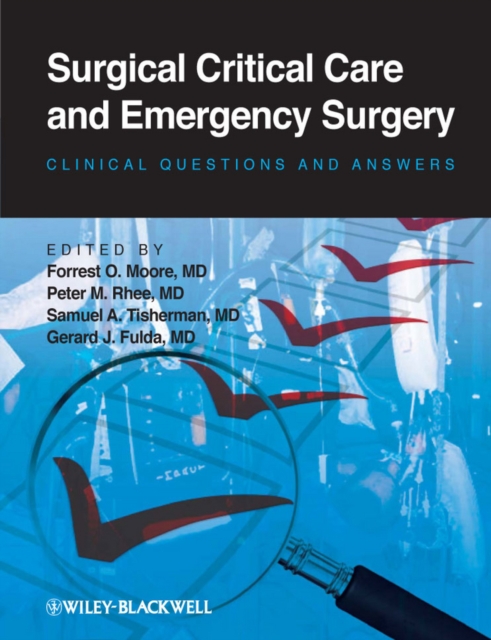
Surgical Critical Care and Emergency Surgery
This is a unique question-and-answer book for surgical residents and trainees, concentrating on the growing subspecialty of surgery in critical care and emergency surgery.This book covers all surgical aspects of critical care and acute or emergency surgery, making it an ideal learning and review text for surgical trainees and those professionals.
eBook
As I See It The MTA Couldn't Keep Pace With the Swiftest of Mollusks
The 63rd Street tunnel terminates at 21st Street in Long Island City, Queens. The Queens local connection would go between 21st Sreet and Queens Plaza. That's a mere 520-foot length of subway. This little sprinter snail of [George B. Chapman]'s acquaintance is obviously unfair competition for the MTA, which to keep up would need to knock off the 520-foot Queens local connection in a long summer day, say two seven-hour shifts. As a metaphor, the snail's pace is obviously grossly inadequate to describe New York's subway construction schedule. But inaccurate though it is to snails, we are probably stuck with it. Hence with apologies, in advance, to snails, the MTA's Queens local connection gets nominated for the Snail's Pace Award.
Newspaper Article
MEAT-EATERS: GO `COLD TURKEY' NOW
In the recent flurry of dire hoof-and-mouth headlines, it would be easy to lose sight of the herd for the cows. Hoof-and-mouth disease poses a threat to animals but virtually no threat to human health. And while the suffering and deaths of mad cow disease victims should not be downplayed, it is important to remember the broader public health context.
Newspaper Article

Bacteria engineered to produce IL-22 in intestine induce expression of REG3G to reduce ethanol-induced liver disease in mice
ObjectiveAntimicrobial C-type lectin regenerating islet-derived 3 gamma (REG3G) is suppressed in the small intestine during chronic ethanol feeding. Our aim was to determine the mechanism that underlies REG3G suppression during experimental alcoholic liver disease.DesignInterleukin 22 (IL-22) regulates expression of REG3G. Therefore, we investigated the role of IL-22 in mice subjected to chronic-binge ethanol feeding (NIAAA model).ResultsIn a mouse model of alcoholic liver disease, we found that type 3 innate lymphoid cells produce lower levels of IL-22. Reduced IL-22 production was the result of ethanol-induced dysbiosis and lower intestinal levels of indole-3-acetic acid (IAA), a microbiota-derived ligand of the aryl hydrocarbon receptor (AHR), which regulates expression of IL-22. Importantly, faecal levels of IAA were also found to be lower in patients with alcoholic hepatitis compared with healthy controls. Supplementation to restore intestinal levels of IAA protected mice from ethanol-induced steatohepatitis by inducing intestinal expression of IL-22 and REG3G, which prevented translocation of bacteria to liver. We engineered Lactobacillus reuteri to produce IL-22 (L. reuteri/IL-22) and fed them to mice along with the ethanol diet; these mice had reduced liver damage, inflammation and bacterial translocation to the liver compared with mice fed an isogenic control strain and upregulated expression of REG3G in intestine. However, L. reuteri/IL-22 did not reduce ethanol-induced liver disease in Reg3g–/– mice.ConclusionEthanol-associated dysbiosis reduces levels of IAA and activation of the AHR to decrease expression of IL-22 in the intestine, leading to reduced expression of REG3G; this results in bacterial translocation to the liver and steatohepatitis. Bacteria engineered to produce IL-22 induce expression of REG3G to reduce ethanol-induced steatohepatitis.
Journal Article

Electrically driven organic laser using integrated OLED pumping
Organic semiconductors are carbon-based materials that combine optoelectronic properties with simple fabrication and the scope for tuning by changing their chemical structure
1
–
3
. They have been successfully used to make organic light-emitting diodes
2
,
4
,
5
(OLEDs, now widely found in mobile phone displays and televisions), solar cells
1
, transistors
6
and sensors
7
. However, making electrically driven organic semiconductor lasers is very challenging
8
,
9
. It is difficult because organic semiconductors typically support only low current densities, suffer substantial absorption from injected charges and triplets, and have additional losses due to contacts
10
,
11
. In short, injecting charges into the gain medium leads to intolerable losses. Here we take an alternative approach in which charge injection and lasing are spatially separated, thereby greatly reducing losses. We achieve this by developing an integrated device structure that efficiently couples an OLED, with exceptionally high internal-light generation, with a polymer distributed feedback laser. Under the electrical driving of the integrated structure, we observe a threshold in light output versus drive current, with a narrow emission spectrum and the formation of a beam above the threshold. These observations confirm lasing. Our results provide an organic electronic device that has not been previously demonstrated, and show that indirect electrical pumping by an OLED is a very effective way of realizing an electrically driven organic semiconductor laser. This provides an approach to visible lasers that could see applications in spectroscopy, metrology and sensing.
An electrically driven organic semiconductor laser is achieved by integrating a device structure that efficiently couples an organic light-emitting diode, with extremely high internal-light generation, with a polymer distributed feedback laser.
Journal Article

Rapid Utilization of Telehealth in a Comprehensive Cancer Center as a Response to COVID-19: Cross-Sectional Analysis
The emergence of the coronavirus disease (COVID-19) pandemic in March 2020 created unprecedented challenges in the provision of scheduled ambulatory cancer care. As a result, there has been a renewed focus on video-based telehealth consultations as a means to continue ambulatory care.
The aim of this study is to analyze the change in video visit volume at the University of California, San Francisco (UCSF) Comprehensive Cancer Center in response to COVID-19 and compare patient demographics and appointment data from January 1, 2020, and in the 11 weeks after the transition to video visits.
Patient demographics and appointment data (dates, visit types, and departments) were extracted from the electronic health record reporting database. Video visits were performed using a HIPAA (Health Insurance Portability and Accountability Act)-compliant video conferencing platform with a pre-existing workflow.
In 17 departments and divisions at the UCSF Cancer Center, 2284 video visits were performed in the 11 weeks before COVID-19 changes were implemented (mean 208, SD 75 per week) and 12,946 video visits were performed in the 11-week post-COVID-19 period (mean 1177, SD 120 per week). The proportion of video visits increased from 7%-18% to 54%-72%, between the pre- and post-COVID-19 periods without any disparity based on race/ethnicity, primary language, or payor.
In a remarkably brief period of time, we rapidly scaled the utilization of telehealth in response to COVID-19 and maintained access to complex oncologic care at a time of social distancing.
Journal Article