
Catalogue Search | MBRL


Are you sure you want to remove the book from the shelf?

{{itemTitle}}
12
result(s) for
"Samuel, Stephen, author"
Sort by:

Unbalanced
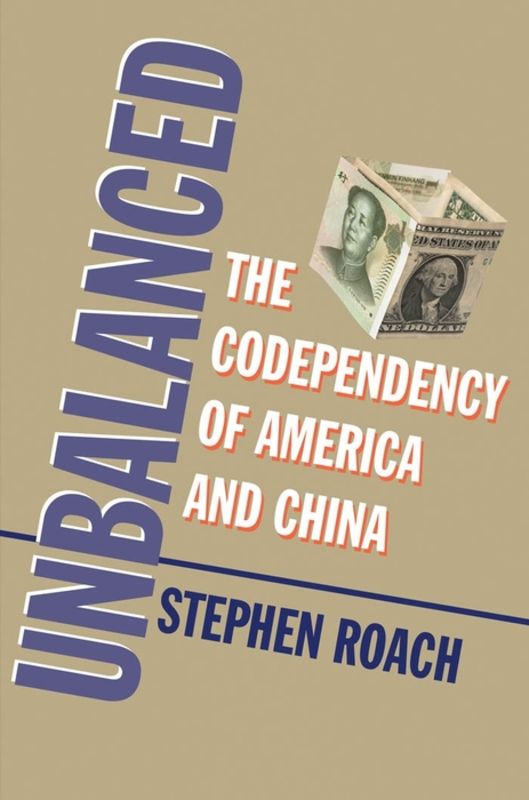
The Chinese and U.S. economies have been locked in an uncomfortable embrace since the late 1970s. Although the relationship initially arose out of mutual benefits, in recent years it has taken on the trappings of an unstable codependence, with the two largest economies in the world losing their sense of self, increasing the risk of their turning on one another in a destructive fashion.InUnbalanced: The Codependency of America and ChinaStephen Roach, senior fellow at Yale University and former chairman of Morgan Stanley Asia, lays bare the pitfalls of the current China-U.S. economic relationship. He highlights the conflicts at the center of current tensions, including disputes over trade policies and intellectual property rights, sharp contrasts in leadership styles, the role of the Internet, the recent dispute over cyberhacking, and more.A firsthand witness to the Asian financial crisis of the late 1990s, Roach likely knows more about the U.S.-China economic relationship than any other Westerner. Here he discusses:
Why America saving too little and China saving too much creates mounting problems for bothHow China is planning to re-boot its economic growth model by moving from an external export-led model to one of internal consumerism with a new focus on service industriesHow America, shows a disturbing lack of strategy, preferring a short-term reactive approach over a more coherent Chinese-style planning frameworkThe way out: what America could do to turn its own economic fate around and position itself for a healthy economic and political relationship with China
In the wake of the 2008 crisis, both unbalanced economies face urgent and mutually beneficial rebalancings.Unbalancedconcludes with a recipe for resolving the escalating tensions of codependence. Roach argues that the Next China offers much for the Next America-and vice versa.
eBook

Boom for whom?
Explores political and educational aspects of Charlotte's nationally praised school desegregation efforts.
Bringing a new perspective to Charlotte's landmark school desegregation efforts, Stephen Samuel Smith provides a multi-faceted history of the nationally praised mandatory busing plan and the court battle that led to its ultimate demise. Although both black and white children benefited from busing, its most ongoing consequences were not educational, but the political and economic ones that served the interests of Charlotte's business elite and facilitated the city's economic boom. Drawing on urban regime theory, Smith shows how busing enhanced civic capacity and was part of a political alliance between Charlotte's business elite and black political leaders. This account of Charlotte's history has national implications for desegregation, urban education, efforts to build civic capacity, and the political involvement of the urban poor.
eBook

Vertigo and Disequilibrium : A Practical Guide to Diagnosis and Management
This updated edition provides a comprehensive basis for understanding, identifying, and treating the underlying multifactorial etiologies of dizziness and imbalance. Vertigo is a common malady for which patients seek treatment, yet the vestibular system and its associated disorders are often misunderstood. This book effectively demystifies this topic, with clinical pearls and knowledge from foremost experts in the field.
The first six chapters cover procuring a thorough patient history, examination techniques, computerized testing, radiological studies, surgical anatomy and physiology of the vestibular system, and laboratory testing. Subsequent chapters concisely detail the diagnosis and treatment of pathologies such as Meniere's disease, benign paroxysmal positional vertigo, labyrithinitis, superior semicircular canal dehisence syndrome, and unilateral peripheral vestibulopathy.
eBook
SPECT and SPECT/CT : a clinical guide
FOUR STARS from Doody's Star Ratings™ Internationally renowned authorities in the field of hybrid imaging contribute firsthand expertise on the practical application of single-photon emission computed tomography (SPECT) and SPECT/CT. By combining clear anatomic markers from CT with functional knowledge from SPECT, SPECT/CT provides added value for patient evaluation and is becoming increasingly prevalent in routine clinical practice. Indeed, hybrid imaging is touted by many as a game changer in nuclear medicine. The first two chapters of this book provide a foundation for understanding SPECT and SPECT/CT technological principles, including the associated radiopharmaceuticals. The remaining chapters detail the utility of SPECT and SPECT/CT in clinical practice including neuroscience and pediatrics, as well as specific pathologies. The book concludes with in-depth discussion of select case studies. Key Features * Efficacious use of SPECT and SPECT/CT for primary body systems, including the central nervous, cardiovascular, respiratory, and skeletal systems * Value for the assessment of neoplastic disease, infection/inflammation, thyroid and parathyroid gland disorders * Fourteen high-quality videos delineate specific techniques and clinical applications * Meticulous, four-color graphics clearly elucidate key concepts * Illustrative case studies offer educational teaching pearls Together, the concise, evidence-based text and wealth of SPECT/CT images deliver a solid knowledge base, enabling practitioners to learn the effective use of this technology. This must-have book is certain to be an invaluable resource for a diverse spectrum of practicing and trainee clinicians in fields such as radiology, nuclear medicine, and radiation oncology.
eBook
Perspectives on Western Sahara
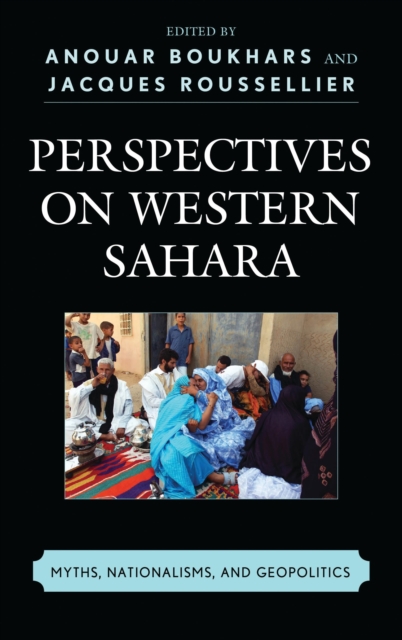
The ongoing conflict in Western Sahara is one of the more intractable legacies of European colonization in North Africa. Following the withdrawal of Spain, this territorial dispute escalated in 1975 into a war of independence between the Sahrawi people of the Polisario Front, who were backed by Algeria, and the states of Mauritania and Morocco. In 1976, the Polisario Front established the Sahrawi Arab Democratic Republic, which was not admitted in the UN but won recognition by a few states. After multiple peace efforts, the conflict reemerged in 2005 as the “independence Intifada.” Today, the Polisario Front controls about 20% of Western Sahara. At the heart of the conflict lie geopolitical interests and incompatible claims aggravated by the use of military force and decades of mostly unproductive diplomatic maneuvers by international bodies and regional or foreign powers. This thorough, impartial survey brings together some of the best experts on the Sahara question to provide a broad-based analysis of the problem, from a range of perspectives. Featuring new research, the chapters examine the roots of the conflict, its dynamics, and potential solutions. This groundbreaking text also addresses questions of law, human rights, natural resources from an analytical point of view. Contributed by scholars from North Africa, Europe, and the U.S., it is an essential contribution to the literature of Middle East and African studies.
eBook

The International Trade Centre
In the era of rapid globalization, the ITC plays a significant and wide ranging role working with both governments and trade support institutions to nurture an export culture, this work will provide a much needed overview of this dynamic organization.
This book:
Details the history of the organization since its inception
Examines its current mandate and the impact of recent reforms
Analyses the ability of the ITC to provide trade intelligence, and its role in the development of national export strategies
Evaluates the future challenges, and emphasises that the ITC must continue to broaden its mandate and continue to be responsive and results orientated to remain a key player
The status of ITC - half-in and half-out of the UN - could prove to be an interesting model for the future, and this work will be of interest to not only to academics but also government trade specialists and negotiators, the \"aid for trade\" donors, NGOs, and those involved in the running of international organizations.
eBook

German Boy
What was the experience of war for a child in bombed and ravaged Germany? In this memoir the voice of innocence is heard.
\"This is great stuff,\" exclaims Stephen E. Ambrose.
\"I love this book.\"
In this gripping account a boy and his mother are wrenched from their tranquil lives to forge a path through the storm of war and the rubble of its aftermath. In the past there has been a spectrum of books and films that share other German World War II experiences. However, told from the perspective of a ten-year-old, this book is rare. The boy and his mother must prevail over hunger and despair, or die.
In the Third Reich young Wolfgang Samuel and his family are content but alone. The father, a Luftwaffe officer, is away fighting the Allies in the West. In 1945 as Berlin and nearby communities crumble, young Wolfgang, his mother Hedy, and little sister Ingrid flee the advancing Russian army. They have no inkling of the chaos ahead. In Strasburg, a small town north of Berlin where they find refuge, Wolfgang begins to comprehend the evils the Nazi regime brought to Germany. As the Reich collapses, mother, son, and daughter flee again just ahead of the Russian charge.
In the chaos of defeat they struggle to find food and shelter. Death stalks the primitive camps that are their temporary havens, and the child becomes the family provider. Under the crushing responsibility Wolfgang becomes his mother's and sister's mainstay. When they return to Strasburg, the Communists in control are as brutal as the Nazis. In the violent atmosphere of arbitrary arrest, rape, hunger, and fear, the boy and his mother persist. Pursued by Communist police through a fierce blizzard, they escape to the West, but even in the English zone, the constant search for food, warmth, and shelter dominates their lives, and the mother's sacrifices become the boy's nightmares.
Although this is a time of deepest despair, Wolfgang hangs on to the thinnest thread of hope. In June 1948 with the arrival of the Americans flying the Berlin Airlift, Wolfgang begins a new journey.
eBook

Seasons of hunger
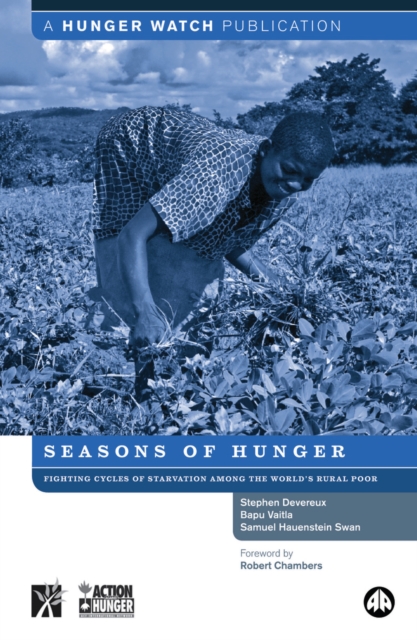
Every year, millions of the rural poor suffer from predictable and preventable seasonal hunger. This hunger is less dramatic but no less damaging than the starvation associated with famines, wars and natural disasters. Seasons of Hunger explores why the world does not react to a crisis that we know will continue year after year.Seasonal hunger is caused by annual cycles of shrinking food stocks, rising prices, and lack of income. This hidden hunger pushes millions of children to the brink of starvation every year, permanently stunting their physical and cognitive development, weakening their immune systems and opening the door for killer diseases. Action Against Hunger argue that ending seasonal hunger could save millions of young lives and is key to achieving the Millennium Development Goals. This book documents seasonal hunger in four countries - India, Malawi, Mali and Myanmar - including personal stories and country-wide data which shows the magnitude of the problem. The authors also find encouraging examples of interventions designed to address seasonality - initiatives led by governments, donors and NGOs, and poor people themselves - and propose a package of advocacy messages that could contribute to the global eradication of seasonal hunger. This book will be a valuable resource for journalists, policy makers, NGO members and students of development studies.
eBook