
Catalogue Search | MBRL


Are you sure you want to remove the book from the shelf?

{{itemTitle}}
2
result(s) for
"Sandel, Michael J. Liberalism and the limits of justice"
Sort by:
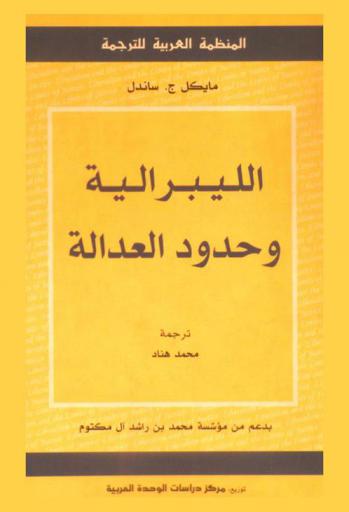
الليبرالية وحدود العدالة
يقدم المجتمع الليبرالي نفسه على أنه لا يسعى إلى فرض نمط وحيد للحياة بل يترك مواطنيه أحرارا إلى أقصى حد ممكن في اختيار القيم التي ترضيهم لذلك نجد أن هذا المجتمع يحتاج إلى مبادئ تتوخى العدالة من دون فرض رؤية مسبقة للحياة الخيرة ومع ذلك هل من الممكن إيجاد مثل هذه المبادئ ؟ وفي حالة الإجابة بالنفي ترى ما هي الآثار المترتبة على ذلك بالنسبة إلى العدالة كمثل أخلاقي وسياسي.
Book

FOR A PRODUCTIVE, JUST AMERICA
THERE are some things money can't buy and other things it tries to buy but shouldn't - elections, for example, or in an earlier day, salvation. But the sale of elections, like the sale of indulgences, usually brings a demand for reform. What is wrong with buying these things? And where else should money's writ not rule? How the good things in life should be distributed is the the subject of [Michael Walzer]'s new book, ''Spheres of Justice,'' which offers an imaginative alternative to the current debate over distributive justice. Mr. Walzer illustrates this point with an argument for greater public provision of medical care, an argument that appeals not to a universal ''right to treatment,'' but instead to the character of contemporary American life and the shared understandings that define it. What the care of souls meant to the medieval Christians, he argues, the cure of bodies means to us. For them, eternity was a socially recognized need - ''hence, a church in every parish, regular services, catechism for the young, compulsory communion, and so on.'' For us, a long and healthy life is a socially recognized need -''hence, doctors and hospitals in every district, regular checkups, health education for the young, compulsory vaccination, and so on.'' Medical care becomes a matter of membership in the society. To be cut off from it is ''not only dangerous but degrading,'' a kind of excommunication. HE uses the history of the word ''vacation'' to show how far we have come from the communal life: ''In Ancient Rome, the days on which there were no religious festivals or public games were called dies vacantes, 'empty days.' The holidays, by contrast, were full - full of obligation but also of celebration, full of things to do, feasting and dancing, rituals and plays. This was when time ripened to produce the social goods of shared solemnity and revelry. Who would give up days like that? But we have lost that sense of fullness; and the days we crave are the empty ones, which we can fill by ourselves as we please.''
Book Review