
Catalogue Search | MBRL


Are you sure you want to remove the book from the shelf?

{{itemTitle}}
1,980
result(s) for
"Sangster, Margaret"
Sort by:

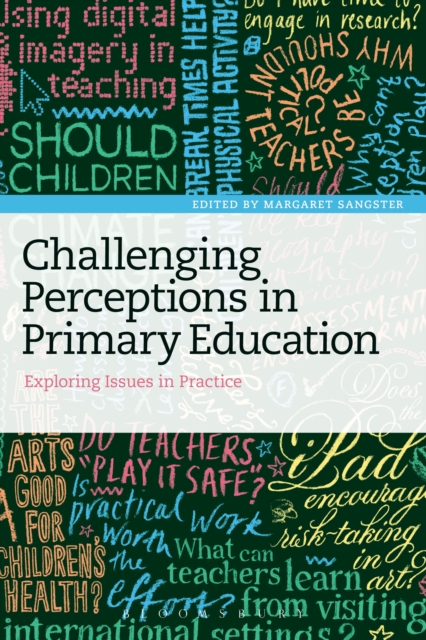
Challenging perceptions in primary education : exploring issues in practice
What are the beliefs that influence your professional practice? Have you ever thought about why you make the decisions you make as a teacher? What influences your teaching style? Beyond the technical skills and knowledge aspects of education, teachers and student teachers face questions which challenge their beliefs and approaches to their teaching and learning. This book contains a series of short articles which not only offer guidance on key topics but encourage the reader to engage in reflecting on their own practice. Questions explored include: - Is learning through practical work worth the effort? - What can we learn from comparisons with education in other countries? - Is there a smarter way to use digital imagery in your teaching? - What's the point of theory? Isn't teaching just a craft?
eBook

Challenging perceptions in primary education : exploring issues in practice
\"What are the beliefs that influence your professional practice? Have you ever thought about why you make the decisions you make as a teacher? What influences your teaching style? Beyond the technical skills and knowledge aspects of education, teachers and student teachers face questions which challenge their beliefs and approaches to their teaching and learning. This book contains a series of short articles which not only offer guidance on key topics but encourage the reader to engage in reflecting on their own practice. Questions explored include: - Is learning through practical work worth the effort? - What can we learn from comparisons with education in other countries? - Is there a smarter way to use digital imagery in your teaching? - What's the point of theory? Isn't teaching just a craft?\"-- Provided by publisher.
Book
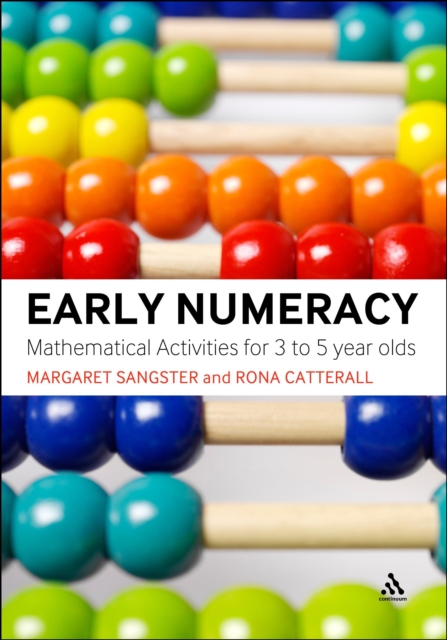
Early Numeracy
This highly practical text provides support for teachers and helps satisfy government guidelines with over 100 activities to introduce mathematical concepts. The resource offers a range of versatile activities and full colour illustrations throughout to help engage the reader and help support best teaching practice.
eBook


An Investigative Approach to Teaching Primary Mathematics
As with much in life the term \"investigative\", when used to describe an approach to teaching and learning, can have many interpretations. Some might consider that the term \"investigations\" is somehow \"mired in the past\", others might consider \"investigations\" to be a \"credo\" that sustains their own mathematics teaching and learning. With contemporary talk of \"curriculum pressure\", the demand for \"results\", and the \"lack of time in the classroom\" default positions and strategies can lose sight of the need for learners to understand. Here the case for an \"investigative approach\" is explained, and illustrated in a way which provides ideas that have the potential to enliven the learning any mathematics classroom.
Journal Article

Developing teacher expertise : exploring key issues in primary practice
\"What are the issues that education raises for you? Beyond the technical skills and knowledge aspects of education, teachers and student teachers face questions which challenge their beliefs and approaches to their teaching and learning. This book contains a series of short articles each of which encourage you to reflect on your own practice and challenge your beliefs about how and what you teach. Questions explored include: When does inclusion become exclusion for the rest of the class? Do interactive whiteboards support or reduce creativity in the classroom? Is drama a luxury in the primary classroom? Should we be teaching other languages to children under seven? Learning outside the classroom, is it worth it? What makes a reflective practitioner? Essential reading for those training to teach children aged between 3 and 11, as well as practicing teachers looking to develop their practice\"-- Provided by publisher.
Book

Reflecting on Pace
The structure of the national numeracy strategy (1999) has ensured that whole-class teaching has become a significant feature of the primary mathematics lesson. It is the section of the lesson where children are introduced to new mathematics and therefore there is a need to make it effective. In this article, the author describes her small-scale research project involving the observation and analysis of 33 student teachers' lessons. Sixteen of these were mathematics lessons. The purpose was to see what factors were involved in engaging pupils in the whole-class teaching section of the lesson and whether there was any sense in the idea of quickening the pace of the lesson. Of the 33 lessons, 13 could have been more effective in terms of children's engagement. Drawing upon an exploratory approach to research, a list of nine main features was drawn up from the observations. Some features were present and some absent in all situations, indicating that success is a complex weave of many skills occurring simultaneously, but the more engaging lessons were found to be where the student teacher addressed more of these features. These nine features are discussed, based on observational data from the research. These are: (1) strong presence/control; (2) quality questioning and \"wait\" time; (3) contribution from the children; (4) appropriate level of difficulty; (5) good timing; (6) well-organised resources; (7) clarity of explanation/expectation; (8) stimulating content; and (9) sufficient content.
Journal Article