
Catalogue Search | MBRL


Are you sure you want to remove the book from the shelf?

{{itemTitle}}
169
result(s) for
"Sassower, Raphael"
Sort by:

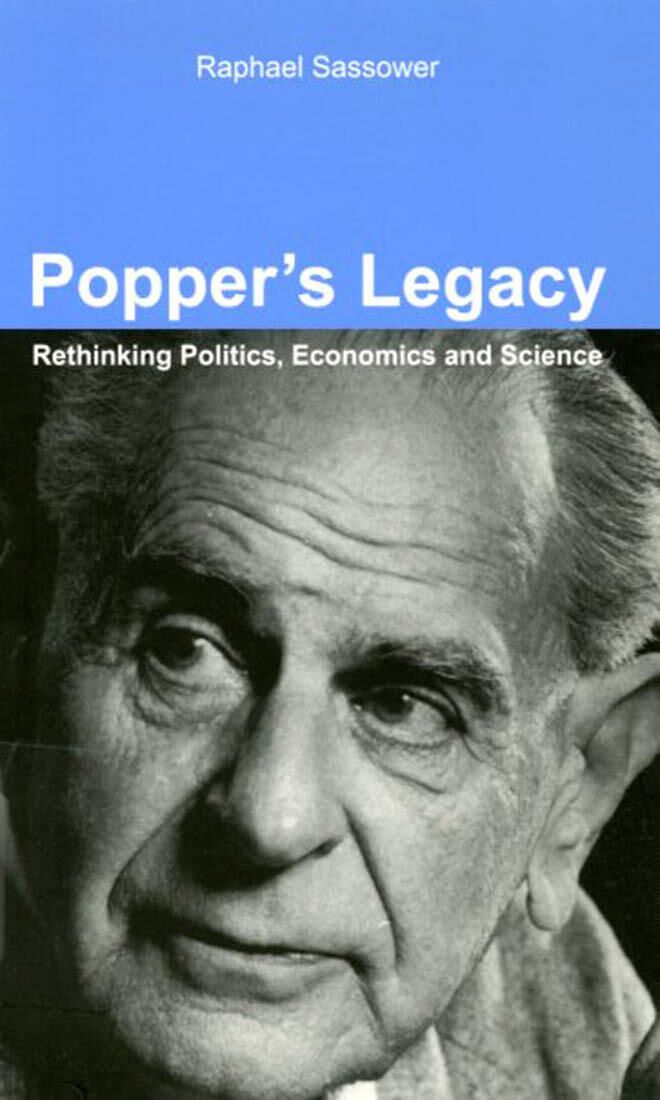
Popper’s Legacy
Karl Popper has had an extraordinary influence on scientific and social thought. Widely regarded as one of the greatest philosophers of science of the twentieth century, he was also a highly influential social and political philosopher, a proponent and defender of the \"open society.\" Popper's Legacy examines all aspects of his work, in particular his moral and psychological insights.
eBook

Compromising the ideals of science
Taking a historical approach, this text examines the conditions under which scientists compromised the ideals of science, with reference to the challenges of profit motives and national security concerns. It also offers suggestions for changing the political and economic conditions under which science is practiced to protect its integrity and its ethos.
Book

Popper's Legacy
The work of Karl Popper has had extraordinary influence across the fields of scientific and social thought. Widely regarded as one of the greatest philosophers of science of the twentieth century, he was also a highly influential social and political philosopher, a proponent and defender of the \"open society\". \"Popper's Legacy\" examines Popper in the round, analysing in particular his moral and psychological insights. Once Popper's scientific legacy is couched in political and moral terms, it becomes apparent that his concern for individual autonomy does not come at the expense of institutional guidelines and social conventions. Instead, these guidelines turn out to be essential sanctions for individual freedom. Popper envisions the conduct of the scientific community as paralleling the conduct of any democratically established community. Critical rationality guides the words and actions of all participants and leadership can be replaced without violence. In presenting a critical overview, \"Popper's Legacy\" reveals the debt many intellectual movements - such as Marxism, feminism, and postmodernism - still owe to Popper.
eBook

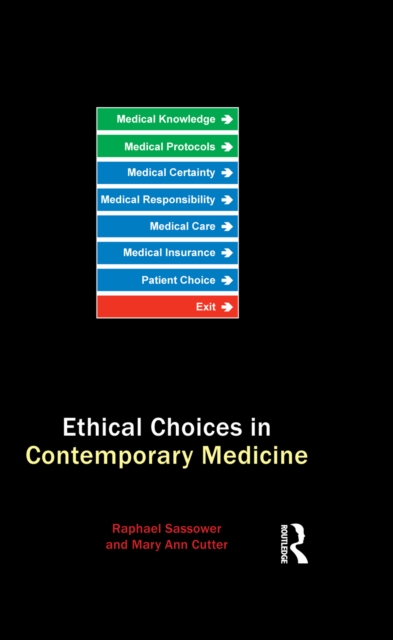
Ethical Choices in Contemporary Medicine
\"Ethical Choices in Contemporary Medicine\" jettisons the standard medical ethics models of \"rights\" language and shows how the bioethical problems that receive attention from the media and the public are related to and are explicable in terms of the epistemological foundations of science and medicine. These epistemological concerns include how medical knowledge is established (scientific validity), how medical protocols are administered (checks and balances), how medical certainty is evaluated (probability) and medical responsibility is framed (personal or collective), and how medical knowledge is transmitted (popular media versus professional journals) and how medical care is allocated (insurance policies and government subsides). The book examines the present predicaments of medicine within a broad cultural context and suggests that rational discourse and parochial ethical dialogue may be futile in the face of competing and incommensurable frameworks and agendas, attitudes and wishes. The authors show that, in the postmodern age, two interrelated issues surface when it comes to medicine. On the one hand, there is a strong critique of science and the privileges associated with the scientific discourse and, on the other, there is still a deep-seated quest for certainty in all medical matters.
Introduction 1. The predicaments of contemporary medicine 2. Medical epistemologies and goals 3. Medical certainty revisited 4. A new ethics of medical practice Bibliography Index
eBook

Narrative Experiments
In Narrative Experiments, Gayle Ormiston and Ralph Sassower bring a refreshing perspective to the domains of inquiry we call “science” and “technology,” asserting that traditional definitions (like classical idealism and materialism) fail to suggest the rich and complex cultural/linguistic interplay occurring between them. This context is not merely a background, nor is Ormiston and Sassower’s just one more interdisciplinary approach to the subject. Instead, their book argues, science, technology, and the humanities developed in concert with one another, and their reciprocity obliterates all traditional disciplinary boundaries. Ormiston and Sassower build their case by devoting a chapter to each of the four themes emerging from the etymological introduction. First, they look at the role fiction and other literary modes play in developing our attitudes toward science and technology -- how the visions of Bacon, Hobbes, Galileo, Rousseau, Mary Shelley, and Orwell evoke both anxiety and hope. Next, they examine a series of eighteenth-century “fictions” -- the Enlightenment texts of Kant, Rousseau, and Hume -- and the elevated (but ambiguous) status science and technology associated with them. The last two chapters evaluate modes of discursive authority and its dissemination -- classical and modern extra-linguistic approaches; the contemporary-linguistic view espoused by Rorty, Quine, and others; and their own avowedly experimental journey through the labyrinths of cultural and linguistic usage.
eBook
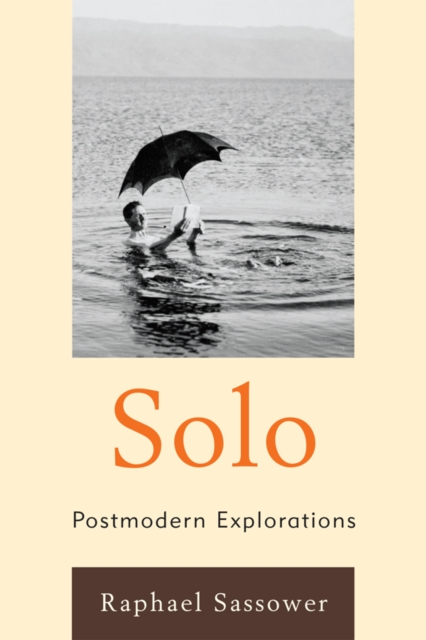
Solo
Solo: Postmodern Explorations provides a postmodern approach to technoscience and economics. Sassower pulls together postmodern motifs and attitudes with his own experience to provide a unique perspective on political history and economics. Solo raises the question of whether it is possible to be an objective observer and what that means for scholarship, especially when it concerns making assessments of other cultures in the developing world. Sassower questions the usefulness of applying external economic measurements on the economic development of these countries.
eBook
