
Catalogue Search | MBRL


Are you sure you want to remove the book from the shelf?

{{itemTitle}}
380
result(s) for
"Saul, Nigel"
Sort by:


The three Richards : Richard I, Richard II and Richard III
The three Richards who ruled England in the Middle Ages were among the most controversial and celebrated of its rulers.Richard I ('Coeur de Lion', 1189-99) was a great crusading hero; Richard II (1377-99) was an authoritarian aesthete deposed by his cousin, Henry IV, and murdered; while Richard III (1483-85), as the murderer of his nephews, '.
eBook


Windsor Castle : a thousand years of a royal palace
\"As England's largest castle and premier royal residence, Windsor Castle is of outstanding importance: historically, architecturally, artistically and in the life of the nation. This authoritative history of the Castle, the first to be published in 100 years, draws upon new research and primary sources to present a general account of Windsor Castle and its immediate environs from around AD700 to the present day, setting this iconic building against the background of wider social, political and cultural events in the life of the monarchy and the nation. Not only is the book richly illustrated with historical drawings, watercolours and photographs from the Royal Collection and elsewhere, it also includes newly commissioned photography and 3D reconstructions of the Castle at key points in its development, showing how this historic site has changed and evolved over 13 centuries\"-- Provided by publisher.
Book

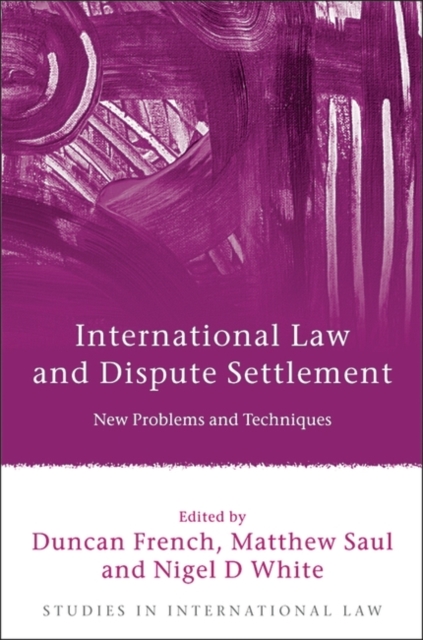
International Law and Dispute Settlement
International dispute settlement plays a fundamental role in maintaining the fabric of the international legal order, reflecting the desire of States, and increasingly non-State actors, to resolve their differences through international dispute procedures and other legal mechanisms. This edited collection focuses upon the growth and complexity of such legal methods, which includes judicial settlement (courts and tribunals), arbitration and other legal (or what might be termed 'extra-legal') means (international organisations, committees, inspection panels, and ombudsmen). In this important collection, such mechanisms are compared and evaluated side-by-side to provide, in one volume, a detailed and analytical account of the current framework. Ranging from key conceptual issues of proliferation of legal mechanisms and the associated risks of fragmentation through to innovations in dispute settlement mechanisms in many topical areas of international law, including international trade law, collective security law and regional law, this collection, written by leading international lawyers, provides a major study in the ongoing trends and emerging problems in this crucial area of international law. This edited collection is published to mark the retirement of Professor John Merrills, Emeritus Professor of International Law, University of Sheffield, who has written widely on international law and human rights law, but is probably best known for his work on the settlement of international disputes, evidenced by the enduring appeal of his leading text International Dispute Settlement, now in its fourth edition.
eBook
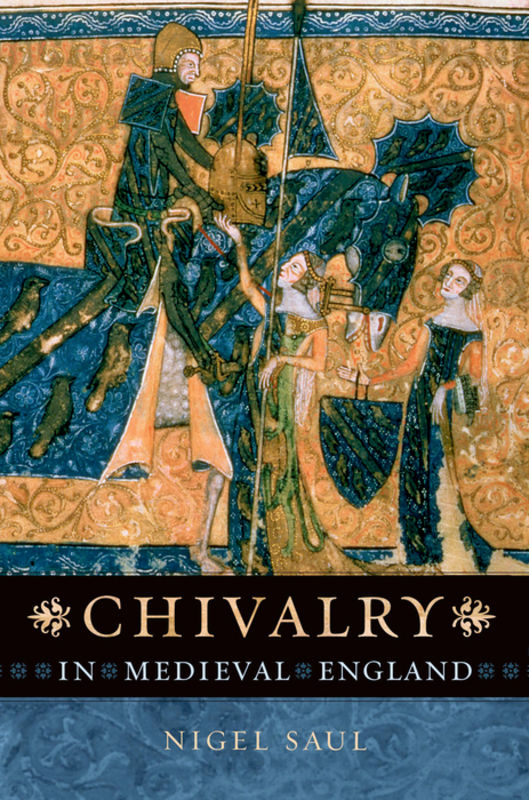
Chivalry in Medieval England
Popular views of medieval chivalry—knights in shining armor, fair ladies, banners fluttering from battlements—were inherited from the nineteenth-century Romantics. This is the first book to explore chivalry’s place within a wider history of medieval England, from the Norman Conquest to the aftermath of Henry VII’s triumph in the Wars of the Roses.
eBook

Out and About in Runnymede
At the Windsor end, the great eye-catching feature is the Long Walk, a dead-straight avenue running north-south for two miles from the Upper Ward of the castle to Snow Hill, the highest point, laid out by Charles Us architect, Hugh May. The land to the east of Windsor Forest in the Middle Ages was all part of the estates of Chertsey Abbey, an ancient Benedictine foundation, whose monks did much to shape the landscape and economy of this part of the Thames Valley.\\n In the nineteenth century it had been used for race meetings, which were notorious for attracting pickpockets and ne'er-dowells.
Journal Article
editorial
In a year rich in anniversaries - not only, and most obviously, the anniversaries associated with the First World War, but also those of Agincourt and Waterloo - the eight-hundredth anniversary of the making of Magna Carta at Runnymede in 1215 stands out as a major historical landmark. The great charter of liberties which King John granted to his subjects in June that year is widely regarded as the foundation of the rule of law in England and a model and inspiration for the many later documents which were to guarantee freedom under the law, chief among them the Bill of Rights of 1689 and the American Bill of Rights of 1791.
Journal Article