
Catalogue Search | MBRL


Are you sure you want to remove the book from the shelf?

{{itemTitle}}
1,250
result(s) for
"Saxena, N."
Sort by:

LKB1 is required for adiponectin-mediated modulation of AMPK–S6K axis and inhibition of migration and invasion of breast cancer cells
Adiponectin is widely known as an adipocytokine with therapeutic potential for its markedly protective function in the pathogenesis of obesity-related disorders, metabolic syndrome, systemic insulin resistance, cardiovascular disease and more recently carcinogenesis. In the present study, we show that adiponectin inhibits adhesion, invasion and migration of breast cancer cells. Further analysis of the underlying molecular mechanisms revealed that adiponectin treatment increased AMP-activated protein kinase (AMPK) phosphorylation and activity as evident by increased phosphorylation of downstream target of AMPK, acetyl-coenzyme A carboxylase and inhibition of p70S6 kinase (S6K). Intriguingly, we discovered that adiponectin treatment increases the expression of tumor suppressor gene
LKB1
in breast cancer cells. Overexpression of LKB1 in breast cancer cells further increased adiponectin-mediated phosphorylation of AMPK. Using isogenic LKB1 knockdown cell line pair, we found that LKB1 is required for adiponectin-mediated modulation of AMPK–S6K axis and more importantly, inhibition of adhesion, migration and invasion of breast cancer cells. Taken together these data present a novel mechanism involving specific upregulation of tumor suppressor gene
LKB1
by which adiponectin inhibits adhesion, invasion and migration of breast cancer cells. Our findings indicate the possibility of using adiponectin analogues to inhibit invasion and migration of breast cancer cells.
Journal Article
Activation of tumor suppressor LKB1 by honokiol abrogates cancer stem-like phenotype in breast cancer via inhibition of oncogenic Stat3
Tumor suppressor and upstream master kinase Liver kinase B1 (LKB1) plays a significant role in suppressing cancer growth and metastatic progression. We show that low-LKB1 expression significantly correlates with poor survival outcome in breast cancer. In line with this observation, loss-of-LKB1 rendered breast cancer cells highly migratory and invasive, attaining cancer stem cell-like phenotype. Accordingly, LKB1-null breast cancer cells exhibited an increased ability to form mammospheres and elevated expression of pluripotency-factors (Oct4, Nanog and Sox2), properties also observed in spontaneous tumors in Lkb1
−/−
mice. Conversely, LKB1-overexpression in LKB1-null cells abrogated invasion, migration and mammosphere-formation. Honokiol (HNK), a bioactive molecule from
Magnolia grandiflora
increased LKB1 expression, inhibited individual cell-motility and abrogated the stem-like phenotype of breast cancer cells by reducing the formation of mammosphere, expression of pluripotency-factors and aldehyde dehydrogenase activity. LKB1, and its substrate, AMP-dependent protein kinase (AMPK) are important for HNK-mediated inhibition of pluripotency factors since LKB1-silencing and AMPK-inhibition abrogated, while LKB1-overexpression and AMPK-activation potentiated HNK’s effects. Mechanistic studies showed that HNK inhibited Stat3-phosphorylation/activation in an LKB1-dependent manner, preventing its recruitment to canonical binding-sites in the promoters of Nanog, Oct4 and Sox2. Thus, inhibition of the coactivation-function of Stat3 resulted in suppression of expression of pluripotency factors. Further, we showed that HNK inhibited breast tumorigenesis in mice in an LKB1-dependent manner. Molecular analyses of HNK-treated xenografts corroborated our
in vitro
mechanistic findings. Collectively, these results present the first
in vitro
and
in vivo
evidence to support crosstalk between LKB1, Stat3 and pluripotency factors in breast cancer and effective anticancer modulation of this axis with HNK treatment.
Journal Article

Vogel–Fulcher–Tammann approach for the determination of fragility of polyisoprene (cis & trans) blend by activation energy: effect of fillers (aluminum and polyaniline)
Samples of a polyisoprene (cis & trans) blend (25/75 vol.% CPI/TPI) with fillers (polyaniline and aluminum) at different weight percentages (0.1, 1 & 5) were prepared using a solution casting method in order to find their applicability in transdermal therapeutic systems. Structural characterization of these samples was done using X-ray diffraction. Tensile strength and viscosity of the prepared samples were determined from the stress–strain behavior and moduli, measured by a dynamic mechanical analyzer. Using derivative curves of viscosity, the glass transition temperature was determined. Activation energy and fragility were obtained from the non-Arrhenius behavior of the viscosity using Vogel–Fulcher–Tammann equation. The activation energy, fragility and tensile strength showed that incorporation of both or either fillers in the CPI/TPI blend decreased the activation energy and fragility but increased the tensile strength at all concentrations of either fillers, excluding 5wt% of polyaniline. Correlations of cross-link density and crystallinity with the increase and decrease of the various properties were established.
Journal Article

Direct simulation of pore-scale two-phase visco-capillary flow on large digital rock images using a phase-field lattice Boltzmann method on general-purpose graphics processing units
We describe the underlying mathematics, validation, and applications of a novel Helmholtz free-energy—minimizing phase-field model solved within the framework of the lattice Boltzmann method (LBM) for efficiently simulating two-phase pore-scale flow directly on large 3D images of real rocks obtained from micro-computed tomography (micro-CT) scanning. The code implementation of the technique, coined as the eLBM (energy-based LBM), is performed in CUDA programming language to take maximum advantage of accelerated computing by use of multinode general-purpose graphics processing units (GPGPUs). eLBM’s momentum-balance solver is based on the multiple-relaxation-time (MRT) model. The Boltzmann equation is discretized in space, velocity (momentum), and time coordinates using a 3D 19-velocity grid (D3Q19 scheme), which provides the best compromise between accuracy and computational efficiency. The benefits of the MRT model over the conventional single-relaxation-time Bhatnagar-Gross-Krook (BGK) model are (I) enhanced numerical stability, (II) independent bulk and shear viscosities, and (III) viscosity-independent, nonslip boundary conditions. The drawback of the MRT model is that it is slightly more computationally demanding compared to the BGK model. This minor hurdle is easily overcome through a GPGPU implementation of the MRT model for eLBM. eLBM is, to our knowledge, the first industrial grade–distributed parallel implementation of an energy-based LBM taking advantage of multiple GPGPU nodes. The Cahn-Hilliard equation that governs the order-parameter distribution is fully integrated into the LBM framework that accelerates the pore-scale simulation on real systems significantly. While individual components of the eLBM simulator can be separately found in various references, our novel contributions are (1) integrating all computational and high-performance computing components together into a unified implementation and (2) providing comprehensive and definitive quantitative validation results with eLBM in terms of robustness and accuracy for a variety of flow domains including various types of real rock images. We successfully validate and apply the eLBM on several transient two-phase flow problems of gradually increasing complexity. Investigated problems include the following: (1) snap-off in constricted capillary tubes; (2) Haines jumps on a micromodel (during drainage), Ketton limestone image, and Fontainebleau and Castlegate sandstone images (during drainage and subsequent imbibition); and (3) capillary desaturation simulations on a Berea sandstone image including a comparison of numerically computed residual non-wetting-phase saturations (as a function of the capillary number) to data reported in the literature. Extensive physical validation tests and applications on large 3D rock images demonstrate the reliability, robustness, and efficacy of the eLBM as a direct visco-capillary pore-scale two-phase flow simulator for digital rock physics workflows.
Journal Article

Diarrhea after kidney transplantation: A study of risk factors and outcomes
Background: Diarrhea in kidney transplant recipients (KTRs) can be associated with significant morbidity.
Material and Methods: We evaluated 198 KTRs for a history of diarrhea post-kidney transplant at a tertiary care center in western India over 1 year. A protocol-based evaluation of diarrhea was done with respect to clinical features, diagnostic evaluation, associated acute allograft dysfunction, and its impact on long-term allograft function. Primary outcomes of interest were: chronic allograft injury (CAI) and the need for mycophenolate mofetil (MMF) withdrawal. We also assessed the effect of MMF withdrawal on the risk of the development of CAI.
Results: Eighty-five of 198 (42.5%) recipients experienced diarrhea and a total of 140 diarrheal episodes were evaluated. The mean age of these 85 recipients was 38 ± 12 years and 72 (84.7%) were males. 73 of 85 recipients were on MMF at the time of diarrhea and in 35 (48%) of them MMF withdrawal was needed for chronic and persistent symptoms. Diarrhea was attributed to infective etiologies in 90 of 140 (64.2%) cases. Among the microbiologically confirmed infective diarrheal episodes, giardia and cryptosporidium were the common pathogens in 11/28 (39%) and 6/28 (21.4%) episodes respectively. One hundred and twenty-eight episodes out of 140 (91.4%) episodes were complicated by acute allograft dysfunction. Forty-one of 85 recipients (48.2%) developed chronic allograft injury and 12 (14.1%) developed allograft rejection (acute and/or chronic). Probability of chronic allograft injury was higher in those with MMF withdrawal.
Conclusion: Diarrhea post-kidney transplant adversely affects graft function, especially after MMF withdrawal.
Journal Article

Characterization and Probiotic Assessment of Lactobacillus Isolates from Saurashtra, Gujarat, India
The Saurashtra region in Gujarat, India has a population that relies on traditional fermented foods and is believed to contain beneficial microbes. However, the effectiveness of probiotic bacteria may vary depending on the individual gut microbiota and dietary habits. Therefore, there is a need to explore native microorganisms with abundant probiotic potential. The isolated bacteria demonstrated resilience against bile salts, intestinal and stomach juices, and pH levels of 2.0–3.0. Exopolysaccharide synthesis ranged from 700 to 900 mg/L.
Lacticaseibacillus
rhamnosus
NHC4 (PP893081) presented cell counts at pH 2.0 (5.15 log CFU/mL) and pH 3.0 (5.87 log CFU/mL), whereas
Lacticaseibacillus
paracasei
NSD4 (PP911495) presented cell counts at pH 2.0 (5.53 log CFU/mL) and pH 3.0 (6.77 log CFU/mL).
L. paracasei
NSD4 displayed auto-aggregation of 84.4% and cell surface hydrophobicity of 70.27%. The antibacterial activity and coaggregation efficacy against
Salmonella enterica, Escherichia coli, Staphylococcus aureus,
and
Bacillus subtilis
were also examined. These native
Lactobacillus
isolates exhibit high probiotic potential, making them ideal for creating modern fermented foods rich in probiotic properties and efficacy.
Journal Article
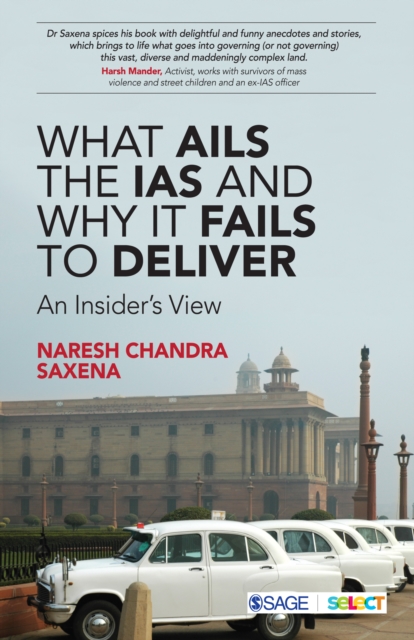
What ails the IAS and why it fails to deliver : an insider's view
An unorthodox and maverick administrator, the author worked in top policy positions, but the system rejected the reforms that he advocated. In his career he followed the economic philosophy of 'socialism for the poor and free market for the rich'. However, the political and administrative system in India seemed to believe in 'indifference to the poor and control over the rich to facilitate rent seeking'. The book is full of anecdotes ranging from how the author resisted political corruption that led to the Prime Minister's annoyance to a situation when the author himself 'bribed' the Chief Minister to scrap oppressive laws against tribal women. As Joint Secretary, Minorities Commission, the author exposed the communal bias of the district administration in handling riots in Meerut; he was punished for bringing to light the killing of innocent Muslim women and children by the police. When Bihar became a 'failed state' during the Lalu Prasad Yadav era of 1990-2005, the author did not hesitate in rebuking the Chief Secretary who was his senior in service, and accused IAS officials in Bihar of behaving like English-speaking politicians. Despite their high integrity, hard work and competence, IAS officials do not exercise sufficient control over the field staff who collude with the junior staff in reporting false figures on hunger deaths, malnutrition and usage of toilets, leading to erosion of accountability. Not only do many welfare programmes such as NREGA, ICDS and PDS have design flaws, governance in India at the state and district levels is also quite weak, manifesting itself in poor service delivery, uncaring administration, corruption, and uncoordinated and wasteful public expenditure.Analysing the present Indian situation, the book suggests policy changes in all cross-cutting systemic issues such as the role of politicians, tenure, size and nature of Indian bureaucracy, accountability, monitoring of programmes and civil service reforms, which will transform individual competencies of IAS officers into better collective outcomes.
eBook

Comparison of oropharyngeal leak pressure of LMA Protector and LMA-ProSeal in different head and neck positions in anaesthetized and paralyzed patients; A prospective randomized study
ABSTRACT
Background and Aims:
Oropharyngeal leak pressure (OLP) of LMA Protector is reported to be higher compared to other second generation supraglottic devices (SGDs) indicating better seal with patient's airway and hence enhanced safety. To ascertain its benefit in patients undergoing surgeries where head and neck position other than neutral is required, we conducted a prospective randomized study to compare OLP of LMA Protector with LMA-ProSeal (PLMA) with head and neck in neutral, extension, flexion, and rotation position.
Methods:
80 American Society of Anesthesiologists (ASA) I-II patients aged more than 18 years undergoing elective surgery under general anaesthesia were recruited. Patients were randomized in the LMA Protector or PLMA group. After induction of anaesthesia, OLP was measured in both the groups in different head and neck position. The insertion characteristics of both SGDs were also recorded and compared.
Results:
The OLP of LMA Protector and PLMA was found to be comparable in neutral head position (p = 0.08). There was no significant difference in OLP of both devices in extension, flexion, or head rotation. In both the study groups, head extension position led to significant decrease in OLP compared to supine position. With the flexion and rotation positioning of head and neck, significant increase in OLP in each group was noted.
Conclusion:
The OLP of LMA Protector and PLMA are comparable in different head and neck position. With both the devices, there was significant decrease in OLP with extension whereas significant increase was noted in flexion and rotation of head and neck.
Journal Article

Phase 2 randomised placebo-controlled trial of spironolactone and dexamethasone versus dexamethasone in COVID-19 hospitalised patients in Delhi
Background
In this phase 2 randomised placebo-controlled clinical trial in patients with COVID-19, we hypothesised that blocking mineralocorticoid receptors using a combination of dexamethasone to suppress cortisol secretion and spironolactone is safe and may reduce illness severity.
Methods
Hospitalised patients with confirmed COVID-19 were randomly allocated to low dose oral spironolactone (50 mg day 1, then 25 mg once daily for 21 days) or standard of care in a 2:1 ratio. Both groups received dexamethasone 6 mg daily for 10 days. Group allocation was blinded to the patient and research team. Primary outcomes were time to recovery, defined as the number of days until patients achieved WHO Ordinal Scale (OS) category ≤ 3, and the effect of spironolactone on aldosterone, D-dimer, angiotensin II and Von Willebrand Factor (VWF).
Results
One hundred twenty patients with PCR confirmed COVID were recruited in Delhi from 01 February to 30 April 2021. 74 were randomly assigned to spironolactone and dexamethasone (SpiroDex), and 46 to dexamethasone alone (Dex). There was no significant difference in the time to recovery between SpiroDex and Dex groups (SpiroDex median 4.5 days, Dex median 5.5 days,
p
= 0.055). SpiroDex patients had significantly lower D-dimer levels on days 4 and 7 (day 7 mean D-dimer: SpiroDex 1.15 µg/mL, Dex 3.15 µg/mL,
p
= 0.0004) and aldosterone at day 7 (SpiroDex 6.8 ng/dL, Dex 14.52 ng/dL,
p
= 0.0075). There was no difference in VWF or angiotensin II levels between groups. For secondary outcomes, SpiroDex patients had a significantly greater number of oxygen free days and reached oxygen freedom sooner than the Dex group. Cough scores were no different during the acute illness, however the SpiroDex group had lower scores at day 28. There was no difference in corticosteroid levels between groups. There was no increase in adverse events in patients receiving SpiroDex.
Conclusion
Low dose oral spironolactone in addition to dexamethasone was safe and reduced D-dimer and aldosterone. Time to recovery was not significantly reduced. Phase 3 randomised controlled trials with spironolactone and dexamethasone should be considered.
Trial registration
The trial was registered on the Clinical Trials Registry of India TRI: CTRI/2021/03/031721, reference: REF/2021/03/041472. Registered on 04/03/2021.
Journal Article
Comparison of gum elastic bougie-guided insertion of LMA ProtectorTM versus the conventional method in achieving oesophagal patency - A randomised comparative study
Background and Aims:
The passage of a Ryle's tube through the drain port on the laryngeal mask airway (LMA) ProtectorTM has been reported to be arduous despite the larger gastric channel. There are no studies on the evaluation of the guided insertion of LMA ProtectorTM to achieve adequate gastrointestinal drainage function.
Methods:
This randomised study included 132 patients who underwent surgery under general anaesthesia. The gum elastic bougie (GEB)-guided insertion of LMA ProtectorTM (group I) was compared with the conventional method (group II), and the alignment of the tip of the drain tube with the oesophagus was assessed. The insertion characteristics of the device, accuracy of LMA ProtectorTM placement, haemodynamic parameters, and post-operative airway morbidity following the insertion of the device were also compared between the two groups.
Results:
The first-attempt success rate for the placement of LMA ProtectorTM and the patency of oesophagus was higher in group I patients than in group II (100% vs 84.8%; P < 0.001). However, the time taken for device insertion and associated haemodynamic changes were significantly longer in group I. The patients in group I had better visualisation of laryngeal structures. The GEB-assisted insertion of LMA ProtectorTM resulted in less incidence of blood staining at the cuff of the device.
Conclusion:
GEB-guided insertion of LMA ProtectorTM achieved better oesophageal patency than the conventional insertion method. This method also had higher first-attempt success at the placement of the device and was observed to be less traumatic.
Journal Article