
Catalogue Search | MBRL


Are you sure you want to remove the book from the shelf?

{{itemTitle}}
3
result(s) for
"Schaffer, Kay, 1945-"
Sort by:

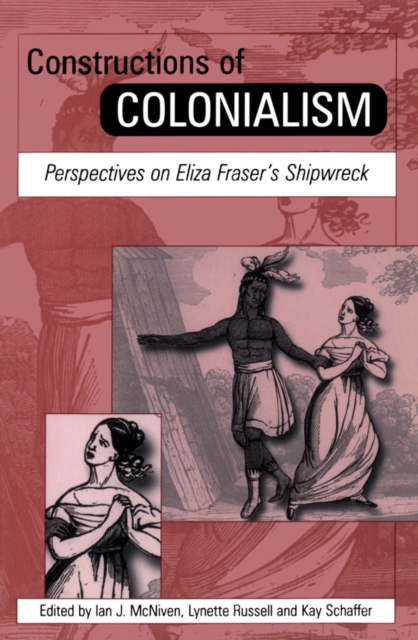
Constructions of colonialism : perspectives on Eliza Fraser's shipwreck
One of the most famous shipwreck sagas of the 19th century took place on the tropical coast of north-east Australia. In 1836 the Stirling Castle was wrecked off the Queensland coast and many of the crew, together with the captain's wife, Eliza Fraser, were marooned on Fraser Island. Early sensationalized accounts represent Mrs Fraser as an innocent white victim of colonialism and her Aboriginal captors as barbarous savages. These \"first contact\" narratives of the white woman and her Aboriginal \"captors\" impacted significantly on England and the politics of Empire at an early stage in Australia's colonial history. The text critically examines the Eliza Fraser episode by bringing together an interdisciplinary team of authors, artists, members of the Fraser Island Aboriginal community and academics in the areas of cultural and women's studies, literature, history, anthropology, archaeology, the visual and creative arts.;This book Essays include feminist analyses of the incident, investigations of textual and visual representations of Aboriginal people, and considerations of the role played by Elisa Fraser as creative inspiration for the arts. The text explores the constructions of Empire, colonialism, identity, femininity, savagery, otherness, captivity and survival.
eBook

Decolonizing the landscape : indigenous cultures in Australia
How does one read across cultural boundaries? The multitude of creative texts, performance practices, and artworks produced by Indigenous writers and artists in contemporary Australia calls upon Anglo-European academic readers, viewers, and critics to respond to this critical question. Contributors address a plethora of creative works by Indigenous writers, poets, playwrights, filmmakers, and painters, including Richard Frankland, Lionel Fogarty, Lin Onus, Kim Scott, Sam Watson, and Alexis Wright, as well as Durrudiya song cycles and works by Western Desert artists. The complexity of these creative works transcends categorical boundaries of Western art, aesthetics, and literature, demanding new processes of reading and response. Other contributors address works by non-Indigenous writers and filmmakers such as Stephen Muecke, Katrina Schlunke, Margaret Somerville, and Jeni Thornley, all of whom actively engage in questioning their complicity with the past in order to challenge Western modes of knowledge and understanding and to enter into a more self-critical and authentically ethical dialogue with the Other. In probing the limitations of Anglo-European knowledge-systems, essays in this volume lay the groundwork for entering into a more authentic dialogue with Indigenous writers and critics.
eBook