
Catalogue Search | MBRL


Are you sure you want to remove the book from the shelf?

{{itemTitle}}
75
result(s) for
"Scheipers, Sibylle"
Sort by:


Do not despair at your fate
Carl von Clausewitz's time in French captivity is well documented, but has never been studied in its own right. However, it is both fascinating and relevant, as Clausewitz's experience of captivity took place against the backdrop of the nationalization of war and the concomitant politicization of prisoners in war. Clausewitz framed his observations by contrasting the 'French' and the 'German' national characters. While Germany as a political identity ceased to play a role for Clausewitz after his return to Prussia, he held on to his characterization of the French as a politically backward society and, ultimately, as an empire in decline.
Journal Article

Strachan on Clausewitz
This article provides an appraisal of Hew Strachan's impact on Clausewitz research since the early 2000s. It highlights that owing to the complexity of Clausewitz's oeuvre and its publication history, scholarship on Clausewitz has to live up to demanding standards in order to be compelling. Strachan's research on Clausewitz provides not only a revisionist reinterpretation that usher our understanding of the Prussian general into the post-Cold War era. It also sets out the relevant standards and exemplifies how particular challenges can be overcome. Conversely, Strachan has also used his understanding of Clausewitz as a framework to sketch an understanding of strategic studies as an interdisciplinary field that is founded in history and that takes Clausewitz's trinity as a starting point for a more meaningful debate on civil-military relations.
Journal Article

Unlawful combatants : a genealogy of the irregular fighter
The book investigates the emergence and the development of irregular fighters, such as guerrillas, rebels, insurgents, and terrorists throughout the history of modern war. It presents a historically based critique of the twenty-first century notion of the irregular fighter as an 'unlawful combatant'.
Book
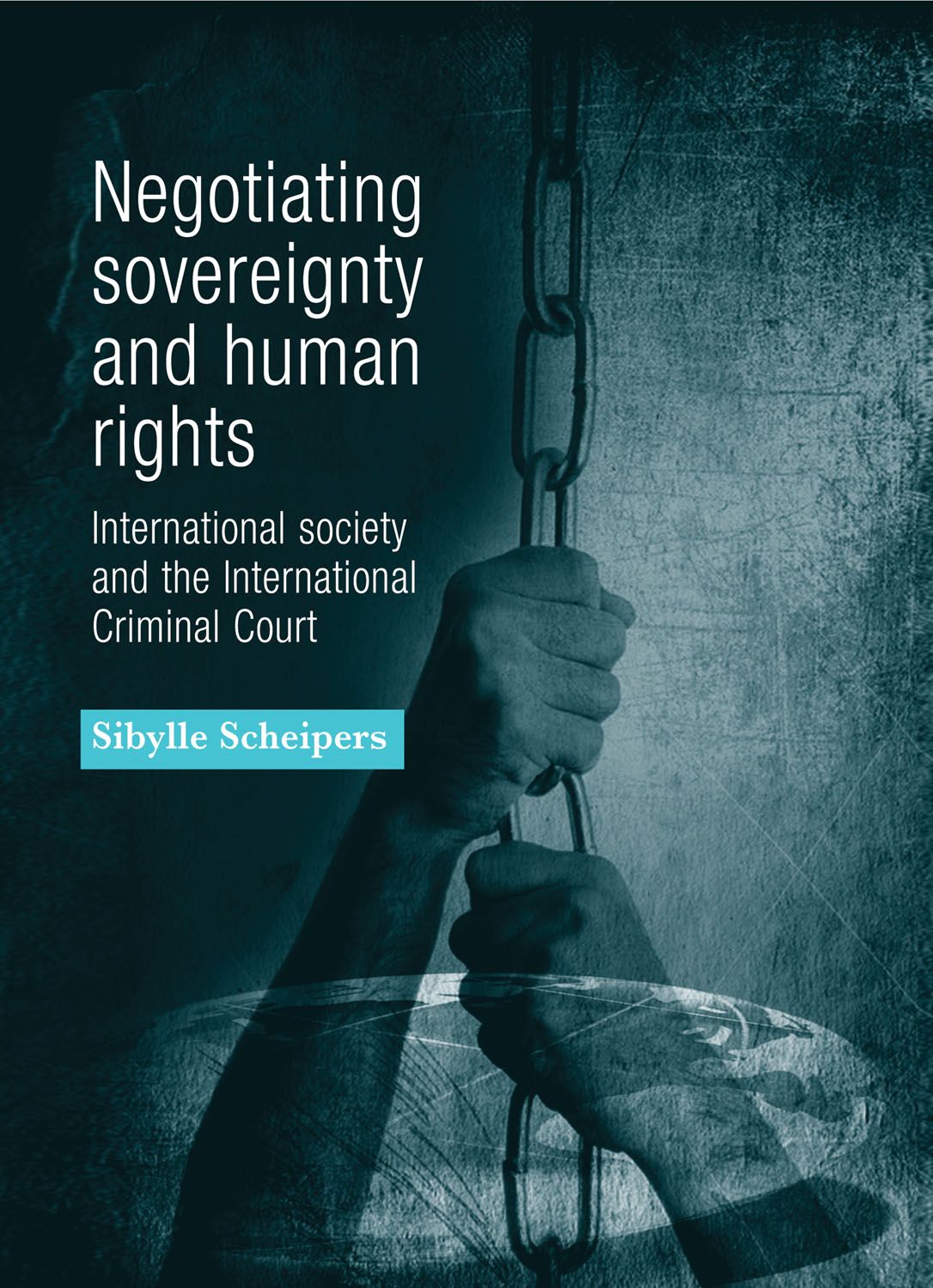
Negotiating sovereignty and human rights
Negotiating sovereignty and human rights takes the transatlantic conflict over the International Criminal Court as a lens for an enquiry into the normative foundations of international society. The author shows how the way in which actors refer to core norms of the international society such as sovereignty and human rights affect the process and outcome of international negotiations.The book offers an innovative take on the long-standing debate over sovereignty and human rights in international relations. It goes beyond the simple and sometimes ideological duality of sovereignty versus human rights by showing that sovereignty and human rights are not competing principles in international relations, as is often argued, but complement each other. The way in which the two norms and their relationship are understood lies at the core of actors’ broader visions of world order. The author shows how competing interpretations of sovereignty and human rights and the different visions of world order that they imply fed into the transatlantic debate over the ICC and transformed this debate into a conflict over the normative foundations of international society.
eBook


Irregular Auxiliaries after 1945
Collaboration with native auxiliaries in wars in the peripheries of the international system is an age-old practice, the relevance of which is likely to increase in the twenty-first century. Yet, the parameters of such collaboration are understudied. This article aims to contribute to the nascent yet fragmentary scholarship on the use of native auxiliaries. It identifies three intellectual templates of the collaboration between Western regular forces and native auxiliaries: the eighteenth-century model of auxiliary 'partisans' as tactical complements to regular armed forces; the nineteenth-century transformation of the 'partisan' into the irregular guerrilla fighter and the concomitant rise of the 'martial races' discourse; and, finally, the post-1945 model of the loyalist auxiliary as a symbol of the political legitimacy of the counter-insurgent side in wars of decolonisation and post-colonial insurgencies. The article focuses on the rise of loyalism after 1945 in particular, a phenomenon that it seeks to understand within the broader context of irregular warfare and the moral reappraisal of irregular fighters after the Second World War.
Journal Article


‘The most beautiful of wars’: Carl von Clausewitz and small wars
Carl von Clausewitz was both an avid analyst of small wars and people’s war and, during the wars of liberation, a practitioner of small war. While Clausewitz scholars have increasingly recognised the centrality of small wars for Clausewitz’s thought, the sources and inspirations of his writings on small wars have remained understudied. This article contextualises Clausewitz’s thought on small wars and people’s war in the tradition of German philosophical and aesthetic discourses around 1800. It shows how Clausewitz developed core concepts such as the integration of passion and reason and the idea of war in its ‘absolute perfection’ as a regulative ideal in the framework of his works on small wars and people’s war. Contextualising Clausewitz inevitably distances him from the twenty-first-century strategic context, but, as this article shows, it can help us to ask pertinent questions about the configuration of society, the armed forces and the government in today’s Western states.
Journal Article