
Catalogue Search | MBRL


Are you sure you want to remove the book from the shelf?

{{itemTitle}}
147
result(s) for
"Schiffer, Michael B"
Sort by:


Archaeology's Footprints in the Modern World
What is the social value of archaeological research to present-day society? Michael Schiffer answers this question with forty-two case studies from a global perspective to demonstrate archaeology’s diverse scientific and humanistic contributions. Drawing on nearly five decades of research, he delivers fascinating yet nontechnical discussions that provide a deeper understanding of what archaeologists do and why they do it.
From reconstructing human evolution and behavior in prehistoric times to providing evidence that complements recorded history or debunks common legends, archaeologists help us understand our human past. They have also played crucial roles in developing techniques essential for the investigation of climate change along with tools for environmental reconstruction. Working for cities, tribes, and federal agencies, archaeologists manage cultural resources and testify in court. In forensic contexts, archaeological expertise enables the gathering of critical evidence. With engaging and lively prose,
Archaeology’s Footprints brings to life a full panorama of contributions that have had an impact on modern society.
eBook
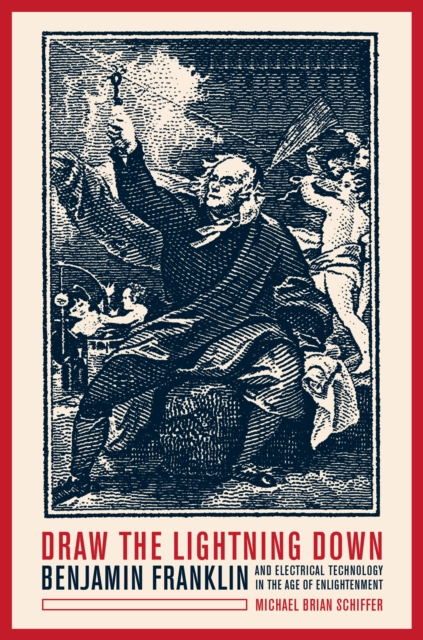
Draw the lightning down : Benjamin Franklin and electrical technology in the age of Enlightenment
Most of us know--at least we've heard--that Benjamin Franklin conducted some kind of electrical experiment with a kite. What few of us realize--and what this book makes powerfully clear--is that Franklin played a major role in laying the foundations of modern electrical science and technology. This fast-paced book, rich with historical details and anecdotes, brings to life Franklin, the large international network of scientists and inventors in which he played a key role, and their amazing inventions. We learn what these early electrical devices--from lights and motors to musical and medical instruments--looked like, how they worked, and what their utilitarian and symbolic meanings were for those who invented and used them. Against the fascinating panorama of life in the eighteenth century, Michael Brian Schiffer tells the story of the very beginnings of our modern electrical world. The earliest electrical technologies were conceived in the laboratory apparatus of physicists; because of their surprising and diverse effects, however, these technologies rapidly made their way into many other communities and activities. Schiffer conducts us from community to community, showing how these technologies worked as they were put to use in public lectures, revolutionary experiments in chemistry and biology, and medical therapy. This story brings to light the arcane and long-forgotten inventions that made way for many modern technologies--including lightning rods (Franklin's invention), cardiac stimulation, xerography, and the internal combustion engine--and richly conveys the complex relationships among science, technology, and culture.
eBook

Studying technological change : a behavioral approach
Studying Technological Change synthesizes nearly four decades of research by Michael Brian Schiffer, a cofounder of the field of behavioral archaeology. This new book asks historical and scientific questions about the interaction of people with artifacts during all times and in all places. The book is not about the history or prehistory of technology, nor is it a catalog of methods and techniques for inferring how specific technologies were made or used. Rather, it supplies conceptual tools that can be used to help craft an explanation of any technological change in any society.
The behavioral approach leads to new questions, creative research employing diverse lines of evidence, and, often, counterintuitive explanations. In behavioral archaeology, one never loses sight of the materiality of human behavior. Needless to say, advocates of other research approaches will find much in this book to dispute. But critics cannot gainsay the productivity of the behavioral approach nor the fact that it has furnished fresh insights into episodes of technological change.
eBook
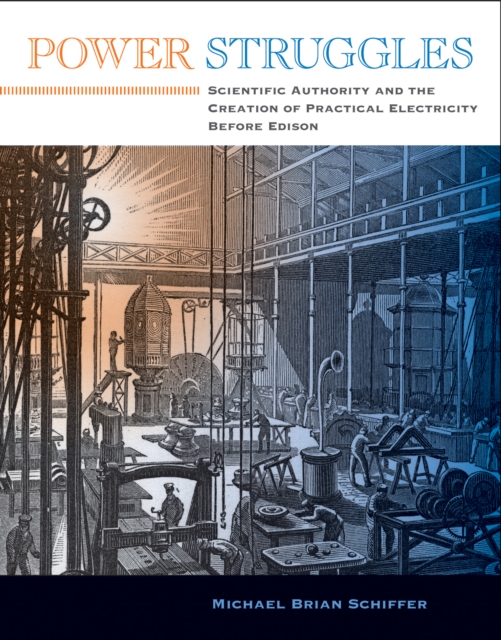
Power Struggles
In 1882, Thomas Edison and his Edison Electric Light Company unveiled the first large-scale electrical system in the world to light a stretch of offices in a city. This was a monumental achievement, but it was not the beginning of the electrical age. The first electric generators were built in the 1830s, the earliest commercial lighting systems before 1860, and the first commercial application of generator-powered lights (in lighthouses) in the early 1860s. In Power Struggles, Michael Brian Schiffer examines some of these earlier efforts, both successful and unsuccessful, that paved the way for Edison. After laying out a unified theoretical framework for understanding technological change, Schiffer presents a series of fascinating case studies of pre-Edison electrical technologies, including Volta's electrochemical battery, the blacksmith's electric motor, the first mechanical generators, Morse's telegraph, the Atlantic cable, and the lighting of the Capitol dome. Schiffer discusses claims of \"practicality\" and \"impracticality\" (sometimes hotly contested) made for these technologies, and examines the central role of the scientific authority--in particular, the activities of Joseph Henry, mid-nineteenth-century America's foremost scientist--in determining the fate of particular technologies. These emerging electrical technologies formed the foundation of the modern industrial world. Schiffer shows how and why they became commercial products in the context of an evolving corporate capitalism in which conflicting judgments of practicality sometimes turned into power struggles.
eBook

The Material Life of Human Beings
In this ground-breaking work, the distinguished anthropological theorist, Michael Brian Schiffer, presents a profound challenge to the social sciences. Through a broad range of examples, he demonstrates how theories of behaviour and communication have too often ignored the fundamental importance of objects in human life. In The Material Life of Human Beings, the author builds upon the premise that the most important feature of human life is not language but the relationships which take place between people and objects. The author shows that artifacts are involved in all modes of human communication - be they visual, auditory or tactile. By creatively folding elements of postmodernist thought into a scientific framework, he creates new concepts and models for understanding and analysing communication and behavior. Challenging established theories within the social sciences, Michael Brian Schiffer offers a reassessment of the centrality of materiality to everyday life.
Michael Brian Schiffer is Professor of Anthropology at the University of Arizona. He is well known for his work in the fields of modern material culture, archaeological theory and experimental archaeology and has published a number of books on these subjects, including The Portable Radio in American Life (1991), Behavioral Archaeology: First Principles (1995) and Taking Charge: The Electric Automobile in America (1994).Stephen J. Lee is Head of History at Bromsgrove School. His many publications include Aspects of European History (in two volumes), Peter the Great and The European Dictatorships, 1918-1945
eBook

Theory and Experiment in the Study of Technological Change
Three fundamental kinds of knowledge inhere in all technologies: recipes for action, teaching frameworks, & technoscience. It is proposed that changes in technology require growth in technoscience, which results from the trial-&-error efforts of artisans striving to solve practical problems. The priorities that ancient technologies placed on particular performance characteristics in their artifact designs can be identified by archeologists using experimental methods. This approach is illustrated in a case study of the transition from Archaic to Woodland ceramic technologies in the prehistory of the eastern US. A series of experimental investigations of the effects of temper type on other product characteristics indicates that Archaic ceramic technologies emphasized ease of manufacture & portability, while Woodland technologies favored heating effectiveness & longer uselife. Comments are offered by: Gary M. Feinman (U of Wisconsin, Madison), Richard A. Krause (U of Alabama, University), Kent G. Lightfoot (State U of New York, Stony Brook), Mark A. McConaughy (Section Archeology, State Museum of Pennsylvania, Harrisburg), Ben A. Nelson (State U of New York, Buffalo), Steven A. Rosen (Archeology Survey of Israel, Israel Museum, Jerusalem), & Miranda Warburton (Navajo Nation Archeology Program, Window Rock, Ariz). In Reply, Schieffer & Skibo examine both theoretical framework & experimental problems. 4 Tables, 125 References. Modified HA
Journal Article

Organic-Tempered Pottery: An Experimental Study
This paper presents the results of testing technological and techno-functional hypotheses concerning the effects of organic temper. Behaviorally relevant tests are used to compare the performance characteristics of untempered, mineral-, and organic-tempered briquettes and vessels. The characteristics tested include impact resistance, abrasion resistance, portability, thermal shock resistance, ease of manufacture, and heating effectiveness. Organic-tempered ceramics have superior performance characteristics during manufacture, allowing for an expedient ceramic technology. This, along with reduced weight and greater portability, may explain the preference for organic-tempered vessels by groups that frequently shift their residence. Moreover, it is found that all low-fired ceramics, but especially organic-tempered ceramics, are susceptible to complete breakdown in a moist environment under freeze-thaw conditions. Frost wedging is thought to be responsible for an underestimation of Late Archaic organic-tempered ceramics in northern latitudes as well as the destruction of any low-fired pottery subject to a moist depositional environment and freeze-thaw cycles.
Journal Article

Toward the Identification of Formation Processes
Research in experimental archaeology, ethnoarchaeology, geoarchaeology, and vertebrate taphonomy has appreciably increased our general understanding of the formation processes—cultural and natural—of archaeological sites. In synthesizing some of these recent advances, this paper focuses on the traces of artifacts and characteristics of deposits that can be used to identify the formation processes of specific deposits. These observational phenomena are grouped into three basic categories that structure the presentation: (1) simple properties of artifacts, (2) complex properties of artifacts, and (3) other properties of deposits. Also considered is the way in which prior knowledge can help the archaeologist to cope with the large number of processes and the nearly infinite combination of them that may have contributed to the specific deposits of interest. Several analytical strategies are proposed: (1) hypothesis testing, (2) multivariate analysis, and (3) use of published data to evaluate formation processes. This paper demonstrates that the identification of formation processes, which must precede behavioral inference and be accomplished by any research endeavor that uses evidence from the archaeological record, can become practical and routine.
Journal Article