
Catalogue Search | MBRL


Are you sure you want to remove the book from the shelf?

{{itemTitle}}
12,306
result(s) for
"Schmidt, H"
Sort by:
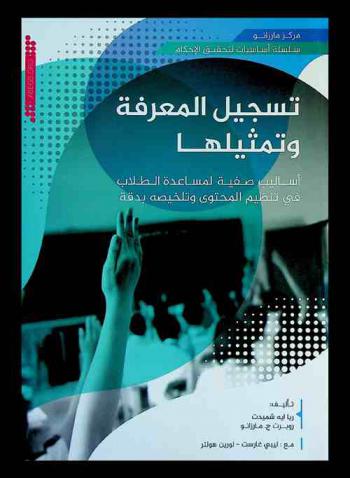
تسجيل المعرفة وتمثيلها : أساليب صفية لمساعدة الطلاب في تنظيم المحتوى وتلخيصه بدقة
ويعرض كتاب تسجيل المعرفة وتمثيلها : أساليب صفية لمساعدة الطلاب في تنظيم المحتوى وتلخيصه بدقة أساليب محددة لإتقان مهارة مهمة وهي تسجيل المعرفة وتمثيلها وتتضمن هذه المهارة : خطوات واضحة للتنفيذ. اقتراحات لرصد قدرة الطلبة على تسجيل المعرفة وتمثيلها. تعديل أساليب التدريس لتناسب الطلاب المتعثرين وذوي الاحتياجات الخاصة أو ذوي التحصيل العالي. أمثلة إيجابية وأخرى سلبية. الأخطاء الشائعة وسبل تجنبها وصنف الكتاب في جزأين الأول التمثيلات اللغوية وتضمن أسلوبين هما التلخيص وتدوين الملاحظات. أما الجزء الثاني فخصص للتمثيلات غير اللغوية وتضمن أربعة أساليب هي : المنظم المعرفي والملاحظات والكتابة التصويرية والجمل التمثيلية وأجهزة تذكيرية.
BOOK

Microglia–blood vessel interactions: a double-edged sword in brain pathologies
Microglia are long-living resident immune cells of the brain, which secure a stable chemical and physical microenvironment necessary for the proper functioning of the central nervous system (CNS). These highly dynamic cells continuously scan their environment for pathogens and possess the ability to react to damage-induced signals in order to protect the brain. Microglia, together with endothelial cells (ECs), pericytes and astrocytes, form the functional blood–brain barrier (BBB), a specialized endothelial structure that selectively separates the sensitive brain parenchyma from blood circulation. Microglia are in bidirectional and permanent communication with ECs and their perivascular localization enables them to survey the influx of blood-borne components into the CNS. Furthermore, they may stimulate the opening of the BBB, extravasation of leukocytes and angiogenesis. However, microglia functioning requires tight control as their dysregulation is implicated in the initiation and progression of numerous neurological diseases. Disruption of the BBB, changes in blood flow, introduction of pathogens in the sensitive CNS niche, insufficient nutrient supply, and abnormal secretion of cytokines or expression of endothelial receptors are reported to prime and attract microglia. Such reactive microglia have been reported to even escalate the damage of the brain parenchyma as is the case in ischemic injuries, brain tumors, multiple sclerosis, Alzheimer's and Parkinson's disease. In this review, we present the current state of the art of the causes and mechanisms of pathological interactions between microglia and blood vessels and explore the possibilities of targeting those dysfunctional interactions for the development of future therapeutics.
Journal Article

الطاووس في أرض البطاريق
قصة خيالية مكتوبة بأسلوب عصري عن كيفية إظهار الإبداع والشجاعة في مؤسسات الوقت الحاضر يقدم هذا الكتاب رؤية جديدة لموضوع مهم ألا وهو كيفية بث روح التجديد والإبداع والتطوير في بيئة العمل من خلال غرس أفكار جديدة بدلا من الأسلوب التقليدي الذي عفا عليه الزمن ونظرا للأسلوب الرائع والجذاب الذي ينفرد به هذا الكتاب فهو يأتي في إطار قصة خيالية تتحدث عن المؤسسات ولكن بروح العصر الحديث والقصة التي يسوقها إلينا الكتاب تتحدث عن كيفية بناء كيان مؤسسة تهتم بالابتكار والإبداع وكيفية الاستفادة من مواهب الموظفين وطاقاتهم وضمان التزامهم. هذا وتنفرد الطبعة الجديدة من هذا الكتاب بنصائح وأدوات واستراتيجيات لشخصيات الطاووس بالإضافة إلى جزء جديد عن كيفية تغيير ثقافة البطاريق.
Book

Microglia in retinal angiogenesis and diabetic retinopathy
Diabetic retinopathy has a high probability of causing visual impairment or blindness throughout the disease progression and is characterized by the growth of new blood vessels in the retina at an advanced, proliferative stage. Microglia are a resident immune population in the central nervous system, known to play a crucial role in regulating retinal angiogenesis in both physiological and pathological conditions, including diabetic retinopathy. Physiologically, they are located close to blood vessels and are essential for forming new blood vessels (neovascularization). In diabetic retinopathy, microglia become widely activated, showing a distinct polarization phenotype that leads to their accumulation around neovascular tufts. These activated microglia induce pathogenic angiogenesis through the secretion of various angiogenic factors and by regulating the status of endothelial cells. Interestingly, some subtypes of microglia simultaneously promote the regression of neovascularization tufts and normal angiogenesis in neovascularization lesions. Modulating the state of microglial activation to ameliorate neovascularization thus appears as a promising potential therapeutic approach for managing diabetic retinopathy.
Journal Article

Renaissance splendor : Catherine de' Medici's Valois tapestries
Featuring detailed scenes of court pageantry and life-size portraits of members of the French Valois dynasty woven in wool, silk, and precious metal-wrapped threads, the Valois Tapestries are one of the most extravagant sets of hangings produced in the 16th century. The precise circumstances surrounding the tapestries' commission and their arrival at the Medici court in Florence, as well as the significance of the specific scenes depicted, however, have eluded scholars for years. Presenting new research into the political maneuvering of the Valois and Medici courts and providing extensive physical analysis gathered during a recent cleaning of the tapestries, this volume offers brand new insight into why these magnificent works were made and what they represent. Exhibition: Cleveland Museum of Art, USA (11.11.2018-27.01.2019).
BOOK

Direct Determination of Absolute Molecular Stereochemistry in Gas Phase by Coulomb Explosion Imaging
Bijvoet's method, which makes use of anomalous x-ray diffraction or dispersion, is the standard means of directly determining the absolute (stereochemical) configuration of molecules, but it requires crystalline samples and often proves challenging in structures exclusively comprising light atoms. Herein, we demonstrate a mass spectrometry approach that directly images the absolute configuration of individual molecules in the gas phase by cold target recoil ion momentum spectroscopy after laser ionizatior–induced Coulomb explosion. This technique is applied to the prototypical chiral molecule bromochlorofluoromethane and the isotopically chiral methane derivative bromodichloromethane.
Journal Article

Fairness Expectations and Altruistic Sharing in 15-Month-Old Human Infants
Human cooperation is a key driving force behind the evolutionary success of our hominin lineage. At the proximate level, biologists and social scientists have identified other-regarding preferences--such as fairness based on egalitarian motives, and altruism--as likely candidates for fostering large-scale cooperation. A critical question concerns the ontogenetic origins of these constituents of cooperative behavior, as well as whether they emerge independently or in an interrelated fashion. The answer to this question will shed light on the interdisciplinary debate regarding the significance of such preferences for explaining how humans become such cooperative beings. We investigated 15-month-old infants' sensitivity to fairness, and their altruistic behavior, assessed via infants' reactions to a third-party resource distribution task, and via a sharing task. Our results challenge current models of the development of fairness and altruism in two ways. First, in contrast to past work suggesting that fairness and altruism may not emerge until early to mid-childhood, 15-month-old infants are sensitive to fairness and can engage in altruistic sharing. Second, infants' degree of sensitivity to fairness as a third-party observer was related to whether they shared toys altruistically or selfishly, indicating that moral evaluations and prosocial behavior are heavily interconnected from early in development. Our results present the first evidence that the roots of a basic sense of fairness and altruism can be found in infancy, and that these other-regarding preferences develop in a parallel and interwoven fashion. These findings support arguments for an evolutionary basis--most likely in dialectical manner including both biological and cultural mechanisms--of human egalitarianism given the rapidly developing nature of other-regarding preferences and their role in the evolution of human-specific forms of cooperation. Future work of this kind will help determine to what extent uniquely human sociality and morality depend on other-regarding preferences emerging early in life.
Journal Article

Tunneling Nanotubes and Tumor Microtubes in Cancer
Intercellular communication among cancer cells and their microenvironment is crucial to disease progression. The mechanisms by which communication occurs between distant cells in a tumor matrix remain poorly understood. In the last two decades, experimental evidence from different groups proved the existence of thin membranous tubes that interconnect cells, named tunneling nanotubes, tumor microtubes, cytonemes or membrane bridges. These highly dynamic membrane protrusions are conduits for direct cell-to-cell communication, particularly for intercellular signaling and transport of cellular cargo over long distances. Tunneling nanotubes and tumor microtubes may play an important role in the pathogenesis of cancer. They may contribute to the resistance of tumor cells against treatments such as surgery, radio- and chemotherapy. In this review, we present the current knowledge about the structure and function of tunneling nanotubes and tumor microtubes in cancer and discuss the therapeutic potential of membrane tubes in cancer treatment.
Journal Article

NADPH oxidases as a source of oxidative stress and molecular target in ischemia/reperfusion injury
Ischemia/reperfusion injury (IRI) is crucial in the pathology of major cardiovascular diseases, such as stroke and myocardial infarction. Paradoxically, both the lack of oxygen during ischemia and the replenishment of oxygen during reperfusion can cause tissue injury. Clinical outcome is also determined by a third, post-reperfusion phase characterized by tissue remodeling and adaptation. Increased levels of reactive oxygen species (ROS) have been suggested to be key players in all three phases. As a second paradox, ROS seem to play a double-edged role in IRI, with both detrimental and beneficial effects. These Janus-faced effects of ROS may be linked to the different sources of ROS or to the different types of ROS that exist and may also depend on the phase of IRI. With respect to therapeutic implications, an untargeted application of antioxidants may not differentiate between detrimental and beneficial ROS, which might explain why this approach is clinically ineffective in lowering cardiovascular mortality. Under some conditions, antioxidants even appear to be harmful. In this review, we discuss recent breakthroughs regarding a more targeted and promising approach to therapeutically modulate ROS in IRI. We will focus on NADPH oxidases and their catalytic subunits, NOX, as they represent the only known enzyme family with the sole function to produce ROS. Similar to ROS, NADPH oxidases may play a dual role as different NOX isoforms may mediate detrimental or protective processes. Unraveling the precise sequence of events, i.e., determining which role the individual NOX isoforms play in the various phases of IRI, may provide the crucial molecular and mechanistic understanding to finally effectively target oxidative stress.
Journal Article
Perivascular microglia promote blood vessel disintegration in the ischemic penumbra
The contribution of microglia to ischemic cortical stroke is of particular therapeutic interest because of the impact on the survival of brain tissue in the ischemic penumbra, a region that is potentially salvable upon a brain infarct. Whether or not tissue in the penumbra survives critically depends on blood flow and vessel perfusion. To study the role of microglia in cortical stroke and blood vessel stability, CX3CR1
+/GFP
mice were subjected to transient middle cerebral artery occlusion and then microglia were investigated using time-lapse two-photon microscopy in vivo. Soon after reperfusion, microglia became activated in the stroke penumbra and started to expand cellular protrusions towards adjacent blood vessels. All microglia in the penumbra were found associated with blood vessels within 24 h post reperfusion and partially fully engulfed them. In the same time frame blood vessels became permissive for blood serum components. Migration assays in vitro showed that blood serum proteins leaking into the tissue provided molecular cues leading to the recruitment of microglia to blood vessels and to their activation. Subsequently, these perivascular microglia started to eat up endothelial cells by phagocytosis, which caused an activation of the local endothelium and contributed to the disintegration of blood vessels with an eventual break down of the blood brain barrier. Loss-of-microglia-function studies using CX3CR1
GFP/GFP
mice displayed a decrease in stroke size and a reduction in the extravasation of contrast agent into the brain penumbra as measured by MRI. Potentially, medication directed at inhibiting microglia activation within the first day after stroke could stabilize blood vessels in the penumbra, increase blood flow, and serve as a valuable treatment for patients suffering from ischemic stroke.
Journal Article