
Catalogue Search | MBRL


Are you sure you want to remove the book from the shelf?

{{itemTitle}}
7
result(s) for
"Schulkin, Jay, author"
Sort by:


Bodily sensibility : intelligent action
The brain is a cognitive organ, and regions of the brain that traverse brainstem and cortical sites orchestrate the expression of bodily sensibility: intelligent action. They can appear perfunctory or intimate, calculating a sum or selecting a mate. Schulkin presents neuroscientific research demonstrating that thought is not on one side and bodily sensibility on the other; from a biological point of view, they are integrated. Schulkin further argues that this integration has important implications for judgements about the emotions, art and music, moral sensibilities, attraction and revulsion, and our perpetual inclination to explain ourselves and our surroundings. He begins the book by setting forth a view of the emotions not as a bodily burden to be borne, but rather as a great source of information. He then moves on to other domains, claiming that underlying the experience of aesthetics in at least some instances is the interplay between expectation and disappointment from its infraction, and suggesting that, among other things, repulsion and attraction to the cries and joys of others constitutes moral responsiveness. This book should appeal to researchers in behavioural neuroscience, emotion, and psychophysiology, as well as cognitive and social psychologists and philosophers of mind.
eBook

Cognitive Adaptation
Cognitive Adaptation: A Pragmatist Perspective argues that there is a fundamental link between cognitive/neural systems and evolution that underlies human activity. One important result is that the line between nature and culture and scientific and humanistic inquiry is quite permeable - the two are fairly continuous with each other. Two concepts figure importantly in our human ascent: agency and animacy. The first is the recognition of another person as having beliefs, desires, and a sense of experience. The second term is the recognition of an object as alive, a piece of biology. Both reflect a predilection in our cognitive architecture that is fundamental to an evolving, but fragile, sense of humanity. The book further argues for a regulative norm of self-corrective inquiry, an appreciation of the hypothetical nature of all knowledge. Schulkin's perspective is rooted in contemporary behavioral and cognitive neuroscience.
eBook

Milk : the biology of lactation
\"After drawing its first breath, every newborn mammal turns his or her complete attention to obtaining milk. This primal act was once thought to stem from a basic fact: milk provides the initial source of calories and nutrients for all mammalian young. But it turns out that milk is a much more complicated biochemical cocktail and provides benefits beyond nutrition. In this fascinating book, biologists Michael L. Power and Jay Schulkin reveal this liquid's evolutionary history and show how its ingredients have changed over many millions of years to become a potent elixir. Power and Schulkin walk readers through the early origins of the mammary gland and describe the incredible diversification of milk among the various mammalian lineages. After revealing the roots of lactation, the authors describe the substances that naturally occur in milk and discuss their biological functions. They reveal that mothers pass along numerous biochemical signals to their babies through milk. The authors explain how milk boosts an infant's immune system, affects an infant's metabolism and physiology, and helps inoculate and feed the baby's gut microbiome. Throughout the book, the authors weave in stories from studies of other species, explaining how comparative research sheds light on human lactation. The authors then turn their attention to the fascinating topic of cross-species milk consumption--something only practiced by certain humans who evolved an ability to retain lactase synthesis into adulthood. The first book to discuss milk from a comparative and evolutionary perspective, Power and Schulkin's masterpiece reveals the rich biological story of the common thread that connects all mammals\"-- Provided by publisher.
Book
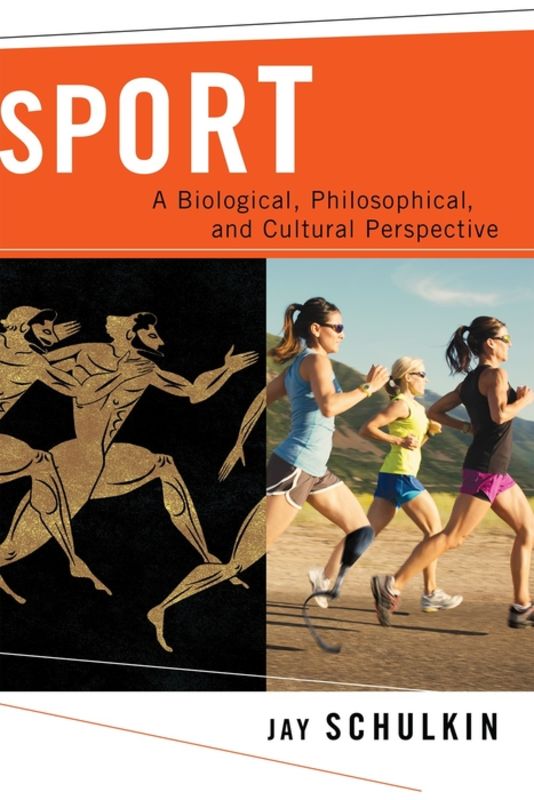
Sport
Sports are as varied as the people who play them. We run, jump, and swim. We kick, hit, and shoot balls. We ride sleds in the snow and surf in the sea. From the Olympians of ancient Greece to today's professional athletes, from adult pickup soccer games to children's gymnastics classes, people at all levels of ability at all times and in all places have engaged in sport. What drives this phenomenon? In Sport, the neuroscientist Jay Schulkin argues that biology and culture do more than coexist when we play sports—they blend together seamlessly, propelling each other toward greater physical and intellectual achievement. To support this claim, Schulkin discusses history, literature, and art—and engages philosophical inquiry and recent behavioral research. He connects sport's basic neural requirements, including spatial and temporal awareness, inference, memory, agency, direction, competitive spirit, and endurance, to the demands of other human activities. He affirms sport's natural role as a creative evolutionary catalyst, turning the external play of sports inward and bringing insight to the diversion that defines our species. Sport, we learn, is a fundamental part of human life.
eBook
Adaptation and Well-Being
Recently, an interest in our understanding of well-being within the context of competition and cooperation has re-emerged within the biological and neural sciences. Given that we are social animals, our well-being is tightly linked to interactions with others. Pro-social behavior establishes and sustains human contact, contributing to well-being. Adaptation and Well-Being is about the evolution and biological importance of social contact. Social sensibility is an essential feature of our central nervous systems, and what have evolved are elaborate behavioral ways in which to sustain and maintain the physiological and endocrine systems that underlie behavioral adaptations. Writing for his fellow academics, and with chapters on evolutionary aspects, chemical messengers and social neuroendocrinology among others, Jay Schulkin explores this fascinating field of behavioral neuroscience.
eBook