
Catalogue Search | MBRL


Are you sure you want to remove the book from the shelf?

{{itemTitle}}
551
result(s) for
"Scott, Allen W"
Sort by:

Development and application of a biomarker assay for determining the pharmacodynamic activity of an antagonist candidate biotherapeutic antibody to IL21R in whole blood
Background
In preparation for potential clinical development of Ab-01, an antagonistic antibody directed against the IL21R, studies were undertaken to address translational medicine needs that fall into four categories: 1) development of a pharmacodynamic biomarker assay suitable for use in the clinic, 2) demonstration that Ab-01 has the desired biological activity
in vitro
and
in vivo
in cynomolgus monkeys, the preferred safety study species, 3) pre-clinical
in vivo
proof-of-concept that the assay can be used to detect Ab-01 pharmacodynamic (PD) activity in treated subjects, and 4) comprehensive assessment of the agonistic potential of Ab-01 when cross-linked. This report and a recently published companion report address the first three of these needs. The fourth has been addressed in a separate study.
Methods
Genes that change RNA expression upon
ex vivo
rhIL21 stimulation of whole blood were identified in human and cynomolgus monkey. The inhibitory effects of exogenously added Ab-01 were measured
ex vivo
in human and monkey, and the
in vivo
inhibitory effects of Ab-01 treatment were measured in monkey.
Results
Stimulation of whole human blood for 2 hours with rhIL21 induced robust increases in RNA expression of 6 genes. This response was blocked by Ab-01, indicating that the assay is suitable for measuring Ab-01 activity in blood. rhIL21 induced expression of a similar set of genes in cynomolgus monkey blood. This response was blocked with Ab-01, thus demonstrating that Ab-01 has the desired activity in the species, and that safety studies done in cynomolgus monkeys are relevant. Proof -of-concept for using this assay system to detect PD activity
in vivo
was generated by measuring the response in monkey blood to
ex vivo
rhIL21 stimulation before and 5 minutes following
in vivo
Ab-01 administration.
Conclusions
A robust PD biomarker assay suitable for clinical use has been developed in human whole blood. The successful adaptation of the assay to cynomolgus monkeys has enabled the demonstration of Ab-01 activity both
in vitro
and
in vivo
in monkey, thus validating the use of this species in safety studies and establishing proof-of-concept for using this PD assay system to aid in dose selection in clinical studies.
Journal Article

A visual familiarity account of evidence for orthographic processing in pigeons (Columbia livia): a reply to Scarf, Corballis, Güntürkün, and Colombo (2017)
Scarf et al. (Proc Natl Acad Sci 113(40):11272–11276, 2016) demonstrated that pigeons, as with baboons (Grainger et al. in Science 336(6078):245–248, 2012; Ziegler in Psychol Sci. https://doi.org/10.1177/0956797612474322, 2013), can be trained to display several behavioural hallmarks of human orthographic processing. But, Vokey and Jamieson (Psychol Sci 25(4):991–996, 2014) demonstrated that a standard, autoassociative neural network model of memory applied to pixel maps of the words and nonwords reproduces all of those results. In a subsequent report, Scarf et al. (Anim Cognit 20(5):999–1002, 2017) demonstrated that pigeons can reproduce one more marker of human orthographic processing: the ability to discriminate visually presented four-letter words from their mirror-reversed counterparts (e.g. “LEFT” vs. “[InlineMediaObject not available: see fulltext.]”). The current report shows that the model of Vokey and Jamieson (2014) reproduces the results of Scarf et al. (2017) and reinforces the original argument: the recent results thought to support a conclusion of orthographic processing in pigeons and baboons are consistent with but do not force that conclusion.
Journal Article
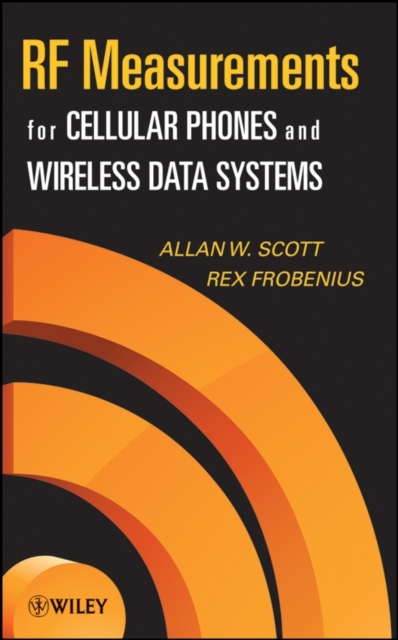
RF Measurements for Cellular Phones and Wireless Data Systems
<b>The only source for practical, real-world information on RF measurements for cellular phones and wireless data systems</b> <p>It is predicted that by the year 2010, all digital wireless communications equipment—including cellular, PCS, and 3G phones; wireless LANs; GPS navigation systems; and DBS TV—will have data transfer capabilities of over 1 Mbps. Now, as this significant turning point quickly approaches, this book presents everything industry professionals need to know about the Radio Frequency (RF) measurements and tests that must be made on this new generation of digital wireless communications equipment.</p> <p>Presenting just enough theory as is absolutely required for comprehension, RF Measurements for Cellular Phones and Wireless Data Systems:</p> <ul> <li> <p>Provides a review of basic RF principles and terminology</p> </li> <li> <p>Describes RF measurement equipment, including signal generators, power meters, frequency meters, vector network analyzers, spectrum analyzers, and vector signal analyzers</p> </li> <li> <p>Explains the RF devices that are used in cellular phones and wireless data transmission equipment—how they work, what their critical performance parameters are, how they're tested, and typical test results</p> </li> <li> <p>Illustrates the testing of RF devices and systems with digitally modulated signals that represent the voice, video, or data that the RF wave is carrying</p> </li> </ul> <p>RF Measurements for Cellular Phones and Wireless Data Systems has been written to serve as the industry standard for RF measurements and testing. It is an indispensable resource for engineers, technicians, and managers involved in the construction, installation, or maintenance of cell phones and wireless data equipment.</p>
eBook

Can Habituation of Sexual Responses be Elicited in Men and Women When Attention is Maintained?
Studies investigating men and women separately suggest a sex difference in the habituation of genital responses to sexual stimuli: Men's responses habituate readily whereas women's responses appear more resistant. These studies also demonstrate that attention is positively correlated with habituation effects when they occur. The
preparation hypothesis
asserts that women's genital responses occur automatically in the presence of sexual cues to protect them from injuries that may occur as a result of penetration. It follows that women may not habituate as much as men because the costs of not responding to sexual cues are likely higher for women than they are for men. In a recent study we found similar and pronounced habituation effects for genital responses and self-reported attention in men and in women. The aims of the current study were to examine whether habituation can be elicited when attention is maintained and if a sex difference would be observed. Thirty-six men and women were presented with 14 audiovisual stimuli following a within-subjects habituation design. Genital responses were measured using circumferential phallometry and vaginal photoplethysmography. Poststimulus ratings of sexual arousal and attention were recorded. Results showed habituation of genital but not subjective sexual responses in both sexes. Participants reported a high degree of attention across habituation trials, but controlling for changes in attention eliminated habituation effects for genital responses. The role of attention in sexual responses and the implications of our findings for the preparation hypothesis are discussed.
Des études distinctes sur les hommes et les femmes suggèrent une différence sur le plan de l'habituation des réactions génitales aux stimuli sexuels : les réactions des hommes présentent une habituation plus aisée, tandis que les réactions des femmes semblent y résister davantage. Les études montrent également que l'attention est en corrélation positive avec les effets de l'habituation. Selon
l'hypothèse de la préparation
, les réactions des organes génitaux de la femme sont automatiques en présence de signaux sexuels en guise de protection contre les blessures que pourrait causer la pénétration. Il s'ensuit que les femmes pourraient présenter une habituation moindre que les hommes en raison des plus grandes conséquences de ne pas réagir aux signaux sexuels. Une récente étude a rapporté des effets d'habituation à la fois similaires et prononcés des réactions génitales et de l'attention autorapportée chez les hommes et les femmes. Le but de la présente étude était de déterminer si l'habituation pouvait être sollicitée lorsque l'attention était maintenue et si les résultats étaient différents selon le sexe. On a présenté à 36 hommes et femmes 14 stimuli audiovisuels après un cadre d'habituation avec les mêmes sujets. La mesure des réactions génitales a été effectuée au moyen de la pléthysmographie pénienne et de la photopléthysmographie vaginale. L'évaluation post-stimuli de l'excitation sexuelle et de l'attention a été consignée. Les résultats ont révélé une habituation des organes génitaux, mais pas des réactions sexuelles subjectives chez les deux sexes. Les participants ont rapporté un haut niveau d'attention dans tous les essais d'habituation, mais le contrôle des changements dans le degré d'attention a éliminé les effets d'habituation des réactions génitales. Le rôle de l'attention dans les réactions sexuelles et les répercussions des résultats de l'étude en ce qui a trait à l'hypothèse de la préparation sont discutés.
Journal Article


Récits épisodiques de la propagation de la brooksification
Introduces this special issue of the Canadian Journal of Experimental Psychology comprises a Festschrift, summarizing the proceedings of an event that celebrated the accomplishments of Herr Professor Dr. Lee R. Brooks that took place at McMaster University in June 2003. (PsycInfo Database Record (c) 2025 APA, all rights reserved)
Journal Article
Episodic Accounts of Spreading Brooksification
Eva and Allen profile scientist Lee R. Brooks. Brooks, who served once as the Founder and President of the Leptology Research Board, was the discoverer of minute creatures named leptons. His discovery led to the understanding of how humans coordinate analytic and non-analytic processes when making categorization decisions.
Journal Article
Repetition Deficits, List Context, and Word-Class Interactions in the RSVP of Words in Sentences
We report a failure to
find a repetition deficit in recall following the rapid serial visual presentation (
RSVP
) of words within sentences, using adjectives rather than
nouns as the critical items. In a series of experiments that ruled out participant and
procedural differences as the source of the failure, both word class and list context were
found to moderate the repetition deficit, but grammatical necessity did not. The presence
in the list of sentences in which the repeated adjectives were separated by more than
three words (i.e., more than 400 ms in
RSVP
) not only eliminated the
repetition deficit for the recall of those sentences but also for the recall of sentences
in which the repeated adjectives were separated by three or fewer words (i.e., less than
400 ms in
RSVP
). However, although substantially reduced, a
repetition deficit with noun-based materials was still found in this list context.
Matching the adjective-based sentences with the noun-based sentences in sentence length
and position of the critical items revealed that the moderating effect of word-class on
the repetition deficit was mediated by the biases in sentence structure that using
different word classes tend to induce.
En prenant
connaissance de la documentation au sujet des déficits de
répétition suivant une série de présentations
visuelles rapides, on a l'impression d'un phénomène robuste de
perception, qui transcende les conditions et les tâches, tout en
exerçant autrement des influences importantes sur le rappel. Dans
l'expérience 1, en utilisant des adjectifs plutôt que des noms en tant
qu'items critiques, on a décelé un défaut surprenant
d'obtention de déficits de répétition avec une série
de présentations visuelles rapides de mots dans des phrases. Cette
défaillance se produisait même si au moins un sous-ensemble des phrases
satisfaisait aux conditions généralement reconnues comme étant
nécessaires pour démontrer l'effet. L'expérience 2 a
démontré que cette défaillance ne découlait pas d'une
singularité de nos méthodes, de notre équipement ou des
participants, dans le sens où nous avons été en mesure de
produire des déficits de répétition substantiels à
l'aide du matériel dénominatif plus usuel, modifié de
manière à ce qu'il corresponde aux méthodes employées
dans l'expérience1. L'expérience 3 a trouvé qu'il
était possible de démontrer un déficit de
répétition à l'aide de phrases adjectivales à
rémanence brève (moins de 3 mots intermédiaires ou moins de 400
msec de présentations visuelles rapides) en autant que celles-ci se trouvaient
dans un contexte à proximité d'autres phrase à
rémanence brève; ainsi, il apparaît que c'était le
contexte à proximité de phrases à rémanence longue (au
moins 4 mots intermédiaires ou plus de 400 msec de présentations
visuelles rapides) dans l'expérience 1 qui éliminait le déficit
de répétition des phrases adjectivales, à rémanence
brève. Cependant, l'expérience 4 a montré que ce contexte
à rémanence longue n'était pas suffisant pour éliminer
le déficit de répétition du matériel
dénominatif, même si le déficit a été
réduit de façon substantielle. Les résultats auxiliaires
suggèrent qu'au moins une partie du déficit de
répétition restant pourrait avoir été causé
par les différences résiduelles dans la répartition de la
rémanence même dans les phrases à rémanence
brève. L'expérience 5 a démontré que la
différence critique entre les noms et les adjectifs pour produire les
déficits de répétition ne semble pas découler soit de
la nécessité grammaticale non plus que de la classe de mot proprement
dit, mais plutôt des différences de structure superficielle que la
production de phrases à l'aide de différentes classes de mots a tendance
à introduire. Les résultats sont décrits en termes de comptes
rendus des perceptions et des temps de récupération des
déficits de répétition suivant une série de
présentations visuelles rapides.
Journal Article