
Catalogue Search | MBRL


Are you sure you want to remove the book from the shelf?

{{itemTitle}}
160
result(s) for
"Scott, Sonya"
Sort by:

Rejoinder on animal spirits in Descartes and Keynes: a response to Kurt Smith
This essay serves as a response to Kurt Smith, who wrote a philosophical and historical commentary on my 2018 essay entitled ‘Crises, confidence and animal spirits: exploring subjectivity in the dualism of Descartes and Keynes’ in The Journal of Philosophical Economics. It also provides a rejoinder to my original commentary on the role of animal spirits in relation to dualism in the work of Descartes and Keynes. I address Smith’s historical-philosophical response to my work in three ways. First, I revisit Gilbert Ryle’s concept of the intellectualist legend with respect to understanding the Cartesian tradition of thought and expand upon my own exegetical approach in order to clear up the thorny issue of determining and asserting authorial intention. Second, I address the problem of establishing analogies between texts and disciplines. In order to do so I will revisit my earlier critique of the concept of ‘the Economy’ and show that, contra to Smith’s reading, it is not in fact analogous to Descartes’ ‘human being.’ Finally, I open up a fresh exploration of the nature of the relationship between economic rationality and economic system, looking at the broader economic vision of Keynes and some of his notorious opponents – Ludwig von Mises and Friedrich Hayek.
Journal Article
MATHEMATICS IS THE LANTERN: VITO VOLTERRA, LÉON WALRAS, AND IRVING FISHER ON THE MATHEMATIZATION OF ECONOMICS
The interdisciplinary project to unite the field of mathematics with the social and biological sciences marks the work of Vito Volterra, one of Italy’s most prominent mathematicians of the twentieth century. This paper explores the connections between Volterra’s 1901 inaugural address at the Accademia dei Lincei in Rome and the work of two of his contemporaries, Léon Walras and Irving Fisher. All three thinkers were ardent advocates of the mathematical turn in economic thinking. This paper argues, however, that it is the previously unexplored relationship between Volterra and Fisher that sheds the most light on the way in which mechanical physics contributed to the project of mathematization within economics more generally. Furthermore, it explores the way in which mathematical inquiry postulated a new and coherent abstraction of the economy, at the same time that it gave epistemological authority to the economist.
Journal Article
Crises, confidence, and animal spirits: exploring subjectivity in the dualism of Descartes and Keynes
This paper will explore the nuanced epistemological status of the economic subject in Keynes' work, alongside the physiology of the human subject in Descartes' Passions of the Soul and Treatise on Man. In both instances 'animal spirits' serve as an indicator of dualism within the subject. In Descartes, the spirits mediate between the soul and the body, between the rational and non-rational, by their effect on the pineal gland. In Keynes, animal spirits push up against a certain form of economic rationality and represent a non-rational impulse inherent to human nature that is often opposed to economic reason. While Keynes' conception of economic subjectivity extends well beyond the rationalism of many of his predecessors, the dualism presented in his work by means of the animal spirits is worth considering in philosophical terms. Ultimately this paper will conclude that Keynes' work contains an element of what Gilbert Ryle (1949) has termed the 'intellectualist legend,' that is, the philosophical assumption that we must think first, and then act, relegating spontaneous action to the realm of the 'animal' or the 'non-rational.'
Journal Article
Rejoinder on animal spirits in Descartes and Keynes: a response to Kurt Smith
This essay serves as a response to Kurt Smith, who wrote a philosophical and historical commentary on my 2018 essay entitled ‘Crises, confidence and animal spirits: exploring subjectivity in the dualism of Descartes and Keynes’ in The Journal of Philosophical Economics. It also provides a rejoinder to my original commentary on the role of animal spirits in relation to dualism in the work of Descartes and Keynes. I address Smith’s historical-philosophical response to my work in three ways. First, I revisit Gilbert Ryle’s concept of the intellectualist legend with respect to understanding the Cartesian tradition of thought and expand upon my own exegetical approach in order to clear up the thorny issue of determining and asserting authorial intention. Second, I address the problem of establishing analogies between texts and disciplines. In order to do so I will revisit my earlier critique of the concept of ‘the Economy’ and show that, contra to Smith’s reading, it is not in fact analogous to Descartes’ ‘human being.’ Finally, I open up a fresh exploration of the nature of the relationship between economic rationality and economic system, looking at the broader economic vision of Keynes and some of his notorious opponents – Ludwig von Mises and Friedrich Hayek.
Journal Article
Crises, confidence, and animal spirits: exploring subjectivity in the dualism of Descartes and Keynes
This paper will explore the nuanced epistemological status of the economic subject in Keynes’ work, alongside the physiology of the human subject in Descartes’ Passions of the Soul and Treatise on Man. In both instances ‘animal spirits’ serve as an indicator of dualism within the subject. In Descartes, the spirits mediate between the soul and the body,
between the rational and non-rational, by their effect on the pineal gland. In Keynes, animal spirits push up against a certain form of economic rationality and represent a non-rational impulse inherent to human nature that is often opposed to economic reason. While Keynes’ conception of economic subjectivity extends well beyond the rationalism of many of his
predecessors, the dualism presented in his work by means of the animal spirits is worth considering in philosophical terms. Ultimately this paper will conclude that Keynes’ work contains an element of what Gilbert Ryle (1949) has termed the ‘intellectualist legend,’ that is, the philosophical assumption that we must think first, and then act, relegating spontaneous action to the realm of the ‘animal’ or the ‘non-rational.
Journal Article

What would it take to eradicate health inequalities? A cross-sectional study using routine administrative data
Phelan and Link argue that socioeconomic status is a fundamental cause of mortality inequalities, hypothesising that any fundamental cause (other candidates include racism and stigma) will have three essential features: (1) will be associated with many disease outcomes; (2) will affect outcomes through a range of intervening mediators; and (3) will persistently display health gradients despite substitution of new for old mediators, such as persistent gradient in all-cause mortality despite change from infectious to non-communicable disease risk factors. They further propose that fundamental causes probably operate via differential access to many resources, which can be variously used to protect and improve health, and that there should therefore be no or lesser health gradients when deployment of resources for health advantage cannot be consciously used; for example, in cases in which we know little or nothing about how to prevent or treat a fatal disease. In view of the already substantial evidence that socioeconomic status meets the first and second essential feature of a fundamental cause as defined by Phelan and Link, we set out to assess whether there is evidence of substitution in a Scottish population sample and investigate whether socioeconomic inequalities in mortality increase with increasing preventability in Scotland.
Using death certification data and census population data from 1961, 1981, 1991, and 2001, we described trends in absolute and relative inequalities for 46 causes of death for men and women across Carstairs index of deprivation deciles between 1983 and 1999 and for men aged 20–64 years across social classes for the period 1976–1999 to assess whether substitution of specific causes of mortality had occurred. Additionally, we described mortality rates within Carstairs deciles and social classes for: (1) avoidable mortality and a sample of causes of death not classified as avoidable by the Office of National Statistics and (2) four categories of death grouped according to a pre-existing, expert-established, preventability typology. The slope index of inequality (SII), which gives a single measure of the absolute difference across socioeconomic groups while accounting for the size of each socioeconomic group, was used to describe absolute inequalities trends. The relative index of inequality was calculated by dividing the SII by the mean mortality rate and was used to describe trends in relative inequalities.
Although socioeconomic inequalities in mortality decreased in both absolute and relative terms for certain causes of death (eg, tuberculosis and rheumatic heart disease for women), they increased over the same time period for others (eg, alcohol-related mortality and suicide). New socioeconomic gradients also emerged for many specific causes of death (eg, malignant melanoma, mortality associated with perinatal complications, and colorectal cancer). There was a clear socioeconomic gradient for avoidable mortality but not for non-avoidable mortality. Relative inequalities seemed to be directly proportional to preventability (appendix).
Socioeconomic status exhibits Phelan and Link's proposed features of a fundamental cause of disease in Scotland, being associated with several causes of death mediated by a range of intermediate mechanisms and with evidence of substitution during the observation period. Weaknesses of this work include the small numbers of deaths for some specific causes; the inclusion of a small number of non-avoidable causes of death; the use of the 1991 Carstairs index throughout; and possible numerator and denominator mismatch for social class estimates. The first of these potentially limits the reliability of some findings, and the remainder introduce potential bias. This study suggests that continuing to focus on controlling individual intermediate mediators such as tobacco will ultimately fail to eradicate health inequalities and that sustained reduction and prevention will only be achieved by addressing underlying inequalities in income, wealth, and power.
None.
Journal Article
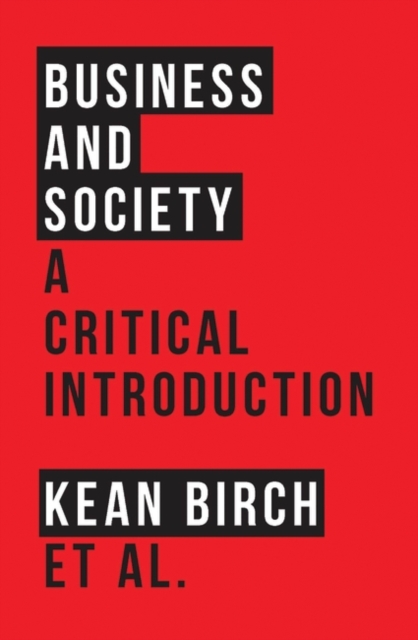
Business and Society
Corporations dominate our societies. They employ us, sell to us and influence how we think and who we vote for, while their economic interests dictate local, national and global agendas. Written in clear and accessible terms, this much-needed textbook provides critical perspectives on all aspects of the relationship between business and society: from an historical analysis of the spread of capitalism as the foundation of the 'corporate' revolution in the late nineteenth century to the regulation, ethics and exclusionary implications of business in contemporary society. Furthermore, it examines how corporate power and capitalism might be resisted, outlining a range of alternatives, from the social economy through to new forms of open access or commons ownership.
eBook

Is the period of austerity in the UK associated with increased rates of adverse birth outcomes?
Hugely concerning changes to health outcomes have been observed in the UK since the early 2010s, including reductions in life expectancy and widening of inequalities. These have been attributed to UK Government ‘austerity’ policies which have profoundly affected poorer populations. Studies in mainland Europe have shown associations between austerity and increases in adverse birth outcomes such as low birthweight (LBW). The aim here was to establish whether the period of UK austerity was also associated with higher risks of such outcomes. We analysed all live births in Scotland between 1981 and 2019 (n = 2.3 million), examining outcomes of LBW, preterm birth (PB) and small-for-gestational-age (SGA). Descriptive trend analyses, segmented regression (to identify changes in trends) and logistic regression modelling (to compare risk of outcomes between time periods) were undertaken, stratified by infant sex and quintiles of socioeconomic deprivation. There were marked increases in LBW and PB rates in the austerity period, particularly in the most deprived areas. However, rates of SGA decreased, suggesting prematurity as the main driver of LBW rather than intrauterine growth restriction. The regression analyses confirmed these results: trends in LBW and PB changed within 1–3 years of the period in which austerity was first implemented, and that period was associated with higher risk of such outcomes in adjusted models. The results add to the European evidence base of worsening birth outcomes associated with austerity-related economic adversity. The newly elected UK government needs to understand the causes of these changes, and the future implications for child and adult health.
Journal Article
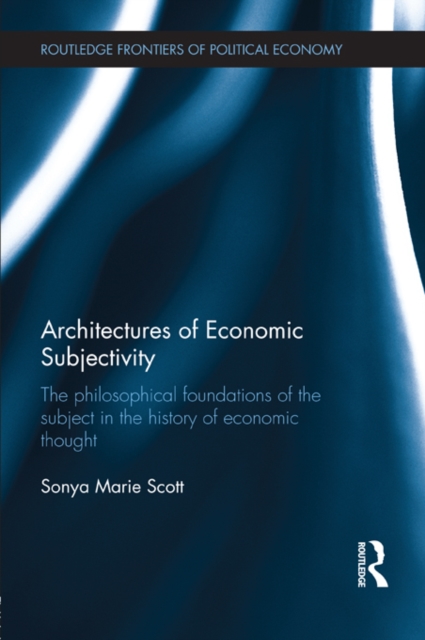
Architectures of Economic Subjectivity
The history of European economic thought has long been written by those seeking to prove or disprove the truth-value of the theories they describe. This work takes a different approach. It explores the philosophical groundwork of the theoretical structure within which economic subjects are presented. Demonstrating how the subjects of economic texts tend to be defined in and through their relationship to knowledge, this study addresses the epistemological constitution of subjectivity in economic thought.
eBook

Crises, confidence, and animal spirits: exploring subjectivity in the dualism of Descartes and Keynes
This paper will explore the nuanced epistemological status of the economic subject in Keynes' work, alongside the physiology of the human subject in Descartes' Passions of the Soul and Treatise on Man. In both instances 'animal spirits' serve as an indicator of dualism within the subject. In Descartes, the spirits mediate between the soul and the body, between the rational and non-rational, by their effect on the pineal gland. In Keynes, animal spirits push up against a certain form of economic rationality and represent a non-rational impulse inherent to human nature that is often opposed to economic reason. While Keynes' conception of economic subjectivity extends well beyond the rationalism of many of his predecessors, the dualism presented in his work by means of the animal spirits is worth considering in philosophical terms. Ultimately this paper will conclude that Keynes' work contains an element of what Gilbert Ryle (1949) has termed the 'intellectualist legend,' that is, the philosophical assumption that we must think first, and then act, relegating spontaneous action to the realm of the 'animal' or the 'non-rational.'
Journal Article