
Catalogue Search | MBRL


Are you sure you want to remove the book from the shelf?

{{itemTitle}}
14
result(s) for
"Seetharam, Kallidaikurichi"
Sort by:


A Tale of Two Crises
Some analysts looked at the 1997/98 East Asian crisis not as one crisis but as a combination of crises, beginning with a crisis of confidence and evolving into a currency crisis, a financial crisis, an economic crisis, a social crisis and a political crisis.
This book is a multidisciplinary study of financial crises, in particular, the Asian crisis of 1997 and the more recent global financial crisis of 2008. Looking at financial crises not as one crisis, but as a combination of crises beginning with a crisis of confidence, this study steps out of the traditional mould and examines financial crises from novel perspectives. The book highlights that since the origin of a financial crisis is a confidence crisis, either in the whole economy or a particular sector, the Asian and recent global crises could have backward and forward linkages to political regimes and institutions, culture and tradition, the role of the media, society and societal evolution and development processes of regulatory regimes.
Through contributions by authors in fields ranging from sociology and political science, media and Islamic banking, to law and regulation, this study adopts a broad framework for understanding financial crises, and sheds light on the interwoven and complex structures and often overlooked aspects which contribute to the holistic understanding of this topic.
1. Reflections on the Asian and Sub-Prime Crises, Charles Adams 2. Putting the Politics Back in: Financial Crises in Comparative Perspective, Mark Beeson 3. Social Origins of Financial Crises, Kurtulus Gemici 4. The Legal Framework and its Efficacy, Stanley Siegel 5. Regulatory Framework: The Winning/Losing Architecture, Lan Luh Luh and Hans Tjio 6. Role of International Monetary Fund, World Bank and Asian Development Bank in Tackling Financial Crises in Asia, Sanja Samirana Pattnayak and Alka Chadha 7. Islamic Banking: What can We Learn?, Tarek Coury 8. How the Media Shapes Perceptions and Fuels Psychology in Financial Crises, Thomas Oberlechner
Seetharam Kallidaikurichi E. is an internationally recognized thought leader at the Asian Development Bank with over 20 years of professional experience in development cooperation, infrastructure policy, systems thinking, diplomacy, and Human Values. Since September 2008, he is a visiting professor on secondment from ADB at the Lee Kuan Yew School of Public Policy, National University of Singapore (NUS). He is also concurrently founding Director of the NUS Global Asia Institute (NUS-GAI) and the Institute of Water Policy (IWP). In recognition of his pioneering contribution to promoting engineering education and public policy, he was elected a Fellow of the Faculty of Engineering, University of Tokyo in 2009. Under his direction, the two Institutes conduct cutting edge integrative research on topics pivotal to the future of Asian cities and effective water policies, respectively. In 2010, NUS-GAI received $17 million for a new integrative initiative on health in Asia and IWP hosted the first BBC world debate on water. . His recent publications include volumes on Index of Drinking Water Adequacy and Developing Living Cities .
eBook

Index of drinking water adequacy for the Asian economies
An Index of Drinking Water Adequacy (referred to as IDWA-I in this paper) was first proposed in 2007 for 23 member countries of the Asian Development Bank (ADB), and formed part of the Asian Water and Development Outlook (AWDO), 2007 brought out by the ADB. IDWA-I was obtained by averaging 5 separate component indicators referring to capacity to buy water, extent of resource availability, amount of water used, water quality (indicated by a proxy variable, namely the death rate due to diarrhoea) and the percentage of people with access. This paper reports the main results of IDWA-I and IDWA-II, in which we replace general access with specific access via home connection, after discovering the relatively weak correlation between the two types of access. Because of the dominating influence of the other common components, IDWA-I and IDWA-II are highly correlated indicators. The two, however, bring out diverse relative ranks for different countries.
Journal Article

A Tale of Two Crises
Some analysts looked at the 1997/98 East Asian crisis not as one crisis but as a combination of crises, beginning with a crisis of confidence and evolving into a currency crisis, a financial crisis, an economic crisis, a social crisis and a political crisis.
This book is a multidisciplinary study of financial crises, in particular, the Asian crisis of 1997 and the more recent global financial crisis of 2008. Looking at financial crises not as one crisis, but as a combination of crises beginning with a crisis of confidence, this study steps out of the traditional mould and examines financial crises from novel perspectives. The book highlights that since the origin of a financial crisis is a confidence crisis, either in the whole economy or a particular sector, the Asian and recent global crises could have backward and forward linkages to political regimes and institutions, culture and tradition, the role of the media, society and societal evolution and development processes of regulatory regimes.
Through contributions by authors in fields ranging from sociology and political science, media and Islamic banking, to law and regulation, this study adopts a broad framework for understanding financial crises, and sheds light on the interwoven and complex structures and often overlooked aspects which contribute to the holistic understanding of this topic.
eBook
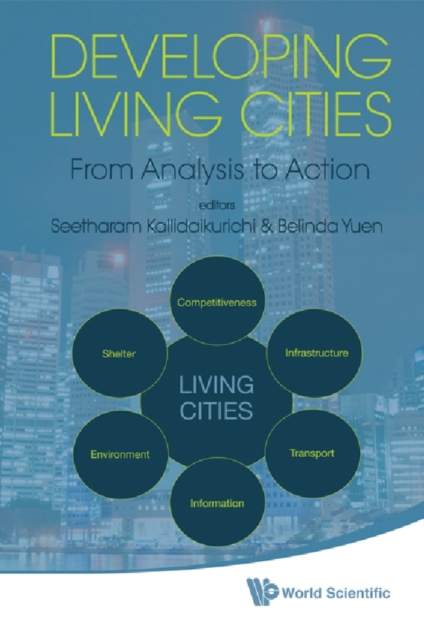
Developing living cities
With more and more of the world's population projected to live in urban areas, the life and death of cities has become a key factor in urban development considerations. This book attempts to bring an original contribution on the analysis of creating living cities. It advances the concept and framework of a “living city” and also explicates the key attributes of a “living city” that are increasingly critical to the reinvigoration and sustainable growth of cities.
eBook


9 Conclusion
This edited volume has taken a novel approach to review the two financial crises from eight different perspectives, some of them non-traditional. In doing so, the volume uncovers insights which may not have otherwise surfaced when looking at the crises from a more traditional angle. The chapters have provided varying diagnosis of the problems surrounding the crises episodes, raised specific ques-tions, and offered different recommendations.
Book Chapter
INTRODUCTION: THE DYNAMICS OF LIVING CITIES
The following sections are included:
Asian City Trends
Cities as engines of growth
Urban–rural dynamics
Living in cities: Poverty and social and cultural transformation
Growing importance of cities
Living Cities: A Suggested Framework for Better Planning and Management of Future Cities
An Overview of the Chapters
References
Book Chapter