
Catalogue Search | MBRL


Are you sure you want to remove the book from the shelf?

{{itemTitle}}
53
result(s) for
"Serra, Narcís"
Sort by:
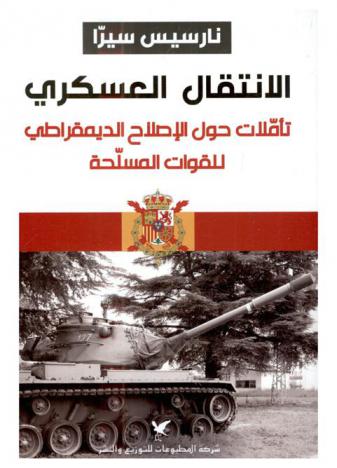
الانتقال العسكري : تأملات حول الإصلاح الديمقراطي للقوات المسلحة
كتاب ''الانتقال العسكري'' هو ثمرة أعمال نارسيس سيرا، يفسر فيه الخطوات الرئيسة التي تسهم في تقليص نفوذ القوات المسلحة خلال عملية التحول الديمقراطي. فيتطرق إلى موضوع الإصلاح العسكري الذي حصل في إسبانيا وبرهن أهميته في ترسيخ الديمقراطية الإسبانية. لذا ينطلق سيرا من هذا المثال كي يرسم لنا نموذجا بسيطا يحتذى لعملية التحول ويسلط الضوء على الشروط الأساسية لنجاح أي إصلاح ديمقراطي للمؤسسة العسكرية، كما يقول إن إحراز تقدم في الانتقال العسكري يتطلب إصلاحات قانونية ومؤسسية، وتغييرات في هيكل المهنة العسكرية وعقيدتها، هذا إلى جانب السيطرة على مستويات النزاعات. كتاب لافت ومفيد لكل من تهمه الشؤون الديمقراطية والعسكرية.
Book
National, European and Human Security
This book examines how national security strategies relate to an emerging common European or global vision of security, and to human security ideas.
Human security and national security are often regarded as competing and mutually antagonistic; the former was proposed and has been operationalised in ways which represent a paradigm shift away from state-centric approaches and the dominance of national-security perspectives. This has led to human security being associated with a broadening of the security agenda to encompass not only physical security, the use of force and military capabilities, but also the provision of material well-being and dignity to vulnerable communities.
This edited volume seeks to identify key concepts and themes in the national discourse of several European countries, addressing security at a meta-narrative and conceptual level, illustrating the changes taking place in approaches to security, and in particular, mapping moves away from a paradigm of 'national security' to one which might be called 'human security'. It also enables an assessment of whether national security is currently converging at either European or global levels.
This book will be of much interest to students of human security, European politics, discourse analysis, war and conflict studies, and IR/security studies in general.
eBook


The Military Transition
The Spanish transition from a dictatorship to a democratic state began after Francisco Franco`s death on November 20, 1975. King Juan Carlos I named Adolfo Suárez as the head of the first government, placing the country on the path to change. Suárez initiated the Law for Political Reform, which created a parliamentary democracy by calling for free elections and developing the framework for a democratic country based on a revised constitution. The newly appointed government had to cope with the opposition of the hard-liner Francoist Bunker group, which had influence over certain parts of the armed forces.
To deal with
Book Chapter

European Secuirty in the XXI Century
In the author’s view, the great transformations at this century’s end consist in the following: the world is no longer Euro-centric, technological progress has generated globalization –which, in turn, has reduced the capacities of the nation-state– and a new egocentric and asocial individualism has been born. Globalization, arriving at the same time as the dismantling of the Communist regimes and the disintegration of the Soviet Union, has created –in matters of security, defense, risks, crisis situations– new threats and a revolution in military affairs. For this series of reasons, to talk of European security can not be limited to a simple harmonization of issues, rather it should mean reevaluating the role that Europe has to play in the world. From a European perspective, non-combat means are needed to guarantee security and, also, to tackle the issue of European fragmentation, whose solution requires very complex architecture mechanisms. In Serra’s estimate, work must be done in two directions: extending the benefits of democratic consolidation, market economy and security, while, at the same time, finding a compromise between the transatlantic link with the United States and the creation of a European security dimension. On the one hand, European security and defense needs to be more efficient, using the latest technologies and, on the other hand, it needs to demonstrate more political will in at least two ways: first, in the integration of the European defense efforts; and, second, in drawing up a position for Europe in the world in the spirit of federalism-institutionalism proposing itself, Europe, as a political unit with a political role, which improves the levels of citizenship and stands behind world governability.
Journal Article


La política española de defensa
Discurso pronunciado por el Ministro de Defensa, Narcís Serra, el 31 de enero de 1986, en el Saint Anthony?s College de la Universidad de Oxford, Inglaterra. Una breve reseña sobre la historia moderna militar española revela cómo el último conflicto europeo en el que participaron las fuerzas españolas fue durante las guerras napoleónicas. A principios del siglo XX las fuerzas armadas comenzaron a intervenir en la política doméstica. La dictadura de Franco se identificó fuertemente con los militares. La restauración de una monarquía constitucional en 1975 condujo a una serie de reformas diseñadas para modernizar la defensa, reformar el sistema justicia militar, integrar a las fuerzas españolas en la Organización del Tratado de Atlántico Norte, y para aumentar su profesionalización
Journal Article
