
Catalogue Search | MBRL


Are you sure you want to remove the book from the shelf?

{{itemTitle}}
6
result(s) for
"Seward, Dan E"
Sort by:
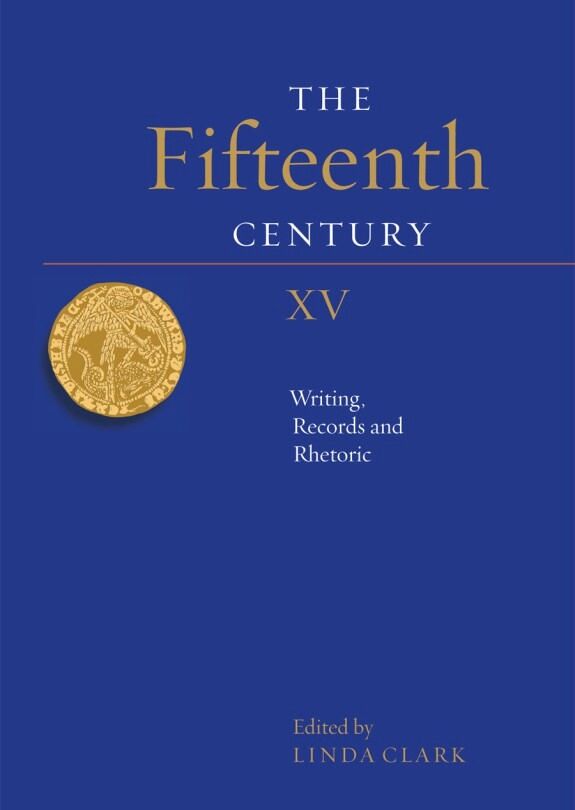
The Fifteenth Century XV
The focus of this volume may be summed up as \"The Word\". Its essays examine the contents and provenance of manuscripts which were written for polemical purposes, treasured by the duchess of York, and through the new medium of print introduced to a wider public topics of historical interest and illustrations of the geography of the known world. The essays here also consider official records of forest administration, expressed in arcane language; documents preserved in the papal curia which reveal significant facts about the lives of Scottish bishops; archives produced by the English chancery noting the movements of a royal councillor; and letters, poems and songs exposing the political strategy of a German prince. Nor is the spoken word neglected, whether employed in speeches delivered at the start of parliaments, using as their themes scriptures and classical texts to set a political agenda; or as sermons to open-air congregations gathered at St. Paul's Cross, where the oratory of Bishop Alcock stirred his listeners in different ways. Contributors: Michael Bennett, Julia Boffey, Paul Cavill, J.M. Grussenmeyer, Tom Johnson, J.L. Laynesmith, John Milner, Ben Pope, Dan E. Seward, Sarah Thomas
eBook

Bishop John Alcock and the Roman Invasion of Parliament: Introducing Renaissance Civic Humanism to Tudor Parliamentary Proceedings
For scholars examining the intersection between Renaissance humanism and parliament, Sir Thomas More holds an iconic position, one difficult to look past. Although mere scraps of More's parliamentary oratory survive, two customary speeches from his tenure as Speaker of the Commons offer glimpses into both his humanist learning and his parliamentary legacy. They are briefly recited in Edward Hall's account of the ceremony confirming More's election as Speaker in 1523. The first, More's disabling or excuse speech, a traditionally ironic request to be dismissed from the post, plays up the irony of the ceremony as only a humanist would, jesting about oratorical incapacity while nonetheless exhibiting the wit and erudition to support that assessment with a learned reference to Cicero's De Oratore (2.18.75). Although disabling speeches are generally dismissed as inconsequential, the unusual attention given to More's and those of subsequent Tudor and Jacobean Speakers (which are the fullest on record) demonstrates well the oft-noted appreciation humanists held for fulgent, playful speech. In the same ceremony of 1523, More also performed his rendition of the ‘protestation’ speech, which was traditionally delivered by Speakers to voice sincere caveats to their service and to petition for customary rights on behalf of the Commons. As historians of parliament well know, More is credited with making the first clear request for freedom of speech in the House of Commons. Later Speakers would follow More's lead, reciting this petition alongside older customary privileges of the lower house. When such notable oratorical performances are considered alongside More's pioneering of an eventually well-worn political path (from Commons’ house to chancellor's chair, where he is supposed to have re-secularised the opening address), it is difficult indeed to look beyond More to consider the oratorical and institutional legacies of other early English humanists who also spoke in parliament.Yet More was, to be sure, the product and protégé of fifteenth-century humanists who were also influential in parliament. He was particularly indebted to the archbishop of Canterbury John Morton (c.1420–1500), who served as chancellor for five sessions of parliament during the reign of Henry VII. Perhaps simply because we do not have good accounts of More's parliamentary speeches, those recorded for Morton, which will be examined further below, do indeed exhibit more fully the humanist signatures of classical citation and civic spirit, in spite of their being delivered in traditional sermonic form.
Book Chapter
The fifteenth century.: (Writing, records and rhetoric)
The focus of this volume may be summed up as \"The Word\". Its essays examine the contents and provenance of manuscripts which were written for polemical purposes, treasured by the duchess of York, and through the new medium of print introduced to a wider public topics of historical interest and illustrations of the geography of the known world. The essays here also consider official records of forest administration, expressed in arcane language; documents preserved in the papal curia which reveal significant facts about the lives of Scottish bishops; archives produced by the English chancery noting the movements of a royal councillor; and letters, poems and songs exposing the political strategy of a German prince. Nor is the spoken word neglected, whether employed in speeches delivered at the start of parliaments, using as their themes scriptures and classical texts to set a political agenda; or as sermons to open-air congregations gathered at St. Paul's Cross, where the oratory of Bishop Alcock stirred his listeners in different ways. Contributors: Michael Bennett, Julia Boffey, Paul Cavill, J.M. Grussenmeyer, TomJohnson, J.L. Laynesmith, John Milner, Ben Pope, Dan E. Seward, Sarah Thomas
eBook
