
Catalogue Search | MBRL


Are you sure you want to remove the book from the shelf?

{{itemTitle}}
137
result(s) for
"Shapiro, Jerry"
Sort by:
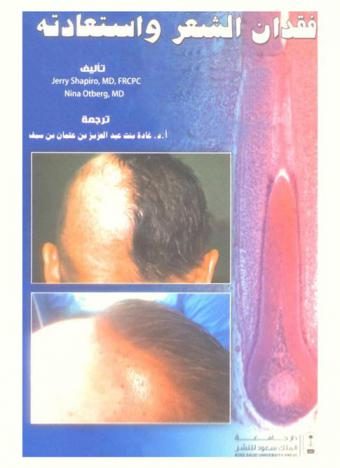
فقدان الشعر واستعادته
يقدم كتاب فقدان الشعر واستعادته نظرة شمولية للتدبير العلاجي العملي، بكل من الدوائي والجراحي، لكافة أشكال فقدان الشعر، وناقش بعمق كيفية الفحص الصحيح للمريض المصاب بفقدان الشعر، كما في الثعلبة ذكرية الشكل، التي تعد من أكثر المسببات شيوعا لفقدان الشعر، كما بحث بشكل شامل داء المناعة الذاتية، الثعلبة البقعية بما في ذلك أمراضها، وسماتها السريرية والتشخيص التفريقي ومعالجتها، كما اشتملت هذه الطبعة أيضا على التطورات الجديدة في تشخيص ومعالجة المرض.
BOOK

The Invisible Impact of a Visible Disease: Psychosocial Impact of Alopecia Areata
Introduction
The physical impact of alopecia areata (AA) is visible, but the psychological and social consequences and emotional burden are often underrecognized.
Methods
In this cross-sectional study, 547 participants recruited via the National Alopecia Areata Foundation completed a survey encompassing demographics; AA illness characteristics; and five patient-reported outcome measures on anxiety and depression, perceived stress, psychological illness impact, stigma, and quality of life (QoL). Differences in disease severity subgroups were assessed via analysis of variance (ANOVA) and t tests.
Results
Mean age was 44.6 years, and 76.6% were female. Participants with more severe hair loss tended to report longer duration of experiencing AA symptoms (
P
< 0.001). Overall, participants reported negative psychological impact, emotional burden, and poor QoL due to AA. Participants with 21–49% or 50–94% scalp hair loss reported greater psychological impact and poorer QoL than those with 95–100% scalp hair loss (most parameters
P
< 0.05). Similar results were observed for eyebrow/eyelash involvement subgroups.
Conclusions
These results suggest that participants with AA experience emotional burden, negative self-perception, and stigma, but the impact of AA is not dependent solely on the amount of hair loss. Lower impact among participants with 95–100% scalp hair loss may indicate that they have adapted to living with AA.
Journal Article

Alopecia Areata: Burden of Disease, Approach to Treatment, and Current Unmet Needs
Alopecia areata is an autoimmune hair loss disorder with variations in distribution, duration, and severity. The disease is chronic and often follows an unpredictable course, frequently leading to stress and anxiety for those who suffer from it. Throughout the years more knowledge has been gained regarding pathogenesis, diagnostic tools, impact on quality of life, as well as treatment strategies for alopecia areata. However, challenges in treating and alleviating the burden of disease remain. In this article, we discuss updates regarding the pathogenesis and treatment of alopecia areata and highlight unmet needs of the condition, including a review of limitations of current treatments, accessibility to management strategies, and the need for disease awareness and advocacy.
Journal Article
Defining Severity in Alopecia Areata: Current Perspectives and a Multidimensional Framework
Alopecia areata (AA) is an autoimmune disease characterized by nonscarring hair loss. As a clinically heterogeneous disease, various classification systems have evolved for defining its severity. In this high-level review of the literature, we discuss the traditional classification systems for AA severity and their strengths and weaknesses. Most recent classifications have focused on the extent of scalp hair loss as a defining feature, but additional clinical aspects of the disease, including location, pattern, and duration of hair loss as well as impact on the patient’s quality of life, are also relevant. These various components have typically been used unidimensionally to classify patients. We propose a multidimensional framework to define AA severity that incorporates multiple patient- and illness-related domains. Using such a framework, dermatologists may better assess the severity of the disease for the individual patient beyond the extent of hair loss.
Journal Article

Current Treatment of Alopecia Areata
Treatment of alopecia areata is dependent on age of patient as well as the extent and duration of scalp involvement. Treatments include steroids, topical immunotherapy, topical minoxidil, anthralin, and immunosuppressants. Each case must be dealt with on a customized individual basis.
Journal Article

Successful Treatment of Coexisting Alopecia Areata and Bullous Pemphigoid With Dupilumab: A Case Report
Alopecia areata (AA) and bullous pemphigoid (BP) are distinct autoimmune diseases, but growing evidence points to overlapping immune pathways. We present a rare case of a 71‐year‐old woman with concurrent AA and BP. She initially presented with 10 months of progressive scalp and body hair loss (Severity of Alopecia Tool [SALT] ~ 80) and nail dystrophy; scalp biopsy confirmed AA. One month later, she developed pruritic vesicles and papules, with biopsy findings consistent with BP. Despite multiple therapies, including systemic and topical corticosteroids, anthralin and topical ruxolitinib, she remained refractory. Dupilumab was initiated, resulting in marked improvement: her SALT score dropped to ~5, BP resolved and nails improved. After 1 year on dupilumab, she remained lesion‐free with complete hair regrowth and was able to discontinue treatment without relapse. This case highlights the immunological interplay between Th1‐ and Th2‐mediated disease pathways and the evolving therapeutic role of interleukin (IL)‐4/IL‐13 blockade. Although traditionally associated with Th1 dominance, AA may involve Th2 pathways, particularly in atopic patients. Dupilumab, an IL‐4Rα antagonist, has shown emerging utility in AA and was recently FDA‐approved for the treatment of BP. This case illustrates dupilumab's potential as a unifying therapeutic in autoimmune conditions with overlapping inflammatory mechanisms and underscores the need for further research to guide individualized immunomodulatory therapy in complex dermatologic diseases.
Journal Article

Cardiovascular risk in patients with scarring and nonscarring alopecias: Assessing the current state of evidence
Alopecia is traditionally classified into scarring and nonscarring subtypes, with etiopathologies ranging from androgen‐mediated to immuno‐inflammatory. Over 50% of men and almost 50% of women will experience some form of hair loss in their lifetime. Given this prevalence and the psychosocial significance of hair, understanding the pathophysiology and comorbidities of different types of hair loss is imperative. Other proinflammatory dermatologic disorders, such as psoriasis, are recognised to have systemic manifestations including an increased risk of cardiovascular (CV) disease, and are now considered CV risk‐enhancing conditions. With increased recognition of the importance of systemic inflammation in promoting atherosclerosis, high prevalence, and improved treatment strategies, there is increased interest in establishing whether a similar association between alopecia and cardiovascular disease (CVD) exists. In this manuscript, we aim to review the current literature regarding CV risk in androgenic alopecia (AGA) and alopecia areata (AA). Additionally, we review the literature for cicatricial alopecias and highlight the need for more research into their potential associations with CV risk. Evidence from the identified AGA publications suggests an association of AGA with CV risk factors including hypertension, dyslipidemia, and insulin resistance, as well as with coronary artery disease. For AA, most of the identified studies found an association between AA and CV risk, though the relationships were not always statistically significant. Research on cicatricial alopecias and CV risk is limited and often contradictory. There is great need for more studies regarding the association between various types of alopecia and the development of CVD, and potential mechanisms. Particularly needed are more studies of cicatricial alopecias and potential associated CV risk. While some literature suggests that patients with alopecia have an increased risk of CVD, the lack of concrete evidence represents a notable gap in our current understanding.
Journal Article

Hair Loss in Women
A 45-year-old white woman presents with a 1-year history of scalp-hair loss. She was hospitalized with appendicitis 14 months ago. She has been a vegetarian for 20 years. She takes no medications. Her father was bald. On physical examination, she has diffuse, nonscarring hair thinning with a widened part over the central portion of the scalp. How should this problem be evaluated and treated?
A 45-year-old white woman presents with a 1-year history of scalp-hair loss. On physical examination, she has diffuse, nonscarring hair thinning with a widened part over the central portion of the scalp. How should this problem be evaluated and treated?
Foreword
This
Journal
feature begins with a case vignette highlighting a common clinical problem. Evidence supporting various strategies is then presented, followed by a review of formal guidelines, when they exist. The article ends with the author's clinical recommendations.
Stage
A 45-year-old white woman presents with a 1-year history of scalp-hair loss. She was hospitalized with appendicitis 14 months ago. She has been a vegetarian for 20 years. She takes no medications. Her father was bald. On physical examination, she has diffuse, nonscarring hair thinning with a widened part over the central portion of the scalp. How should this problem be evaluated and treated?
The Clinical Problem
Hair loss, or alopecia, is a very common presenting symptom, and more than one third of women have clinically significant hair loss during their lifetime. The effect of hair loss on patients' . . .
Journal Article