
Catalogue Search | MBRL


Are you sure you want to remove the book from the shelf?

{{itemTitle}}
3
result(s) for
"Shaw, Steven R., author"
Sort by:

Pediatric intellectual disabilities at school : translating research into practice
This book synthesizes the most current evidence-based research and practices on prevention, assessment, intervention, and treatment of pediatric intellectual developmental disabilities. It provides a broad empirical framework for innovative practices and discusses their possible impact on children's future development, ability to learn, social skills, and quality of life. The book highlights important findings in cognitive and behavioral development for children with such disorders as 22q13 Deletion syndrome (i.e., Phelan McDermid syndrome), Prader-Willi syndrome, Williams syndrome, and sex chromosome disorders (e.g., Klinefelter syndrome) - children often considered untestable, unteachable, and unknowable. In addition, the book includes case studies that emphasize a team approach with physicians, families, school psychologists, and teachers for providing quality research-based psychological, educational, and mental health services. Topics featured in this book include: Up-to-date findings on the causes and symptoms of intellectual disability disorders. Common medical treatments for children with intellectual disabilities. Therapeutic interventions for children with intellectual disabilities. Psychoeducational assessment practices for children requiring special education assistance. Future directions to support people with intellectual disabilities. Pediatric Intellectual Disabilities at School is a must-have resource for researchers, graduate students, and other professionals in child and school psychology, psychiatry, social work, special and general education, public health, and counseling.
Book

Psychiatric disorders
“This book focuses on educational implications of Tourette syndrome, bipolar disorder, mood disorders, eating disorders, and other issues, as well as pediatric medications and side effects. The well-organized chapters include research reviews, educational strategies, handouts, and discussion questions and are valuable resources for school psychologists, teachers, administrators, nurses, and others.”—Patti L. Harrison, President, National Association of School Psychologists Professor of School Psychology, The University of Alabama, TuscaloosaThe educator's go-to reference for important psychiatric health topics!Increasingly, educators are called upon to address children's medical as well as mental health needs within the school setting. Based on a critical review of current research, this concise, highly practical volume outlines the most relevant psychiatric health issues for educators today.Written for school psychologists, counselors, administrators, and teachers, this easy-to-understand resource covers:Neuropsychiatric conditions that commonly affect children, including Tourette syndrome, bipolar/mood disorders, and anxiety disorder; Psychopharmacology, including the use of atypical antipsychotics and autism, the treatment of tardive dyskinesia in children, the medical management of ADHD, polypharmacy prescription practice, and side effects of common health medications; Dietary control and supplement use that includes dietary treatments for autism, identification and treatment of eating disorders, and use of steroids in adolescence.Featuring case studies, strategies for educators, discussion questions, glossaries, and handouts, Psychiatric Disorders provides valuable information to practitioners involved in providing differentiated instruction and educational accommodations, offering special education services, collaborating with families, working with the community, or influencing policy.
eBook
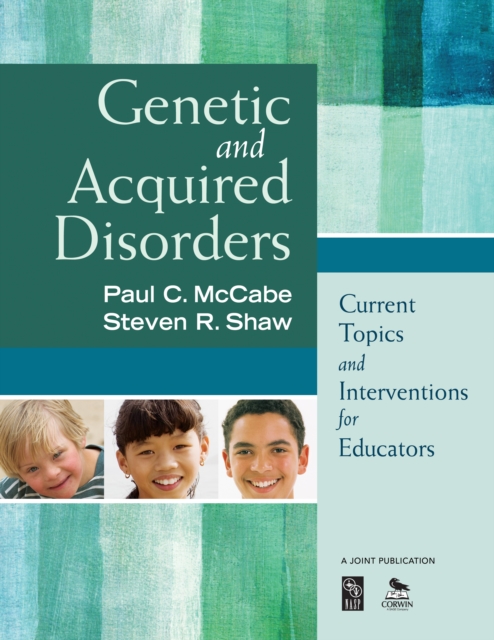
Genetic and acquired disorders
A copy (3-in-1)Psychiatric DisordersGenetic and Acquired DisordersPediatric DisordersCurrent Topics and Interventions for EducatorsPaul C. McCabe, Steven R. ShawThe educatorÆs go-to reference for important pediatric health topics!Written for school psychologists, counselors, administrators, and teachers, each of these concise, well-researched volumes provides a balanced, practical perspective on common health issues. The guides support the work of practitioners who provide differentiated instruction, educational accommodations, special education services, and family outreach and collaboration. Each book is divided into three sections, with each chapter featuring:An introductory case studyVital information about specific health topicsImplications and strategies for educatorsDiscussion questionsHandoutsA review of the latest and most reliable scientific researchB copy (3-in-1)Psychiatric DisordersGenetic and Acquired DisordersPediatric DisordersCurrent Topics and Interventions for EducatorsPaul C. McCabe, Steven R. ShawWritten for school psychologists, counselors, administrators, and teachers, these concise, well-researched volumes provide balanced and practical perspectives on important health issues. Each guide is divided into three sections, with each chapter featuring a case study, background information, strategies for educators, handouts, and a review of the latest and most reliable scientific research.
eBook