
Catalogue Search | MBRL


Are you sure you want to remove the book from the shelf?

{{itemTitle}}
120
result(s) for
"Sheldrake, Rupert"
Sort by:


Cellular senescence, rejuvenation and potential immortality
Ageing, death, and potential immortality lie at the heart of biology, but two seemingly incompatible paradigms coexist in different research communities and have done since the nineteenth century. The universal senescence paradigm sees senescence as inevitable in all cells. Damage accumulates. The potential immortality paradigm sees some cells as potentially immortal, especially unicellular organisms, germ cells and cancerous cells. Recent research with animal cells, yeasts and bacteria show that damaged cell constituents do in fact build up, but can be diluted by growth and cell division, especially by asymmetric cell division. By contrast, mammalian embryonic stem cells and many cancerous and ‘immortalized’ cell lines divide symmetrically, and yet replicate indefinitely. How do they acquire their potential immortality? I suggest they are rejuvenated by excreting damaged cell constituents in extracellular vesicles. If so, our understanding of cellular senescence, rejuvenation and potential immortality could be brought together in a new synthesis, which I call the cellular rejuvenation hypothesis: damaged cell constituents build up in all cells, but cells can be rejuvenated either by growth and cell division or, in ‘immortal’ cell lines, by excreting damaged cell constituents. In electronic supplementary material, appendix, I outline nine ways in which this hypothesis could be tested.
Journal Article
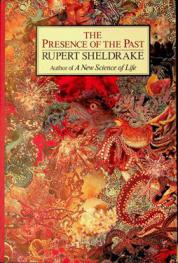

The Nature of Visual Perception: Could a Longstanding Debate Be Resolved Empirically?
There is a deep divide between people's direct experiences and the standard understanding of vision as taught in biology and psychology. When the looker cannot be seen and other sensory cues are excluded, the sense of being stared at, also called scopaesthesia, is impossible from the conventional point of view. Yet it seems to happen. Here, we suggest that thinking again about this puzzle, instead of ignoring or denying it, could deepen our understanding of vision and stimulate fruitful research in the life and mind sciences. The evolution of brain processes that imply a movement of influences out of the eyes would make more sense if such influences actually occur than if they are an illusion. Could scopaesthesia actually happen? No, not if minds are inside heads. But what if minds are not confined to brains?
Journal Article

Boy's best friend : a novel
Lester has just moved to Cape Cod and is starting in a new school, and George is missing his best friend who has moved away, but the two develop a friendship and learn about scientific experimentation when they start working on a school science project, testing psychic ability in dogs, based on an experiment developed by Dr. Rupert Sheldrake.
Book

Beyond the Science Delusion
The “scientific worldview” is immensely influential because the sciences have been so successful. Yet in the second decade of the twenty-first century, when science and technology seem to be at the peak of their power, when their influence has spread all over the world and when their triumph seems indisputable, unexpected problems are disrupting the sciences from within. Most scientists take it for granted that these problems will eventually be solved by more research along established lines, but some, including the author think that they are symptoms of a deeper malaise that paradoxically creates the conditions for a new dialogue with religion.
Journal Article
Beyond the Science Delusion
[...]some cosmologists propose that the continued expansion of the universe is driven by the ongoing creation of \"dark energy\" from the universal gravitational field or from the \"quintessence field\".14 If the laws of nature are more like habits, and there is an inherent memory within the natural world,15 how does this relate to the principle of karma in Hinduism and Buddhism, a chain of cause and effect that implies a kind of memory in nature? In some schools of thought, as in the Lankavatra Sutra of Mahayana Buddhism, there is a cosmic or universal memory.16 If minds are not stored as material traces in brains, but depend on a process of resonance, then memories themselves may not be extinguished at death, although the body through which they are normally retrieved decays.17 Is there some other way in which these memories can continue to act? In an evolutionary, living universe, are humans merely part of an unfolding process on one isolated planet, or does human consciousness play a larger role in cosmic evolution, in some way connected to minds in other parts of the universe?
Journal Article


Animal psi
Psi healing is the systematic, intentional intervention by one or more persons to alter the condition of another living being or beings, by means of focused intention, hand contact, or 'passes', without apparently producing the influence through known, conventional physical or energetic means. During healing treatments, healees and healers commonly report heat, cold, tingling, vibrations and other sensations at the site of treatment. Independent reviews of clinical healing studies by Solfvin and Schouten agree that the evidence is suggestive. In 2000, Abbot's meta-analysis covers fifty-nine randomised controlled studies of healing in humans up to the year 2000. The experience of integrating spiritual healing with conventional medicine in the United Kingdom is instructive. Since 1988, the Doctor-Healer Network has provided a forum for doctors, nurses and other conventional health care professionals to meet with healers, other complementary therapists and clergy to explore how healing can be integrated with conventional medical care.
Book Chapter
