
Catalogue Search | MBRL


Are you sure you want to remove the book from the shelf?

{{itemTitle}}
6
result(s) for
"Shepherd, Gordon M., 1933-"
Sort by:

Foundations of the neuron doctrine
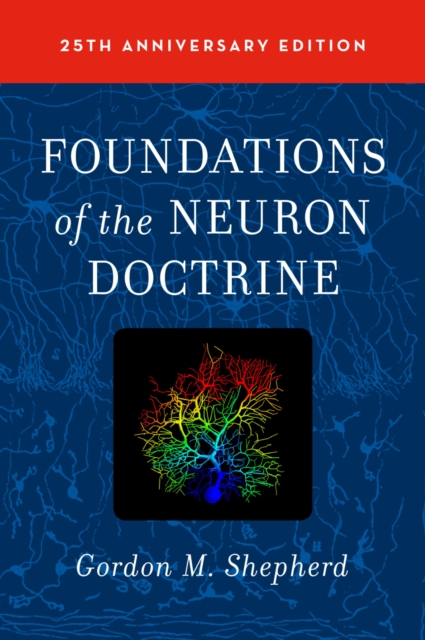
The neuron doctrine, first formulated in 1891, states that the brain is constructed of individual neurons, organized into functioning circuits that mediate behavior. It is the fundamental principal that underlies all of neuroscience and clinical neurology. Foundations of the Neuron Doctrine gives an authoritative account of how this theory was the product of an explosion of histological studies and vigorous debates near the end of the nineteenth century by an extraordinary group of scientists, led by Santiago Ramon y Cajal of Spain, using a selective stain discovered by Camillo Golgi of Italy. They were the first to describe the distinctive branching patterns of nerve cells, providing evidence that the cells interact as individual units to form circuits, opposed however by Golgi, who held out for a view that the nerve cells form syncytial networks. Studies in the 1950s appeared to confirm the nerve cell as an individual unit, as embodied in the neuron doctrine, which became the basis for the rise of concepts of normal and disordered neural function since then. This 25th Anniversary Edition is timely. Recent studies are showing a much greater degree of complexity in neuronal organization, so that the debate of neuron versus network is again coming to the fore in neuroscience research. Unique to this Anniversary Edition is the inclusion of commentaries by distinguished international leaders - Marina Bentivoglio, Xavier De Felipe, Sten Grillner, Paolo Mazzarello, Larry Swanson, and Rafael Yuste - on the continuing relevance of the neuron doctrine for modern studies of the brain at all levels, from genes and molecules to microcircuits, neural networks, and behavior. As this new wave of modern studies expands our concepts of nervous function as the basis of behavior, Foundations of the Neuron Doctrine will be a unique source providing conceptual continuity from classical times to the present and into the future. With commentaries from Marina Bentivoglio Paolo Mazzarello Javier DeFelipe Larry Swanson Sten Grillner Rafael Yuste
eBook


Creating Modern Neuroscience
For modern scientists, history often starts with last week's journals and is regarded as largely a quaint interest compared with the advances of today. However, this book makes the case that, measured by major advances, the greatest decade in the history of brain studies was mid-twentieth century, especially the 1950s. The first to focus on worldwide contributions in this period, this book ranges through dozens of astonishing discoveries at all levels of the brain, from DNA (Watson and Crick), through growth factors (Hamburger and Levi-Montalcini), excitability (Hodgkin and Huxley), synapses (Katz and Eccles), dopamine and Parkinson's (Carlsson), visual processing (Hartline and Kuffler), the cortical column (Mountcastle), reticular activating system (Morruzzi and Magoun) and REM sleep (Aserinsky), to stress (Selye), learning (Hebb) and memory (HM and Milner). The clinical fields are also covered — from Cushing and Penfield, psychosurgery, and brain energy metabolism (Kety), to most of the major psychoactive drugs in use today (beginning with Delay and Deniker) — and much more. There is a focus on the creative process itself; on understanding how the combination of unique personalities, innovative hypotheses, and new methods led to the advances. Insight is given into this process through describing the struggles between male and female, student and mentor, academic and private sector, and the roles of chance and persistence. The book thus provides a multidisciplinary understanding of the revolution that created the modern field of neuroscience, and which set the bar for judging current and future advances.
eBook

Angelo Mosso's Circulation of Blood in the Human Brain
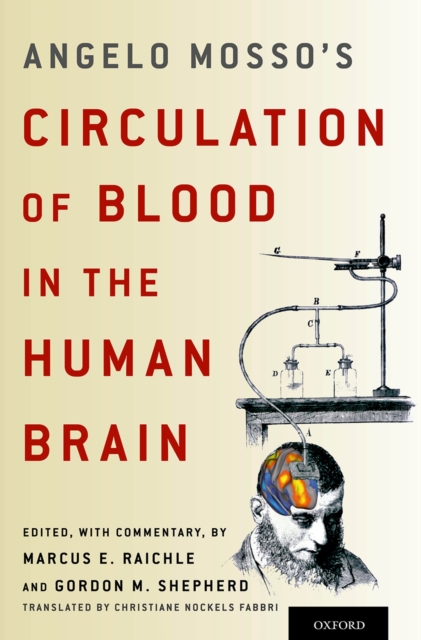
The pioneer in studies of changes in brain flow that underlie modern brain imaging was Angelo Mosso. This volume provides for the first time an English translation of his historic 1881 volume, together with a rich commentary by two leaders of modern brain imaging, Marcus Raichle and Gordon M. Shepherd. The volume offers unique insights into the origins of brain imaging and also the rise of modern cognitive neuroscience. It will be of interest to neuroscientists, neurologists, psychologists, psychiatrists, historians of science and medicine, and the general public.
eBook