
Catalogue Search | MBRL


Are you sure you want to remove the book from the shelf?

{{itemTitle}}
1,002
result(s) for
"Shermer, Michael"
Sort by:


Reason (and science) for hope Enlightenment Now : The Case for Reason, Science, Humanism, and Progress Steven Pinker Viking, 2018. 576 pp
An optimistic treatise celebrates the enlightened thinking that has made us happier, healthier, and safer than ever In Enlightenment Now , Steven Pinker documents how we have systematically applied knowledge to problems in order to propel ourselves to unimaginable levels of progress. Since the Enlightenment, he reveals, more people live longer, healthier, happier, and more meaningful lives filled with enriching works of art, music, literature, science, technology, and medicine.
Journal Article


Tracking Science: An Alternative for Those Excluded by Citizen Science
In response to recent discussion about terminology, we propose \"tracking science\" as a term that is more inclusive than citizen science. Our suggestion is set against a post-colonial political background and large-scale migrations, in which \"citizen\" is becoming an increasingly contentious term. As a diverse group of authors from several continents, our priority is to deliberate a term that is all-inclusive, so that it could be adopted by everyone who participates in science or contributes to scientific knowledge, regardless of socio-cultural background. For example, current citizen science terms used for Indigenous knowledge imply that such practitioners belong to a sub-group that is other, and therefore marginalized. Our definition for \"tracking science\" does not exclude Indigenous peoples and their knowledge contributions and may provide a space for those who currently participate in citizen science, but want to contribute, explore, and/or operate beyond its confinements. Our suggestion is not that of an immediate or complete replacement of terminology, but that the notion of tracking science can be used to complement the practice and discussion of citizen science where it is contextually appropriate or needed. This may provide a breathing space, not only to explore alternative terms, but also to engage in robust, inclusive discussion on what it means to do science or create scientific knowledge. In our view, tracking science serves as a metaphor that applies broadly to the scientific community-from modern theoretical physics to ancient Indigenous knowledge.
Journal Article

Skeptic : viewing the world with a rational eye
Seventy-five of author's contributions to Scientific American magazine.
Book
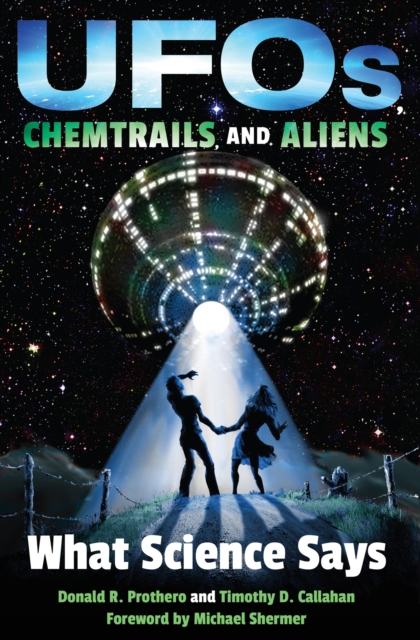
UFOs, Chemtrails, and Aliens
UFOs. Aliens. Strange crop circles. Giant figures scratched in the desert surface along the coast of Peru. The amazing alignment of the pyramids. Strange lines of clouds in the sky. The paranormal is alive and well in the American cultural landscape. InUFOs, Chemtrails, and Aliens, Donald R. Prothero and Tim Callahan explore why such demonstrably false beliefs thrive despite decades of education and scientific debunking. Employing the ground rules of science and the standards of scientific evidence, Prothero and Callahan discuss a wide range of topics including the reliability of eyewitness testimony, psychological research into why people want to believe in aliens and UFOs, and the role conspiratorial thinking plays in UFO culture. They examine a variety of UFO sightings and describe the standards of evidence used to determine whether UFOs are actual alien spacecraft. Finally, they consider our views of aliens and the strong cultural signals that provide the shapes and behaviors of these beings. While their approach is firmly based in science, Prothero and Callahan also share their personal experiences of Area 51, Roswell, and other legendary sites, creating a narrative that is sure to engross both skeptics and believers.
eBook

Philosophy: Creative resilience
Michael Shermer sifts through a study of the science of randomness and our responses to it.
Journal Article

This View of Science: Stephen Jay Gould as Historian of Science and Scientific Historian, Popular Scientist and Scientific Popularizer
Science historian Ronald Numbers once remarked that the two most influential historians of science of the 20th century were Thomas Kuhn and Stephen Jay Gould. All historians are deeply familiar with Kuhn's work and influence, and most know of the remarkable impact Gould has had on evolutionary theory through both his professional and popular works. But little attention has been paid to the depth, scope, and importance of Gould's rôle as historian and philosopher of science, and his use of popular science exposition to reinforce old knowledge and generate new. This paper presents the results of an extensive quantitative content analysis of Gould's 22 books, 101 book reviews, 479 scientific papers, and 300 \"Natural History\" essays, in terms of their subject matter (Evolutionary Theory, History and Philosophy of Science, Natural History, Paleontology/Geology, Social Science/Commentary), and thematic dichotomies (Theory-Data, Time's Arrow-Time's Cycle, Adaptationism- Nonadaptationism, Punctuationism-Gradualism, Contingency-Necessity). Special emphasis is placed on the interaction between the subjects and themata, how Gould has used the history of science to reinforce his evolutionary theory (and vice versa), and how his philosophy of science has influenced both his evolutionary theory and his historiography. That philosophy can best be summed up in a quotation from Charles Darwin, frequently cited by Gould: 'All observation must be for or against some view if it is to be of any service'. Gould followed Darwin's advice throughout his career, including his extensive writings on the history and philosophy of science.
Journal Article
The Immortalist Transcendent Man The Life and Ideas of Ray Kurzweil Barry Ptolemy, Director Ptolemaic Productions and Therapy Studios, USA, 2009. 83 minutes. http://transcendentman.com
Ptolemy's film spotlights Ray Kurzweil and his radically optimistic views of how technology will soon transform humanity's future. Ptolemy's film spotlights Ray Kurzweil and his radically optimistic views of how technology will soon transform humanity's future.
Journal Article
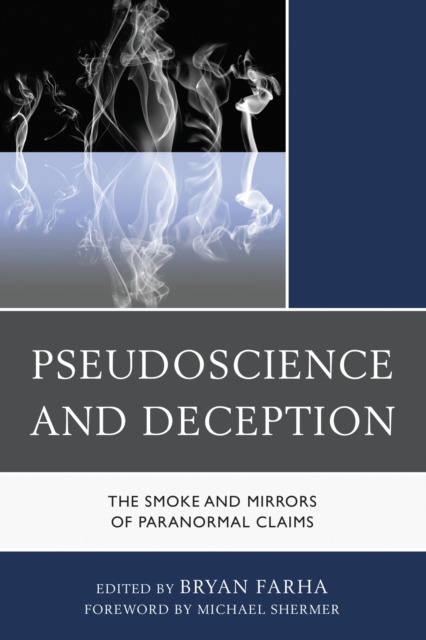
Pseudoscience and deception
Pseudoscience and Deception is a compilation of some of the most eye-opening skeptical articles pertaining to extraordinary claims and pseudoscience. The articles explore paranormal, extraordinary, or fringe-science claims and reveal logical explanations or outline the deceptive tactics involved in convincing the vulnerable. Topics include claims of astrology, psychic ability, alternative medicine, after-death communication, psychotherapy, and pseudoscience. The contributors to this book are among the most accomplished critical thinkers, scientists, and educators in the world and tackle their respective topics from a rational, logical, and skeptical perspective. Most students are seldom excited to study “critical thinking”—with the exception of allegedly paranormal phenomena as the subject matter. Educators must seize this golden opportunity to witness and experience students’ genuine engagement in studying critical thinking.
eBook