
Catalogue Search | MBRL


Are you sure you want to remove the book from the shelf?

{{itemTitle}}
331
result(s) for
"Shields, Sarah"
Sort by:


Correcting for the Problems of the Survey Course
Every year, I teach a broad survey course on the Modern Middle East (between 120 and 200 students), along with seminars on a wide range of topics. Regardless of the content of these courses, I have three big goals. I want them to come away understanding that the history of the region is more complex and fascinating than they learned in high school and from the pundits, and the simplistic assumptions and solutions they offer answer no questions. Second, I want to persuade them that things change over time, and we can't understand anything without knowing its context—and the context of the Middle East is global. But most imperative: I want to convince students to be critical in analyzing sources of information. Informed citizenship requires students to be able to think critically, and that is what historians do offer. We analyze multiple sources in myriad ways.
Journal Article

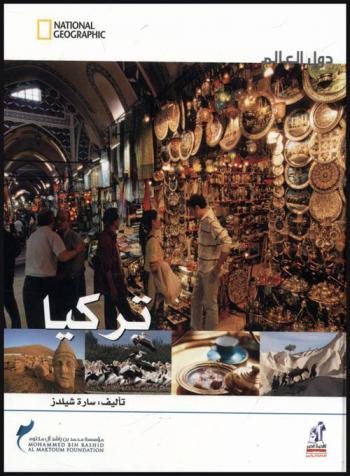
Turkey
Presents current, detailed information on Turkey, from economy and the environment to geography and social trends.
Book

The Greek-Turkish population exchange: internationally administered ethnic cleansing
The photographs are compelling: Greek Orthodox Christians are gathered in small groups on the Aegean coast of what is now Turkey, wearing too much clothing for the hot day, whatever possessions they could carry sitting at their feet, their faces drawn with worry as they stare at the water, awaiting the ships that would take them to Greece. They were being expelled from Anatolia, where their ancestors had lived and died and worked and prayed for so many centuries that most claimed no other homeland. These Christians followed a patriarch who had resided in Constantinople/Istanbul since the year 330 and whose massive cathedral, Hagia Sophia, had already become a major tourism site. For centuries, the community had regulated prayer, education, taxation and communal life under the ruling Ottoman sultans. The status of Orthodox Christians, like those of the other Ottoman millets (Armenian, Syriac and Catholic Christians, as well as Jews) began to change dramatically as increasingly powerful European empires intervened in Ottoman territories, claiming to be `protecting minorities.' Still, despite anti-Armenian violence at the end of the 1800s, it was only with the Balkan wars at the beginning of the twentieth century that the Ottoman regime began to define Greek Orthodox Christian Ottomans as enemies. And it took a Greek invasion of Anatolia in 1919 to set in motion the catastrophic events that would result in the expulsion of these Christians standing on the Aegean shore.
Journal Article
The Greek-Turkish Population Exchange: Internationally Administered Ethnic Cleansing
The photographs are compelling: Greek Orthodox Christians are gathered in small groups on the Aegean coast of what is now Turkey, wearing too much clothing for the hot day, whatever possessions they could carry sitting at their feet, their faces drawn with worry as they stare at the water, awaiting the ships that would take them to Greece. They were being expelled from Anatolia, where their ancestors had lived and died and worked and prayed for so many centuries that most claimed no other homeland. These Christians followed a patriarch who had resided in Constantinople/Istanbul since the year 330 and whose massive cathedral, Hagia Sophia, had already become a major tourism site. Adapted from the source document.
Journal Article

A Peculiar Case of the Abscopal Effect: Radioactive Iodine Therapy Incidentally Palliating Marginal Zone Lymphoma
The abscopal effect is an extremely rare phenomenon occurring when irradiation or treatment of a primary tumor burden not only results in debulking of the targeted site but also reduces tumor size at distant sites from the intended treatment area. We present the abscopal effect occurring in a patient with low-grade marginal zone lymphoma who subsequently received radioactive iodine therapy for papillary thyroid carcinoma. She was 67 years old when a routine complete blood count at her primary care physician’s office yielded a persistent leukocytosis of 14,500/μL with lymphocytosis of 9,870/μL. Immunophenotyping and fluorescence in situ hybridization (FISH) analysis confirmed low-grade marginal zone lymphoma. Over eight years, her peak leukocyte and lymphocyte counts were 24,100/μL and 18,100/μL, respectively. Subsequently, she was diagnosed with papillary thyroid carcinoma after presenting with a new complaint of dysphagia. A total thyroidectomy was performed, followed by 172.1 millicuries of oral I-131 sodium iodine radioactive ablation therapy. Following treatment, her leukocyte and lymphocyte counts were 3,100/μL and 1,100/μL, respectively. Over the next four years, her leukocyte and lymphocyte counts remained within normal limits and she remained symptom free. To our knowledge, there has never been a published report describing the use of radioactive iodine causing abscopal effect benefits for patients with underlying lymphoproliferative diseases.
Journal Article


The Voices of Middle School Teachers: How Middle School Teachers’ Perceptions and Experiences Influence Their Approach to Establishing Grading Practices in Their Classrooms: a Case Study
This research involved a qualitative case study of middle school teachers’ perceptions and experiences that influence their classroom grading practices. It also identified the purpose of middle school grades through middle school teachers' lens, how middle school grading is inconsistent, and how there is a need to establish standard practices. Nine middle school teachers who teach in an Oregon middle school, have 5+ years of teaching experience, and assign grades to middle school students were involved in this study. The research sought to answer four research questions. Data were collected through virtual one-on-one interviews and a virtual focus group. A significant pattern throughout this study indicated that grading is intended to provide feedback to stakeholders of student learning. For grading to be used as feedback, a common practice needs to be used systematically. Teachers need to feel more prepared when they graduate from their pre-service programs, and building leaders need to intentionally plan professional development on grading practices to ensure commonality among their staff. The traditional grading system is outdated and does not accurately reflect what students have learned. Because grading is so personal, teachers have to be a part of the conversation. Both the literature and the theoretical framework used for this study support these findings.
Dissertation