
Catalogue Search | MBRL


Are you sure you want to remove the book from the shelf?

{{itemTitle}}
158
result(s) for
"Shirlow, Peter"
Sort by:
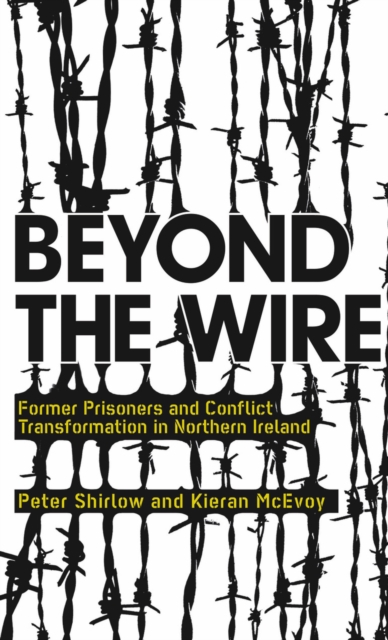
Beyond the Wire
This book provides the first detailed examination of the role played by former loyalist and republican prisoners in grass roots conflict transformation work in the Northern Ireland peace process. It challenges the assumed passivity of former prisoners and ex-combatants. Instead, it suggests that such individuals and the groups which they formed have been key agents of conflict transformation. They have provided leadership in challenging cultures of violence, developed practical methods of resolving inter-communal conflict and found ways for communities to explore their troubled past. In analysing this, the authors challenge the sterile demonisation of former prisoners and the processes that maintain their exclusion from normal civic and social life.
The book is a constructive reminder of the need for full participation of both former combatants and victims in post-conflict transformation. It also lays out a new agenda for reconciliation which suggests that conflict transformation can and should begin 'from the extremes'.
The book will be of interest to students of criminology, peace and conflict studies, law and politics, geography and sociology as well as those with a particular interest in the Northern Ireland conflict.
eBook

Bidirectional effects between maternal mental health and adolescent internalizing problems across six years in Northern Ireland
Background Emerging evidence indicates the existence of bidirectional relations between mothers’ mental health and adolescent adjustment, but few studies have examined these relations in contexts of high environmental adversity, including economic deprivation and political violence. Given other empirical connections between political violence and adolescent adjustment problems, the impact of child adjustment problems on maternal mental health may be exacerbated in contexts of sectarian violence. Methods Addressing this gap, latent change score modeling was used to examine interrelations between trajectories of maternal mental health and adolescent internalizing symptoms over time in communities afflicted by political conflict. Over six years, 999 adolescent‐mother dyads participated in a longitudinal study in Belfast, Northern Ireland. Six‐hundred ninety‐five families were originally recruited in year 1, with 304 recruited to supplement the sample in year 3; the largest available sample for a given year was 760 dyads. Models including maternal mental health, adolescent internalizing symptomatology, and political violence (i.e., sectarian antisocial behavior) as a time‐varying covariate were tested. Results Results demonstrated that for both mothers and adolescents in a dyadic pairing, higher rates of symptomology in one member of the dyad were related to symptoms observed in the other member. Results also suggest that political violence and factors related to social deprivation increased symptoms across the dyad. Conclusion This study advances understanding of the bidirectional impact between maternal mental health and adolescent internalizing over time in contexts of political violence. This study examined the bidirectional impact between maternal mental health and adolescent internalizing 6 consecutive years in youth from Belfast, Northern Ireland. Results demonstrated that higher symptomology in one pair of the mother‐adolescent dyad predicted an increase of symptoms for the other member in the following year. Politically‐related antisocial behavior in the community increased mother's and adolescent's symptomatology, thereby impacting these bidirectional relations.
Journal Article

Belfast
Paris, Jerusalem and Belfast are cities that are shaped by political violence, death and the injustices caused by segregated living. But divided cities are becoming places within which policy makers and politicians project an image of normality despite the facts of social injustice, victimhood and harm.
It is a commonly held view that the city of Belfast is emerging out of conflict and into a new era of tolerance and transformation. This book challenges this viewpoint. The authors pinpoint how international peace accords, such as the Belfast Agreement, are gradually eroded as conflict shifts into a stale and repetitive pattern of ethnically-divided competition over resources.
This book is a vivid portrait of how segregation, lived experience and fear are linked in a manner that undermines democratic accountability. It argues that the control of place remains the most important weapon in the politicisation of communities and the reproduction of political violence. Segregation provides the laboratory within which sectarianism continues to grow.
eBook
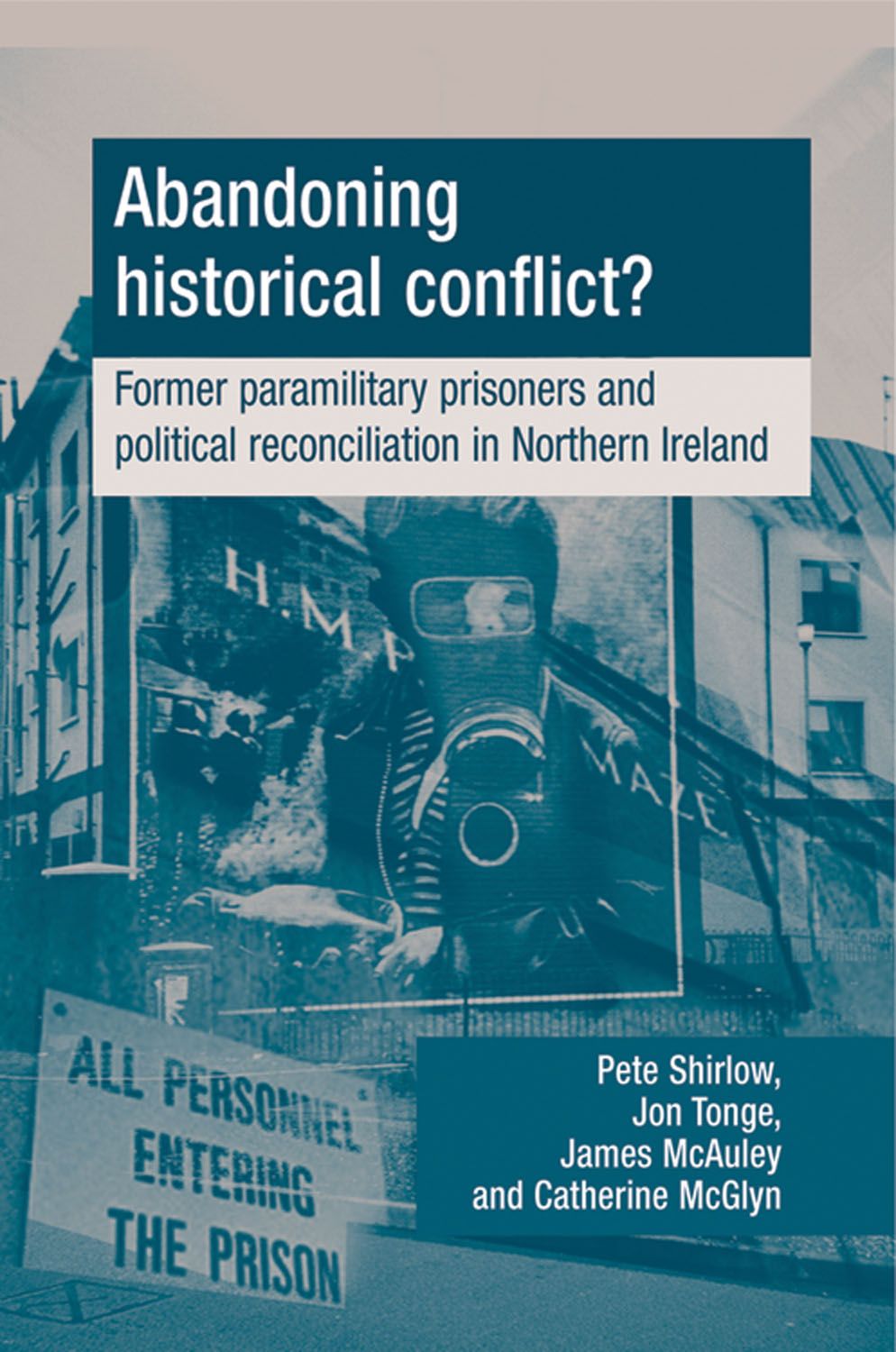
Abandoning historical conflict?
Drawing on over 150 interviews with former IRA, INLA, UVF and UFF prisoners, this is a major analysis of why Northern Ireland has seen a transition from war to peace. Most accounts of the peace process are ‘top-down’, relying upon the views of political elites. This book is ‘bottom-up’, analysing the voices of those who actually ‘fought the war’. What made them fight, why did they stop and what are the lessons for other conflict zones?Using unrivalled access to members of the armed groups, the book, available for the first time in paperback, offers a critical appraisal of one-dimensional accounts of the onset of peace, grounded in ‘mutually hurting stalemate’ and ‘ripeness’, which downgrade the political and economic aspects of conflict. Military stalemate had been evident since the early 1970s and offers little in explaining the timing of the peace process. Moreover, republicans and loyalists based their ceasefires upon very different perceptions of transformation or victory.Based on a Leverhulme Trust project and written by an expert team, Abandoning Conflict offers a new analysis, based on subtle interplays of military, political, economic and personal changes and experiences.
eBook

The Geography of Conflict and Death in Belfast, Northern Ireland
The conflict known as the \"Troubles\" in Northern Ireland began during the late 1960s and is defined by political and ethno-sectarian violence between state, pro-state, and anti-state forces. Reasons for the conflict are contested and complicated by social, religious, political, and cultural disputes, with much of the debate concerning the victims of violence hardened by competing propaganda-conditioning perspectives. This article introduces a database holding information on the location of individual fatalities connected with the contemporary Irish conflict. For each victim, it includes a demographic profile, home address, manner of death, and the organization responsible. Employing geographic information system (GIS) techniques, the database is used to measure, map, and analyze the spatial distribution of conflict-related deaths between 1966 and 2007 across Belfast, the capital city of Northern Ireland, with respect to levels of segregation, social and economic deprivation, and interfacing. The GIS analysis includes a kernel density estimator designed to generate smooth intensity surfaces of the conflict-related deaths by both incident and home locations. Neighborhoods with high-intensity surfaces of deaths were those with the highest levels of segregation (> 90 percent Catholic or Protestant) and deprivation, and they were located near physical barriers, the so-called peacelines, between predominantly Catholic and predominantly Protestant communities. Finally, despite the onset of peace and the formation of a power-sharing and devolved administration (the Northern Ireland Assembly), disagreements remain over the responsibility and \"commemoration\" of victims, sentiments that still uphold division and atavistic attitudes between spatially divided Catholic and Protestant populations.
Journal Article

Neighborhood Effects of Intergroup Contact on Change in Youth Intergroup Bias
Intergroup contact plays a critical role in the reduction of prejudice; however, there is limited research examining the multiple ways through which contact can impact trajectories of development for adolescents in divided societies. Thus, the goal of the current study was to examine individual- and context-level effects of intergroup contact on change in intergroup bias through adolescence. Hierarchical linear modeling was used to analyze five waves of data from 933 youth (Mage = 15.5, SD = 4.03; range: 10–20 years old; 52% female) living in 38 neighborhoods in Belfast, Northern Ireland. The results suggest that youth increase in bias with age. Adolescents with more frequent intergroup contact increase more quickly, and those who report higher quality of contact increase more slowly. Both frequency and quality of contact at the neighborhood level predicted slower increases in bias across adolescence. The results add to a growing literature that combines social and developmental approaches to understanding how intergroup processes and intergroup divide impact youth development of intergroup attitudes and behaviors. The results are discussed in terms of the importance of both individual experiences and the context of intergroup contact for youth development in divided contexts.
Journal Article

Age as a Dynamic Moderator of Relations between Exposure to Political Conflict and Mental Health in Belfast, Northern Ireland
Identifying how, when, and under what conditions exposure to political conflict is associated with youth mental health problems is critical to developing programming to help youth exposed to various forms of political violence. The current study uses Time Varying Effects Modeling (TVEM) to examine how relations between exposure to ethno-politically motivated antisocial behavior and mental health problems change as a function of age in a sample of youth from Belfast, Northern Ireland. Young people (N = 583, Mage 16.51 wave 1, 17.23 wave 2) self-reported their exposure to sectarian antisocial behavior, nonsectarian antisocial behavior, and mental health problems as part of a longitudinal study of youth across multiple neighborhoods in Belfast. The results suggest mental health problems and associations with exposure to sectarian antisocial behavior change in nonlinear patterns throughout adolescence, with the strongest links between exposure to political conflict and mental health between ages 16 and 19. Significant relations between nonsectarian antisocial behavior and mental health problems were not indicated for the full sample but the results suggested a relation emerged in later adolescence for Protestant youth, the historical majority group. The value of this exploratory approach to examining relations between key context and psychological variables for youth in contexts of political tension and violence is discussed.
Journal Article
Abandoning historical conflict?
Drawing on over 150 interviews with former IRA, INLA, UVF and UFF prisoners, this is a major analysis of why Northern Ireland has seen a transition from war to peace. Most accounts of the peace process are ‘top-down’, relying upon the views of political elites. This book is ‘bottom-up’, analysing the voices of those who actually ‘fought the war’. What made them fight, why did they stop and what are the lessons for other conflict zones? Based on a Leverhulme Trust project and written by an expert team, the book offers a new analysis, based on subtle interplays of military, political, economic and personal changes and experiences. Combined, these allowed combatants to move from violence to peace whilst retaining core ideological beliefs and maintaining long-term constitutional visions.
eBook

Belfast
Paris, Jerusalem and Belfast are cities that are shaped by political violence, death and the injustices caused by segregated living. But divided cities are becoming places within which policy makers and politicians project an image of normality despite the facts of social injustice, victimhood and harm. It is a commonly held view that the city of Belfast is emerging out of conflict and into a new era of tolerance and transformation. This book challenges this viewpoint. The authors pinpoint how international peace accords, such as the Belfast Agreement, are gradually eroded as conflict shifts into a stale and repetitive pattern of ethnically-divided competition over resources. This book offers a vivid portrait of how segregation, lived experience and fear are linked in a manner that undermines democratic accountability. The authors argue that the control of place remains the most important weapon in the politicisation of communities and the reproduction of political violence. Segregation provides the laboratory within which sectarianism continues to grow. Examining the implications of these social divisions, the authors draw upon a wide international literature and provide insights that will be useful to students of geography, planning, politics, sociology and peace studies.
eBook

Beyond the Wire
This book provides the first detailed examination of the role played by former loyalist and republican prisoners in grass roots conflict transformation work in the Northern Ireland peace process. It challenges the assumed passivity of former prisoners and ex-combatants. Instead, it suggests that such individuals and the groups which they formed have been key agents of conflict transformation. They have provided leadership in challenging cultures of violence, developed practical methods of resolving inter-communal conflict and found ways for communities to explore their troubled past. In analysing this, the authors challenge the sterile demonisation of former prisoners and the processes that maintain their exclusion from normal civic and social life. The book is a constructive reminder of the need for full participation of both former combatants and victims in post-conflict transformation. It also lays out a new agenda for reconciliation which suggests that conflict transformation can and should begin ‘from the extremes’. The book will be of interest to students of criminology, peace and conflict studies, law and politics, geography and sociology as well as those with a particular interest in the Northern Ireland conflict.
eBook