
Catalogue Search | MBRL


Are you sure you want to remove the book from the shelf?

{{itemTitle}}
86
result(s) for
"Shuler, Jack"
Sort by:

The thirteenth turn : a history of the noose
\"The hangman's knot is a simple thing to tie, just a rope carefully coiled around itself up to thirteen times. But in those thirteen turns lie a powerful symbol, one of the most powerful in history, and particularly in America, whose relationship to the noose is all too deep and complicated. Our history with hangings is shockingly recent. The last man to be hanged in the United States was Billy Bailey, who was executed in Delaware in 1996 for committing a double murder. Hanging has since been disallowed in that state, but it is still legal, in certain situations, in New Hampshire and Washington. An incident in Jena, Louisiana, in 2006, in which nooses were used to symbolically menace black students, is a fresh reminder of just how potent this emblem of racism and savage violence still is. All that meaning, and all that history, is a lot to see in a coiled rope. But the fact is, that meaning is felt by all of us. And Jack Shuler, a professor of American literature and black studies, is the right man to explore it: from Judas Iscariot, perhaps the most infamous hanged man, to the killing of Perry Smith and Richard Hickock, the murderers at the heart of Capote's In Cold Blood, and beyond. Shuler goes era by era, tracing the evolution of this dark practice in episodes, and revealing the ways each one impacted the society around it. As he investigates the death of John Brown and the 1930 lynching that inspired the song \"Strange Fruit,\" his travels take him across America-and not just the South-uncovering our deep secrets and searching for meaning. Shuler's account is a kind of shadow history of America: for all the celebrated strides we've made towards integration and harmony, those victories are hollow without an appreciation for what they vanquished. The Thirteenth Turn is a courageous and searching book that reminds us where we come from, and what is lost if we forget. \"-- Provided by publisher.
Book

Calling Out Liberty
On Sunday, September 9, 1739, twenty Kongolese slaves armed themselves by breaking into a storehouse near the Stono River south of Charleston, South Carolina. They killed twenty-three white colonists, joined forces with other slaves, and marched toward Spanish Florida. There they expected to find freedom. One report claims the rebels were overheard shouting, \"Liberty!\" Before the day ended, however, the rebellion was crushed, and afterwards many surviving rebels were executed. South Carolina rapidly responded with a comprehensive slave code. The Negro Act reinforced white power through laws meant to control the ability of slaves to communicate and congregate. It was an important model for many slaveholding colonies and states, and its tenets greatly inhibited African American access to the public sphere for years to come.
The Stono Rebellion serves as a touchstone forCalling Out Liberty, an exploration of human rights in early America. Expanding upon historical analyses of this rebellion, Jack Shuler suggests a relationship between the Stono rebels and human rights discourse in early American literature. Though human rights scholars and policy makers usually offer the European Enlightenment as the source of contemporary ideas about human rights, this book repositions the sources of these important and often challenged American ideals.
eBook
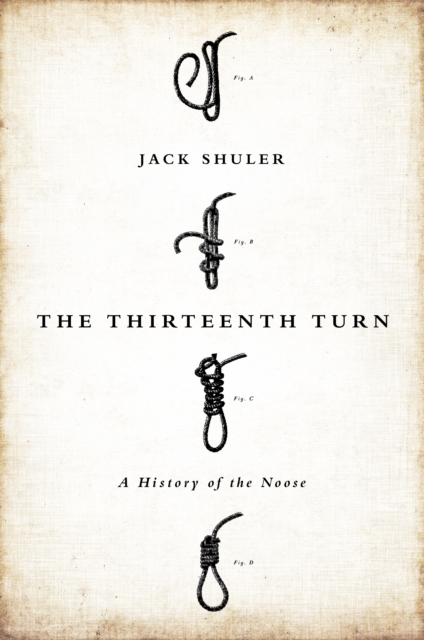
The Thirteenth Turn
Jack Shuler holds the John and Christine Warner Chair at Denison University, where he is an associate professor teaching American literature and Black Studies. He is the author of two books on the nexus of race and violence in America, Calling Out Liberty and Blood and Bone. Shuler's criticism, interviews, reviews, and poems have appeared in the Columbia Journal of American Studies, Journal of Southern History, South Carolina Review, Southern Studies, and Failbetter, among others. He lives in Ohio.
eBook

Blood and Bone
On the night of February 8, 1968, South Carolina state highway patrolmen fired on civil rights demonstrators in front of South Carolina State College, a historically black institution in the town of Orangeburg. Three young black men—Samuel Hammond, Delano Middleton, and Henry Smith—were killed, and twenty-eight other protestors were injured. Preceding the infamous events at Kent State University by more than two years, the Orangeburg Massacre, as it came to be known, was one of the first violent civil rights confrontations on an American college campus. The patrolmen involved were exonerated while victims and their families were left still seeking justice. To this day the community of Orangeburg endeavors to find resolution and reconciliation. In Blood and Bone, Orangeburg native Jack Shuler offers a multifaceted examination of the massacre and its aftermath, uncovering a richer history than the one he learned as a white youth growing up in Orangeburg. Shuler focuses on why events unfolded and escalated as they did and on the ramifications that still haunt the community. Despite the violence of the massacre and its contentious legacy, Orangeburg is a community of people living and working together. Shuler tells their fascinating stories and pays close attention to the ways in which the region is shaping a new narrative on its own, despite the lack of any official reexamination of the massacre. He also explores his own efforts to understand the tragedy in the context of Orangeburg's history of violence. His native connections gave him access to individuals, black and white, who have previously not spoken out publicly. Blood and Bone breaks new ground as an investigation of the massacre and also as a reflection by a proud Orangeburg native on the meanings of Southern community. Shuler concludes that the history of race and violence in Orangeburg mirrors the history of race relations in the United States—a murky and contested narrative, complicated by the emotions and motivations of those who have shaped the story and of those who have refused to close the book on it. Orangeburg, like the rest of the nation, carries the historical burdens of slavery, war, Reconstruction, Jim Crow, and civil rights. Blood and Bone exposes the ways in which historical memory affects the lives of ordinary Americans. Shuler explores how they remember the Orangeburg Massacre, what its meaning holds for them now, and what it means for the future of the South and the nation.
eBook

Thinking and Practicing Reconciliation
Thinking and Practicing Reconciliation asserts that literary representations of conflict offer important insights into processes of resolution and practices of reconciliation, and that it is crucial to bring these debates into the post-secondary classroom. The essays collected here aim to help teachers think deeply about the ways in which we can productively integrate literature on/as reconciliation into our curricula. Until recently, scholarship on teaching and learning in higher education h.
eBook

CLAIMING RIGHTS
One of the earliest contacts Europeans had with the land that some natives calledChicorawas during a reconnaissance mission supported by a Spanish planter named Lucas Vásquez de Ayllón. These Spanish explorers invited a group of Native Americans onto their ships and then proceeded, without warning, to set sail for Hispaniola. In some ways this auspicious beginning would serve as the opening salvo in the continuous warfare of slavery that would eventually entrench itself in the sands of Carolina. From the moment a group of English investors gained control of the territory in 1663—a gift from King Charles
Book Chapter