
Catalogue Search | MBRL


Are you sure you want to remove the book from the shelf?

{{itemTitle}}
73
result(s) for
"Sigmund, Karterud"
Sort by:
Generalizability studies of the Global Assessment of Functioning–Split version
The study aimed to use the Generalizability Theory to investigate the reliability and precision of the split version of the Global Assessment of Functioning (GAF).
Six case vignettes were assessed by 2 samples; one by 19 experienced and independent raters and another by 58 experienced raters from 8 different day-treatment units, evaluating both symptom and function scores of GAF.
Generalizability studies were conducted to disentangle relevant variance components accounting for error variance in GAF scores. Furthermore, decision studies were conducted to estimate the reliability of different measurement designs, as well as precision in terms of error tolerance ratio.
Both symptom and function scores of GAF were found to be highly generalizable, and a measurement design of 2 raters per subject was found to be most efficient with respect to reliability, precision, and use of resources.
Both symptom and function scores of GAF seem highly consistent across experienced raters.
Journal Article

Misleading about MBT in Oslo
In this correspondence we correct some misleading information about mentalization-based treatment in Oslo, Norway.In this correspondence we correct some misleading information about mentalization-based treatment in Oslo, Norway.
Journal Article

Testing Different Versions of the Affective Neuroscience Personality Scales in a Clinical Sample
As a tool to investigate the experiences of six primary emotions, Davis, Panksepp, and Normansell developed the Affective Neuroscience Personality Scales (ANPS). However, the psychometric properties of the ANPS have been questioned, and in particular the factor structure. This study replicates earlier psychometric studies on ANPS in a sample of (546) personality disordered patients, and also includes ANPS-S, a recent short version of ANPS by Pingault and colleagues, and a truncated version of BANPS by Barrett and colleagues.
The study of the full ANPS revealed acceptable internal consistencies of the primary emotion subscales, ranging from 0.74-0.87. However, factor analyses revealed poor to mediocre fit for a six factor solution. Correlational analyses, in addition, revealed too high correlations between PLAY and SEEK, and between SADNESS and FEAR. The two short versions displayed better psychometric properties. The range of internal consistency was 0.61-0.80 for the BANPS scales and 0.65-84 for the ANPS-S. Backward Cronbach Alpha Curves indicated potentials for improvement on all three versions of the questionnaire. Items retained in the short versions did not systematically cover the full theoretical content of the long scales, in particular for CARE and SADNESS in the BANPS. The major problems seem to reside in the operationalization of the CARE and SADNESS subscales of ANPS.
Further work needs to be done in order to realize a psychometrically sound instrument for the assessment of primary emotional experiences.
Journal Article

Mentalization-Based Group Therapy (MBT-G)
This is the first comprehensive manual for mentalization-based group therapy. The author has developed the manual in close cooperation with Anthony Bateman and a team of group analysts. It covers all the aspects of MBT which are necessary to produce an informed and qualified group therapist.
eBook
The symptom and function dimensions of the Global Assessment of Functioning (GAF) scale
The objective was to investigate the validity and clinical impact of the symptom and function dimensions of the Global Assessment of Functioning (GAF) in the Diagnostic and Statistical Manual of Mental Disorders (DSM), Fourth Edition. Is there any need for revision with respect to the DSM, Fifth Edition?
The sample comprised 2695 patients consecutively admitted to 14 different treatment units participating in the Norwegian Network of Personality-Focused Treatment Programs from 1998 to 2007.
Convergent and discriminant validity of the symptom and function dimensions of GAF was analyzed by their associations with demographic variables, diagnostic status, and other self-reported variables assessing symptom distress, interpersonal problems, work and social impairment, and quality of life.
The validity of the separate GAF dimensions was confirmed by discriminant and concurrent associations to other relevant clinical measures. However, the traditional GAF measure based on the lower score of either symptom or function level was found to serve well as a global indicator of symptom distress and social dysfunction. A substantial difference between the symptom and function score of GAF was found in about 10% of the cases; and when differences were found, functional impairment was most often more severe.
This study confirms the validity of the 2 GAF dimensions. However, substantial differences between these dimensions are rarely occurring. We therefore recommend that the GAF scale be prolonged in the DSM, Fifth Edition, roughly in the same shape as in the DSM, Fourth Edition.
Journal Article

Smaller stress-sensitive hippocampal subfields in women with borderline personality disorder without posttraumatic stress disorder
Animal and human studies have suggested that hippocampal subfields are differentially vulnerable to stress, but subfield volume has not been investigated in patients with borderline personality disorder (BPD). Based on the putative role of stressful life events as vulnerability factors for BPD, we hypothesized that patients with BPD would exhibit reduced volumes for the stress-sensitive dentate gyrus (DG) and the cornu ammonis (CA) 3 subfields volumes, and that these volumes would be associated with traumatic childhood experiences.
All participants underwent 3 T magnetic resonance imaging. Hippocampal subfield volumes were estimated using an automated and validated segmentation algorithm implemented in FreeSurfer. Age and total subcortical grey matter volume were covariates. We assessed traumatic childhood experiences using the Childhood Trauma Questionnaire (CTQ).
A total of 18 women with BPD and 21 healthy control women were included in the study. Only 1 patient had comorbid posttraumatic stress disorder (PTSD). The volumes of the left (p = 0.005) and right (p = 0.011) DG-CA4 and left (p = 0.007) and right (p = 0.005) CA2–3 subfields were significantly reduced in patients compared with controls. We also found significant group differences for the left (p = 0.032) and right (p = 0.028) CA1, but not for other hippocampal subfields. No associations were found between CTQ scores and subfield volumes.
The self-reported CTQ might be inferior to more comprehensive assessments of traumatic experiences. The sample size was moderate.
The volumes of stress-sensitive hippocampal subfields are reduced in women with BPD without PTSD. However, the degree to which childhood trauma is responsible for these changes is unclear.
Journal Article
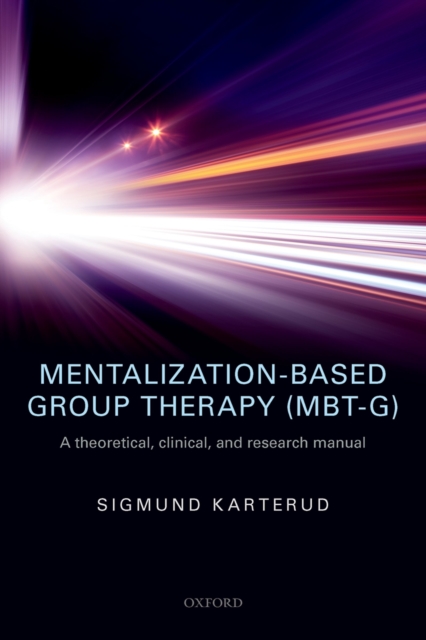
Mentalization-Based Group Therapy (MBT-G): A theoretical, clinical, and research manual: A theoretical, clinical, and research manual
Mentalization-based treatment (MBT) has gained international acclaim as an efficient treatment for patients with borderline personality disorder. The approach is also helpful for other personality disorders and conditions that are difficult to treat, e.g. addiction and eating disorders. MBT consists of a psychoeducational, an individual, and a group therapy component. This is the first comprehensive manual for mentalization-based group therapy. The author has developed the manual in close cooperation with Anthony Bateman and a team of group analysts. It covers all the aspects of MBT which are necessary to produce an informed and qualified group therapist. The book covers the theory behind mentalization and borderline personality disorder (especially its evolutionary roots), the structure of MBT and a discussion of previous experiences with group psychotherapy for borderline patients. The core of the book explains the main principles of MBT-G and provides a powerful means for ensuring that therapists adhere to these principles in a qualified way. The last part contains a full transcript from a real MBT group composed of borderline patients. As the first book dedicated to Group MBT, this book is a valuable and unique addition to the Mentalization literature.
eBook
Mentalization-Based Group Therapy (MBT-G)
Mentalization-based treatment (MBT) has gained international acclaim as an efficient treatment for patients with borderline personality disorder (BPD). The approach also seems to be helpful for other personality disorders and difficult-to-treat conditions, for example, addiction and eating disorders. MBT consists of a psychoeducational, an individual, and a group therapy component. This is the first comprehensive manual for mentalization-based group therapy (MBT-G). The author has developed the manual in close cooperation with Anthony Bateman and a Nordic team of group analysts. The manual covers all aspects which are necessary for an informed and qualified group therapist. It begins with the theory of mentalization and BPD (especially its evolutionary roots), the structure of MBT, and a discussion of previous experiences with group psychotherapy for borderline patients. The following chapters explain the main principles of MBT-G and how to assess if therapists are adhering to these principles in a qualified way. Nineteen items are defined which constitute the MBT adherence and quality scale. Each item is accompanied by vignettes that illustrate high versus low adherence. The reliability of the scale is found to be high and it provides a powerful means for training and measuring treatment integrity. The last chapter contains a transcript from a real MBT group composed of borderline patients. The therapists’ intervention profile is displayed and commented on with respect to treatment integrity.
eBook

The quality of the Diagnostic and Statistical Manual of Mental Disorders, Fourth Edition dependent personality disorder prototype
The aim of this study was to investigate the quality of
Diagnostic and Statistical Manual of Mental Disorders, Fourth Edition dependent personality disorder (DPD) prototype with special reference to possible bidimensionality.
The sample included 1078 patients, 81% (n = 875) had 1 or more personality disorders. The proportion of patients with DPD was 11.3% (n = 122). Frequency distribution,
χ
2, correlations, reliability statistics, exploratory and confirmatory factor analyses were performed.
Of the DPD criteria, criterion 3 showed a higher correlation with avoidant personality disorder than with DPD itself, whereas criterion 5 was weakly correlated with DPD, findings being confirmed by an exploratory factor analysis and a low internal consistency of all DPD criteria. An a priori hypothesized 2-factor model was confirmed by the confirmatory factor analysis.
These results indicate a moderate to low quality of the DPD construct. The main objection is that DPD is based too heavily on a bidimensional model of perceived incompetence and dysfunctional attachment. Items should be revised, in particular, items 3 and 5.
Journal Article
Some suggestions for the DSM-5 schizotypal personality disorder construct
This study relates to the schizotypal personality disorder (SPD) proposal of the upcoming fifth edition of the Diagnostic and Statistical Manual of Mental Disorders (DSM-5) by investigating the construct validity of SPD as defined by DSM-IV in a large sample of patients from the Norwegian Network of Personality-Focused Treatment Programs (N = 2619), assessed by structured diagnostic interviews and the Longitudinal, Expert All Data standard. We investigated factor structure and psychometric properties of the SPD criteria, as well as co-occurrence patterns between SPD and other PDs. Thirty-six patients were diagnosed with SPD and 513 patients (21%) endorsed at least 2 schizotypal criteria. We found that 2 factors were specific for SPD, a cognitive-perceptual factor (ideas of reference, magical thinking, and unusual perceptual experiences) and an oddness factor (odd thinking and speech, constricted affect, and odd appearance or behavior). The criteria belonging to these factors had appropriate psychometric properties. The criteria of the cognitive-perceptual factor were more strongly associated with borderline personality disorder (PD) than with the other PDs. We did not find support for a consistent factor that reflected interpersonal problems. The criteria that used to be part of this factor (suspiciousness, lack of friends or confidants, and excessive social anxiety) performed poorly as specific SPD criteria. SPD was more strongly associated with antisocial PD and paranoid PD than with the other PDs. We suggest that ideas of reference should be included explicitly under the schizotypal facet of cognitive dysregulation in DSM-5, with less emphasis on the social phobic aspects of this feature. Furthermore, there should be more emphasis on the cognitive aspects of suspiciousness in SPD, and it should be considered to split up the affectivity criterion into constricted affect and inappropriate affect, with the latter type of affect being the expression of problems with intersubjective regulation. Finally, it is suggested that interpersonal dysfunction is secondary to the 2 primary SPD factors. Therefore, the SPD narrative should start by describing eccentricity and cognitive-perceptual aberrations rather than interpersonal difficulties.
Journal Article