
Catalogue Search | MBRL


Are you sure you want to remove the book from the shelf?

{{itemTitle}}
7
result(s) for
"Sikkink, Kathryn, 1955-"
Sort by:

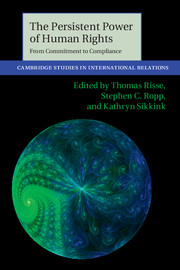
The Persistent Power of Human Rights
The Power of Human Rights (published in 1999) was an innovative and influential contribution to the study of international human rights. At its center was a 'spiral model' of human rights change which described the various socialization processes through which international norms were internalized into the domestic practices of various authoritarian states during the Cold War years. The Persistent Power of Human Rights builds on these insights, extending its reach and analysis. It updates our understanding of the various causal mechanisms and conditions which produce behavioural compliance, and expands the range of rights-violating actors examined to include democratic and authoritarian Great Powers, corporations, guerrilla groups, and private actors. Using a unique blend of quantitative and qualitative research and theory, this book yields not only important new academic insights but also a host of useful lessons for policy-makers and practitioners.
eBook

Evidence for Hope : Making Human Rights Work in the 21st Century
A history of the successes of the human rights movement and a case for why human rights work. Evidence for Hope makes the case that, yes, human rights work. Critics may counter that the movement is in serious jeopardy or even a questionable byproduct of Western imperialism. They point out that Guantanamo is still open, the Arab Spring protests have been crushed, and governments are cracking down on NGOs everywhere. But respected human rights expert Kathryn Sikkink draws on decades of research and fieldwork to provide a rigorous rebuttal to pessimistic doubts about human rights laws and institutions. She demonstrates that change comes slowly and as the result of struggle, but in the long term, human rights movements have been vastly effective.Attacks on the human rights movement's credibility are based on the faulty premise that human rights ideas emerged in North America and Europe and were imposed on developing southern nations. Starting in the 1940s, Latin American leaders and activists were actually early advocates for the international protection of human rights. Sikkink shows that activists and scholars disagree about the efficacy of human rights because they use different yardsticks to measure progress. Comparing the present to the past, she shows that genocide and violence against civilians have declined over time, while access to healthcare and education has increased dramatically. Cognitive and news biases contribute to pervasive cynicism, but Sikkink's investigation into past and current trends indicates that human rights is not in its twilight.
Book
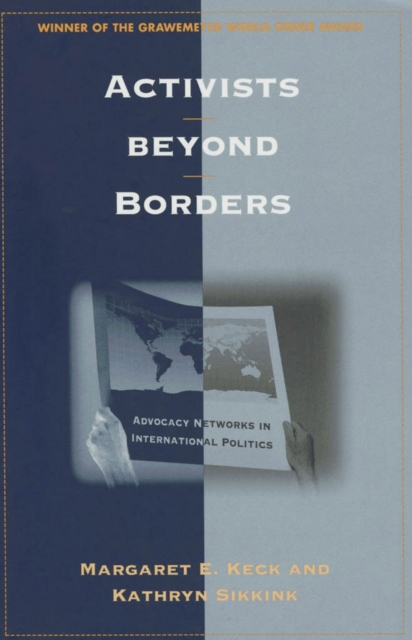
Activists beyond borders : advocacy networks in international politics
In Activists beyond Borders, Margaret E. Keck and Kathryn Sikkink examine a type of pressure group that has been largely ignored by political analysts: networks of activists that coalesce and operate across national frontiers. Their targets may be.
eBook

The persistent power of human rights : from commitment to compliance
\"The Power of Human Rights (published in 1999) was an innovative and influential contribution to the study of international human rights. At its centre was a 'spiral model' of human rights change which described the various socialisation processes through which international norms were internalised into the domestic practices of various authoritarian states during the Cold War years. The Persistent Power of Human Rights builds on these insights, extending its reach and analysis. It updates our understanding of the various casual mechanisms and conditions which produce behavioural compliance, and expands the range of rights-violating actors examined to include democratic and authoritarian Great Powers, corporations, guerilla groups and private actors. Using a unique blend of quantitative and qualitative research and theory, this book yields not only important new academic insights but also a host of useful lessons for policymakers and practitioners\"-- Provided by publisher.
Book

