
Catalogue Search | MBRL


Are you sure you want to remove the book from the shelf?

{{itemTitle}}
68
result(s) for
"Silcox, David P"
Sort by:

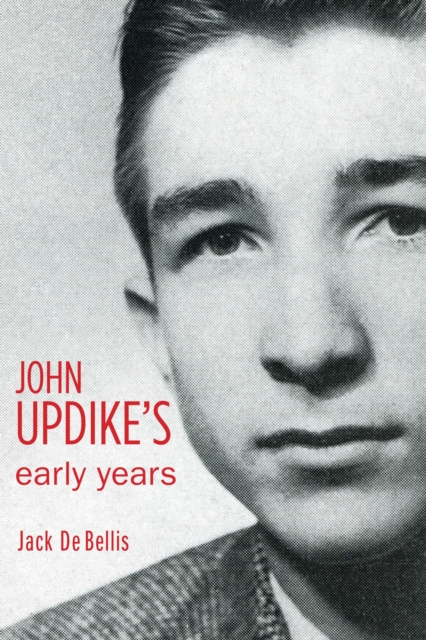
John Updike's early years
John Updike’s Early Years first examines his family, then places him in the context of the Depression and World War II. Relying upon interviews with former classmates, the next chapters examine Updike’s early life and leisure activities, his athletic ability, social leadership, intellectual prowess, comical pranks, and his experience with girls. Two chapters explore Updike’s cartooning and drawing, and the last chapter explains how he modeled his characters on his schoolmates. Lists of Updike’s works treating Pennsylvania, and a compilation of contributions to his school paper are included, along with profiles of all students, faculty and administrators during his years at Shillington High School.
eBook


A Postscript to the David B. Milne Biography and Catalogue Raisonné of the Paintings
After my biography of David Milne (1881–1953), Painting Place: The Life and Work of David B. Milne, was published in 1996, and just after David B. Milne: Catalogue Raisonné of the Paintings was launched in 1998, a crucial fact about Milne came to light. I've been sitting on it for the past decade and a half, partly having been distracted by other interests and activities, partly believing that it wouldn't change fundamental things, partly being uneasy about not having revealed immediately a truth that is pertinent, and partly being uncertain how to present it. Many large projects – and the Milne Project was one – are expected to produce supplements or updates, since continuing studies by original researchers or others often turf up new facts or material, but a Milne supplement was never considered, even though several works by him have surfaced in the interim. The shock came in a letter I received from James T. Angus, who, as a young boy, knew David Milne when Milne lived alone in a tiny cabin at Six Mile Lake in southern Muskoka from 1933 to 1939. The Angus family lived at Big Chute, a few miles away. Big Chute was the site of one of the proposed locks on the Trent-Severn river system that connected the Severn River to Georgian Bay. The lock was never built, however, but to make the waterway functional, a short rail device, managed by James's father Scotty Angus during the summers, moved boats around the otherwise impassable rapid.
Journal Article
David Milne
Along with American painter Marsden Hartley, David Milne was on the leading of edge of artists bringing European modernism to North America.
Reference

The Milne catalogue chronicles The compilation, cataloguing, editing and production of the David B Milne Catalogue Raisonne of the Paintings
My interest in Milne began when, as a student at the University of Toronto, I met Douglas Duncan, Milne's agent and dealer, the eminence of the Picture Loan Society, one day when he was hanging Milne paintings at Victoria College, where he was an alumnus. My attraction to Milne's work became acute a year or so later when I moved to Hart House at the University of Toronto and involved myself with the collection and the exhibitions there -- mostly contemporary art, but including a Milne retrospective show of forty-four paintings, which Duncan chose and which I gathered up and hung. At this time I met Alan Jarvis, former Director of the National Gallery of Canada, who had first written about Milne in 1934 and brought him to Duncan's attention. Jarvis, himself a Rhodes Scholar, said Milne was a genius. When you are young and impressionable and someone like Jarvis tells you that Milne is the best Canadian artist, you are likely to believe him. All the artists I got to know then supported Jarvis's view. Then, too, before I went off to study art history at the Courtauld Institute, I visited Vincent Massey at Batterwood, and he had Milnes hanging everywhere -- literally dozens of them. I was only a scrap of litmus paper in the presence of well-informed opinion. In 1968, both Duncan and Milne's wife, [Patsy], died. A year later, [Blodwen Davies] and [James Clarke] died. Towards the end of 1968 I got a call from [David Milne, Jr], whom I had never met, asking if I was still interested in doing the Milne catalogue. I said I was, and that I also wanted to do a critical study of his father's work. With a lawyer, Harry Malcolmson, we worked out an arrangement whereby the Milne estate would engage me to prepare the catalogue. A sum of $2000 was agreed upon. My friend Will Smith at the Dominion Archives decided that Milne's letters could be released and copied, since they were more than twenty-five years old (and thus had already served the sentence given them by Davies), and I began to transcribe Milne's writings. Some of this was simple, when Milne used a typewriter, or even when he copied out a draft of a letter. But deciphering Milne's handwriting was most often called for and has become a specialty of mine -- one that was often tested. The National Gallery provided copies of photographic prints from Duncan's negatives of Milne's paintings. I had begun. Duncan's sister, Frances Barwick, believing that Duncan's catalogue was virtually complete, insisted that it be published as based on Douglas Duncan's catalogue. I agreed. What did I know? One day just a year ago a man called from Walkerton, Ontario, where Milne went to high school: he had an early Milne drawing, which we did not know about, of the Walkerton town hall. He had found it in a book his father bought for fifty cents when the contents of the Milne house in Paisley were sold by auction many years ago, and he asked if he could reproduce the work as part of a campaign to save the building, which was being threatened with demolition. After some discussion we discovered that the book was inscribed and given to David Milne upon his graduation in 1899 by his teachers in Walkerton. Furthermore, the book contains the picture that Milne copied for his first known painting, On the Dochart, a scene of a Scottish river, which Milne later remembered as an Irish river -- a painting he gave to his mother.
Journal Article
David Milne
David Brown Milne, peintre, graveur, écrivain (né le 8 janvier 1882 à Burgoyne, en Ontario; décédé le 26 décembre 1953 à Bancroft, en Ontario). David Milne est le benjamin d’une famille de dix enfants d’immigrants presbytériens écossais. Sa formation et sa reconnaissance initiales ont lieu à New York. Il est pourtant pratiquement inconnu au Canada jusqu’en 1934 et ne reçoit la même attention que ses contemporains, le Groupe des sept, que récemment. Il a généralement reçu (de même que Tom Thomson) des générations suivantes d’artistes les plus grandes louanges entre tous les peintres canadiens (voir Peinture). Il est habituellement considéré comme notre peintre le plus éminent par les conservateurs étrangers et les critiques. Clement Greenberg, critique d’art américain, est d’avis que David Milne, avec les peintres américains John Marin et Marsden Hartley, compte parmi les trois artistes les plus importants de sa génération en Amérique du Nord. Depuis quelques années, le British Museum fait discrètement l’acquisition de ses œuvres.
Reference
