
Catalogue Search | MBRL


Are you sure you want to remove the book from the shelf?

{{itemTitle}}
15
result(s) for
"Simon, Sarah, author"
Sort by:

Modern watercolor botanicals : a creative workshop in watercolor, gouache, & ink
'Modern Watercolor Botanicals' explores the wonderful world of watercolour and introduces the modern incorporation of gouache and ink into your artistic repertoire.
Book

Protecting clean air
Having clean air to breathe is an often overlooked necessity, yet humans pollute the air through growing demand for energy and consumables. This book presents an overview of air quality, emission sources, criteria pollutants, greenhouse gases, control programs, and the impact of pollution on the atmosphere and global systems. Expertise in many fields is needed to protect air quality-politics, environmental engineering, law, planning, meteorology, health sciences, data management, and more. The book will guide readers through strategies and measures to prevent air pollution and better understand challenges that emission sources pose to society and ecosystems.
eBook

Children's illustrated world atlas
Presents detailed maps of the world, covering geographical features, important places, and information about countries and regions.
P_MAP

Endovascular Management of Ischemic Stroke
A case-based guide to the interventional management of stroke from leading international experts! Stroke is the most prevalent cerebrovascular emergency, impacting an estimated 15 million people worldwide every year. Endovascular treatment (EVT) of ischemic stroke has expanded at an unforeseen pace, with EVT the most common neurointerventional procedure performed at most large centers. Endovascular Management of Ischemic Stroke: A Case-Based Approach by renowned stroke pioneer Vitor Mendes Pereira and distinguished co-editors features contributions from a \"who's who\" of global experts. This practical resource provides straightforward guidance for clinicians who need to learn and master state-of-the-art endovascular interventions reflecting the new, evidenced-based treatment paradigm for acute stroke. This carefully crafted reference takes readers on a journey from the early building blocks that led to modern stroke interventions to meticulous step-by-step descriptions of the latest approaches. Fifty high-yield cases mirror real-life scenarios trainees and professionals are likely to encounter in clinical practice. Seven sections encompass a full spectrum of diverse patient presentations, anatomical variations, advanced techniques, complex pathologies, complications, and stroke mimics. Key Highlights Discussion of emerging techniques likely to stand the test of time such as SAVE, ARTS, transradial access, and transcarotid access Stroke mimics important for differential diagnoses, including hemiplegic migraine, MELAS, RCVS, seizure, and more An appendix that covers fundamental terms, trials, and tools This cutting-edge resource is essential reading for trainee and early-career interventionalists, as well as seasoned practitioners in interventional radiology, neuroradiology, endovascular neurosurgery, and interventional neurology.
eBook


Randomised controlled trial of population screening for atrial fibrillation in people aged 70 years and over to reduce stroke: protocol for the SAFER trial
IntroductionThere is a lack of evidence that the benefits of screening for atrial fibrillation (AF) outweigh the harms. Following the completion of the Screening for Atrial Fibrillation with ECG to Reduce stroke (SAFER) pilot trial, the aim of the main SAFER trial is to establish whether population screening for AF reduces incidence of stroke risk.Methods and analysisApproximately 82 000 people aged 70 years and over and not on oral anticoagulation are being recruited from general practices in England. Patients on the palliative care register or residents in a nursing home are excluded. Eligible people are identified using electronic patient records from general practices and sent an invitation and consent form to participate by post. Consenting participants are randomised at a ratio of 2:1 (control:intervention) with clustering by household. Those randomised to the intervention arm are sent an information leaflet inviting them to participate in screening, which involves use of a handheld single-lead ECG four times a day for 3 weeks. ECG traces identified by an algorithm as possible AF are reviewed by cardiologists. Participants with AF are seen by a general practitioner for consideration of anticoagulation. The primary outcome is stroke. Major secondary outcomes are: death, major bleeding and cardiovascular events. Follow-up will be via electronic health records for an average of 4 years. The primary analysis will be by intention-to-treat using time-to-event modelling. Results from this trial will be combined with follow-up data from the cluster-randomised pilot trial by fixed-effects meta-analysis.Ethics and disseminationThe London—Central National Health Service Research Ethics Committee (19/LO/1597) provided ethical approval. Dissemination will include public-friendly summaries, reports and engagement with the UK National Screening Committee.Trial registration number ISRCTN72104369.
Journal Article

Handbook of Frontal Lobe Assessment
Several tests are used in clinical practice and research to assess the functions subsumed by the frontal lobes of the brain. Improvements in anatomical localization through neuroimaging techniques have revealed that the frontal lobes can be divided into subregions with different functional domains. Authors in this field have made a case for patients with frontal lobe damage to be considered in their distinct subgroups rather than as one unitary group. Therefore, it is important for clinicians and researchers to be made aware of the functions assessed by individual frontal tests and to understand which frontal regions might be impaired in their patient groups. Patients with damage to one of these regions perform poorly on tasks tapping that region but may perform well on tasks tapping the unaffected regions within the frontal lobes. This book aims to provide a critical review and an appraisal of both the neuropsychological and experimental tests that have been devised to assess frontal lobe functions.
eBook

BioBone – A prospective, blinded, multicenter validation study of the CD8 + terminal differentiated effector memory cells (CD8 + TEMRA cells) as prognostic biomarker for disturbed fracture healing – study design
Aims
The BioBone consortium aims to validate circulating CD8 + TEMRA cells as a prognostic biomarker for predicting impaired fracture healing outcomes in a prospective, blinded, multicenter clinical study. The primary performance parameters are the pre-operative identification of at least 30% of patients who ultimately experience impaired healing at the first clinical endpoint, with a specificity greater than 90% to minimize the false-positive rate.
Methods
BioBone is a prospective, blinded, multicenter biomarker validation study designed to assess the prognostic value of circulating CD8 + TEMRA cells in fracture healing. A total of 640 patients aged 18 to 80 years with fractures of the humeral diaphysis, radial and/or ulnar diaphysis, femoral neck, trochanteric femur, femoral diaphysis, distal femur, proximal tibia, tibial diaphysis and distal tibia will be enrolled. The study is powered to validate the target assay performance and accounting for 6–7 potential confounders at an expected incidence of 10% impaired healing. Biomarker levels will be measured pre- and post-operatively using flow cytometry (FC) and patients will be monitored for one year. The primary endpoint is fracture healing status at 17–19 weeks (normal healing or delayed healing), while the secondary endpoint evaluates healing at nine months (delayed healing or pseudarthrosis). Fracture consolidation will be assessed through radiographs or computed tomography (CT) scans in conjunction with clinical assessments such as range of motion and weight-bearing capacity. Key outcome measures include radiographic analysis (RUST/RUSH scores), functional and patient-reported outcomes (e.g. weight bearing ability, range of motion, and the SF-36 questionnaire), as well as socioeconomic parameters (e.g. work capacity, rehabilitation needs, mobility). The predictive performance (sensitivity, specificity, NPV, PPV) of the biomarker will be determined in a prospective, double-blinded analysis, where CD8 + TEMRA blood levels are measured prior to surgical treatment and healing status at clinical endpoints is assessed by independent observers. Additional immunological examination and in vitro analysis of blood and fracture hematoma samples will further investigate the mechanism of action of CD8 + TEMRA cells in impaired human bone regeneration.
Conclusion
The BioBone study will validate the suitability of CD8 + TEMRA cells as a prognostic marker for impaired fracture healing and their integration into routine clinical practice. The results could have a global impact by incorporating immune-based prognostic tools into clinical workflows, paving the way for precision medicine approaches in trauma care. The BioBone study is funded by the German Federal Ministry of Education and Research (BMBF).
Journal Article

Drug law reform in East and Southeast Asia
Drug Law Reform in East and Southeast Asia is a multi-author look at drugs in East and Southeast Asia, on drug policy, patterns and trends, local problems, human rights abuses, treatment prospects, and potential reforms. From the history of drugs in Asia, the book examines recent trends in illicit drugs, especially the present enormous amphetamine problems. It addresses recent policy shifts, especially harm reduction responses to the devastating drug-associated HIV epidemics. It explores further necessary reform, especially in regard to the abysmally inhuman current emphasis on detention and the death penalty for drug offences, and present the most recent evidence on effective and humane approaches to drug treatments. As the first comprehensive collection on illicit drug and harm reduction in East and Southeast Asia, it will be a vital resource for health professionals, policymakers, and others working there—and elsewhere—on drug policy reform. As the first comprehensive collection on illicit drugs and harm reduction in East and Southeast Asia, it will be a vital resource for health professionals, policymakers, and others working on East and Southeast Asia—and elsewhere—on drug policy.
eBook
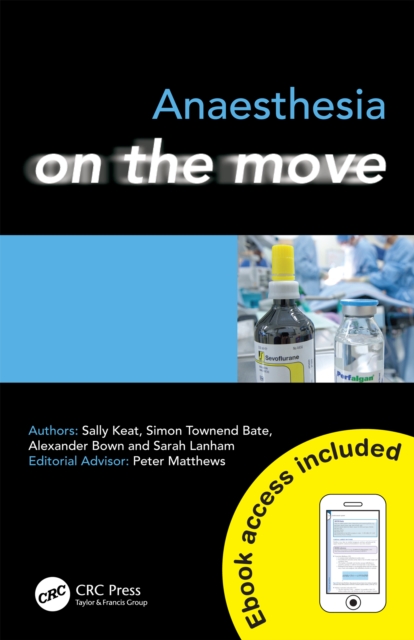
Anaesthesia on the Move
The Medicine on the Move series provides fully flexible access to subjects across the curriculum in a unique combination of print and mobile formats ideal for the busy medical student and junior doctor. No matter what your learning style, whether you are studying a subject for the first time or revisiting it during exam preparation, Medicine on the Move will give you the support you need. This innovative print and app package will help you to connect with the topic of anaesthesia in preparation for exams and future clinical practice.By using this resource in print or as an app, you really will experience the opportunity to learn medicine on the move.
eBook