
Catalogue Search | MBRL


Are you sure you want to remove the book from the shelf?

{{itemTitle}}
25
result(s) for
"Simpfendorfer, Ben"
Sort by:

The rise of the new East : business strategies for success in a world of increasing complexity
\"Taking the reader on a tour of the fast-changing East, The Rise of the New East provides simple business strategies for dealing with the world's growing complexity. From China to India to Dubai, powerfully disruptive forces have resulted from the East's resurgence, and the clash of these forces has had unexpected economic, political, and social outcomes. Influential author Ben Simpfendorfer leads the next generation of commentary on emerging markets to take it beyond simple straight-line outcomes, arguing that the business world should respond to the East's rise by embracing complexity and planning for the unexpected. In a rare combination of high-level economic and political analysis and street-level experience--from China's vast factories, to Indonesia's Muslim consumers, to India's Bollywood films--the emerging world is presented in an accessible and engaging way, and the result is essential guidance for financial investors, senior managers, and business owners. Simpfendorfer relates his experience of working for some of the world's largest multinationals, transacting deals between countries such as China and Pakistan, and assisting mid-sized foreign companies in deciding how to enter the East, in order to provide readers with commercially relevant and tested solutions\"-- Provided by publisher.
Book

The new silk road : how a rising Arab world is turning away from the West and rediscovering China
The author offers an unrivalled view of how the Arab world is turning away from the West and rediscovering China.
Book
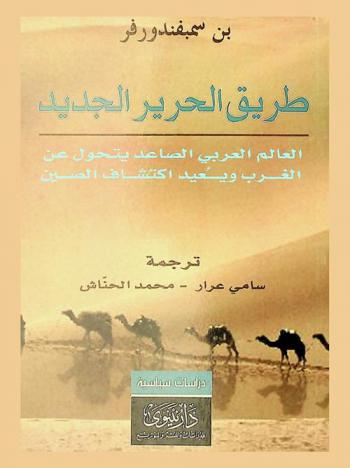
طريق الحرير الجديد : العالم العربي الصاعد يتحول عن الغرب ويعيد اكتشاف الصين
يحتوي كتاب طريق الحرير الجديد على ثمانية فصول تتناول طريق الحرير الجديد العالم العربي يعيد اكتشاف الصين وعائدات النفط الصينية والتنافس على النفط وصناديق الثروات العربية وصعود الممر الإسلامي وسوريا تتعلم الدرس من الصين بينما تنطلق الصين نحو العالمية والمرأة ومستقبل العالم العربي وحرب العلاقات العامة الجديدة قناة الجزيرة في الصين واللغة العربية والعولمة.
Book

China's Rise Changes Global Dynamic
As China’s ascendancy continues to shake the global economy, one of the most important, but less observed implications is that it makes the world a more challenging place to understand for analysts and investors alike.
Magazine Article
Much to be gained from Belt and Road
The fact that a growing number of mainland companies are setting up regional or international offices in Hong Kong is evidence of the city's important role as a springboard.
Newspaper Article

A complex frontier
Development In China's western region, robust private sectors will thrive. China's western provinces have long excited the business world. With an economy similar in scale to Australia and a population...
Newspaper Article
China's economy hard to grasp
Moreover, much of the country's growth has so far benefited companies, rather than households. That's one of the downsides of a low-cost business model. Exports and corporate profits have surged, but low wages have generally depressed private consumption and created social stresses. Fifth, structural-growth drivers are as important as cyclical ones. The liberalization of China's housing industry in 1998, for instance, explains much of the country's surging growth. Until then, the state provided most of the housing stock. But reforms allowed households to buy bigger and better homes, and property developers built them. These five points are by no way exhaustive. But China is unusual compared with many of the world's largest economies, perhaps because of the country's status as a developing, Asian, or formerly planned economy. The usual set of analytical tools won't always apply, however tempting it is to do so.
Newspaper Article