
Catalogue Search | MBRL


Are you sure you want to remove the book from the shelf?

{{itemTitle}}
1,817
result(s) for
"Sinclair, David A."
Sort by:
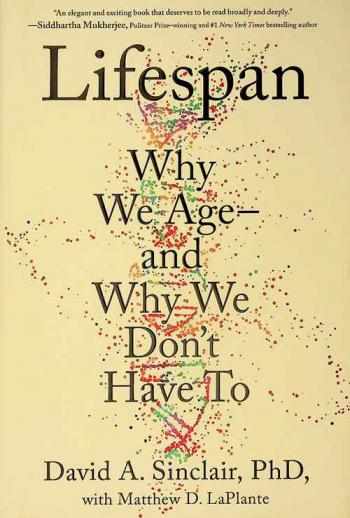
Lifespan : why we age--and why we don't have to
\"From an acclaimed Harvard professor and one of Time's most influential people, this paradigm-shifting book shows how almost everything we think we know about aging is wrong, offers a front-row seat to the amazing global effort to slow, stop, and reverse aging, and calls readers to consider a future where aging can be treated. For decades, experts have believed that we are at the mercy of our genes, and that natural damage to our genes--the kind that inevitably happens as we get older--makes us become sick and grow old. But what if everything you think you know about aging is wrong? What if aging is a disease--and that disease is treatable? In Lifespan, one of the world's foremost experts on aging and genetics reveals a groundbreaking new theory that will forever change the way we think about why we age and what we can do about it. Aging isn't immutable; we can have far more control over it than we realize. This eye-opening and provocative work takes us to the frontlines of research that is pushing the boundaries on our perceived scientific limitations, revealing incredible breakthroughs--many from Dr. David Sinclair's own lab--that demonstrate how we can slow down, or even reverse, the genetic clock. The key is activating newly discovered vitality genes--the decedents of an ancient survival circuit that is both the cause of aging and the key to reversing it. Dr. Sinclair shares the emerging technologies and simple lifestyle changes--such as intermittent fasting, cold exposure, and exercising with the right intensity--that have been shown to help lead to longer lives. Lifespan provides a roadmap for taking charge of our own health destiny and a bold new vision for the future when humankind is able to live to be 100 years young\"-- Provided by publisher.

The economic value of targeting aging
Developments in life expectancy and the growing emphasis on biological and ‘healthy’ aging raise a number of important questions for health scientists and economists alike. Is it preferable to make lives healthier by compressing morbidity, or longer by extending life? What are the gains from targeting aging itself compared to efforts to eradicate specific diseases? Here we analyze existing data to evaluate the economic value of increases in life expectancy, improvements in health and treatments that target aging. We show that a compression of morbidity that improves health is more valuable than further increases in life expectancy, and that targeting aging offers potentially larger economic gains than eradicating individual diseases. We show that a slowdown in aging that increases life expectancy by 1 year is worth US $38 trillion, and by 10 years, US$ 367 trillion. Ultimately, the more progress that is made in improving how we age, the greater the value of further improvements.
Journal Article

Targeting mitochondria for cardiovascular disorders: therapeutic potential and obstacles
A large body of evidence indicates that mitochondrial dysfunction has a major role in the pathogenesis of multiple cardiovascular disorders. Over the past 2 decades, extraordinary efforts have been focused on the development of agents that specifically target mitochondria for the treatment of cardiovascular disease. Despite such an intensive wave of investigation, no drugs specifically conceived to modulate mitochondrial functions are currently available for the clinical management of cardiovascular disease. In this Review, we discuss the therapeutic potential of targeting mitochondria in patients with cardiovascular disease, examine the obstacles that have restrained the development of mitochondria-targeting agents thus far, and identify strategies that might empower the full clinical potential of this approach.
Journal Article

Therapeutic potential of resveratrol: the in vivo evidence
Key Points
Resveratrol, a small polyphenol, has been discovered and re-discovered as a potential therapeutic in recent years. Although putative cardioprotective effects were first noted in 1982, it was only after a 1992 report of high levels of resveratrol in red wine that these effects were investigated extensively. In 1997, resveratrol was isolated in a screen for cyclooxygenase inhibitors, and was shown to be an effective chemotherapeutic and chemopreventive agent. Moreover, in 2003, it was identified as the top hit in a screen for activators of sirtuin deacetylases and was shown to extend the lifespans of lower organisms.
The number of reported effects for resveratrol is constantly growing. Many direct targets have been identified
in vitro
, and protective effects have been demonstrated in various rodent models of disease.
Pharmacokinetic studies have consistently shown that levels of resveratrol in serum do not reach the concentrations required for most of the reported
in vitro
effects, or do so only transiently.
In vivo
evidence has therefore become increasingly important in efforts to understand how resveratrol elicits its effects in mammals.
One possibility that has been suggested based on data from lower organisms is that resveratrol acts as a caloric restriction mimetic. This hypothesis is intriguing because caloric restriction seems to slow the intrinsic rate of ageing, and improve general health, rather than block specific disease processes.
The many reported
in vivo
effects of resveratrol are reviewed here and, whenever possible, have been related to putative mechanisms and targets. Determining the mechanism(s) by which resveratrol and similar molecules act, and developing methods to improve bioavailability and/or specificity, has enormous potential to benefit human health.
Resveratrol is the constituent of red wine that has an array of protective effects
in vitro
and in animal models. Baur and Sinclair provide a comprehensive review of the
in vivo
evidence that suggests resveratrol has therapeutic potential in humans.
Resveratrol, a constituent of red wine, has long been suspected to have cardioprotective effects. Interest in this compound has been renewed in recent years, first from its identification as a chemopreventive agent for skin cancer, and subsequently from reports that it activates sirtuin deacetylases and extends the lifespans of lower organisms. Despite scepticism concerning its bioavailability, a growing body of
in vivo
evidence indicates that resveratrol has protective effects in rodent models of stress and disease. Here, we provide a comprehensive and critical review of the
in vivo
data on resveratrol, and consider its potential as a therapeutic for humans.
Journal Article

Reprogramming to recover youthful epigenetic information and restore vision
Ageing is a degenerative process that leads to tissue dysfunction and death. A proposed cause of ageing is the accumulation of epigenetic noise that disrupts gene expression patterns, leading to decreases in tissue function and regenerative capacity
1
–
3
. Changes to DNA methylation patterns over time form the basis of ageing clocks
4
, but whether older individuals retain the information needed to restore these patterns—and, if so, whether this could improve tissue function—is not known. Over time, the central nervous system (CNS) loses function and regenerative capacity
5
–
7
. Using the eye as a model CNS tissue, here we show that ectopic expression of
Oct4
(also known as
Pou5f1
),
Sox2
and
Klf4
genes (OSK) in mouse retinal ganglion cells restores youthful DNA methylation patterns and transcriptomes, promotes axon regeneration after injury, and reverses vision loss in a mouse model of glaucoma and in aged mice. The beneficial effects of OSK-induced reprogramming in axon regeneration and vision require the DNA demethylases TET1 and TET2. These data indicate that mammalian tissues retain a record of youthful epigenetic information—encoded in part by DNA methylation—that can be accessed to improve tissue function and promote regeneration in vivo.
Expression of three Yamanaka transcription factors in mouse retinal ganglion cells restores youthful DNA methylation patterns, promotes axon regeneration after injury, and reverses vision loss in a mouse model of glaucoma and in aged mice, suggesting that mammalian tissues retain a record of youthful epigenetic information that can be accessed to improve tissue function.
Journal Article

Novel feature selection methods for construction of accurate epigenetic clocks
Epigenetic clocks allow us to accurately predict the age and future health of individuals based on the methylation status of specific CpG sites in the genome and are a powerful tool to measure the effectiveness of longevity interventions. There is a growing need for methods to efficiently construct epigenetic clocks. The most common approach is to create clocks using elastic net regression modelling of all measured CpG sites, without first identifying specific features or CpGs of interest. The addition of feature selection approaches provides the opportunity to optimise the identification of predictive CpG sites. Here, we apply novel feature selection methods and combinatorial approaches including newly adapted neural networks, genetic algorithms, and ‘chained’ combinations. Human whole blood methylation data of ~470,000 CpGs was used to develop clocks that predict age with R2 correlation scores of greater than 0.73, the most predictive of which uses 35 CpG sites for a R2 correlation score of 0.87. The five most frequent sites across all clocks were modelled to build a clock with a R2 correlation score of 0.83. These two clocks are validated on two external datasets where they maintain excellent predictive accuracy. When compared with three published epigenetic clocks (Hannum, Horvath, Weidner) also applied to these validation datasets, our clocks outperformed all three models. We identified gene regulatory regions associated with selected CpGs as possible targets for future aging studies. Thus, our feature selection algorithms build accurate, generalizable clocks with a low number of CpG sites, providing important tools for the field.
Journal Article

Age and life expectancy clocks based on machine learning analysis of mouse frailty
The identification of genes and interventions that slow or reverse aging is hampered by the lack of non-invasive metrics that can predict the life expectancy of pre-clinical models. Frailty Indices (FIs) in mice are composite measures of health that are cost-effective and non-invasive, but whether they can accurately predict health and lifespan is not known. Here, mouse FIs are scored longitudinally until death and machine learning is employed to develop two clocks. A random forest regression is trained on FI components for chronological age to generate the FRIGHT (
Fr
ailty
I
nferred
G
eriatric
H
ealth
T
imeline) clock, a strong predictor of chronological age. A second model is trained on remaining lifespan to generate the AFRAID (
A
nalysis of
Frai
lty and
D
eath) clock, which accurately predicts life expectancy and the efficacy of a lifespan-extending intervention up to a year in advance. Adoption of these clocks should accelerate the identification of longevity genes and aging interventions.
The discovery of interventions that slow aging could be accelerated by employing non-invasive biometrics that predict biological age or life expectancy. Here the authors use longitudinal frailty data from naturally aging mice to develop two such tools, that are responsive to interventions.
Journal Article
Selective Sirt2 inhibition by ligand-induced rearrangement of the active site
Sirtuins are a highly conserved class of NAD
+
-dependent lysine deacylases. The human isotype Sirt2 has been implicated in the pathogenesis of cancer, inflammation and neurodegeneration, which makes the modulation of Sirt2 activity a promising strategy for pharmaceutical intervention. A rational basis for the development of optimized Sirt2 inhibitors is lacking so far. Here we present high-resolution structures of human Sirt2 in complex with highly selective drug-like inhibitors that show a unique inhibitory mechanism. Potency and the unprecedented Sirt2 selectivity are based on a ligand-induced structural rearrangement of the active site unveiling a yet-unexploited binding pocket. Application of the most potent Sirtuin-rearranging ligand, termed SirReal2, leads to tubulin hyperacetylation in HeLa cells and induces destabilization of the checkpoint protein BubR1, consistent with Sirt2 inhibition
in vivo
. Our structural insights into this unique mechanism of selective sirtuin inhibition provide the basis for further inhibitor development and selective tools for sirtuin biology.
The involvement of the sirtuin family of lysine deacylases in disease, metabolism and ageing makes them promising pharmaceutical targets. Rumpf
et al.
present structures of human Sirt2 in complex with two highly selective drug-like inhibitors, and show that they act by rearranging the enzyme’s active site.
Journal Article

Interventions to Slow Aging in Humans: Are We Ready?
Summary The workshop entitled 'Interventions to Slow Aging in Humans: Are We Ready?' was held in Erice, Italy, on October 8-13, 2013, to bring together leading experts in the biology and genetics of aging and obtain a consensus related to the discovery and development of safe interventions to slow aging and increase healthy lifespan in humans. There was consensus that there is sufficient evidence that aging interventions will delay and prevent disease onset for many chronic conditions of adult and old age. Essential pathways have been identified, and behavioral, dietary, and pharmacologic approaches have emerged. Although many gene targets and drugs were discussed and there was not complete consensus about all interventions, the participants selected a subset of the most promising strategies that could be tested in humans for their effects on healthspan. These were: (i) dietary interventions mimicking chronic dietary restriction (periodic fasting mimicking diets, protein restriction, etc.); (ii) drugs that inhibit the growth hormone/IGF-I axis; (iii) drugs that inhibit the mTOR-S6K pathway; or (iv) drugs that activate AMPK or specific sirtuins. These choices were based in part on consistent evidence for the pro-longevity effects and ability of these interventions to prevent or delay multiple age-related diseases and improve healthspan in simple model organisms and rodents and their potential to be safe and effective in extending human healthspan. The authors of this manuscript were speakers and discussants invited to the workshop. The following summary highlights the major points addressed and the conclusions of the meeting.
Journal Article

The SIRT1 Deacetylase Suppresses Intestinal Tumorigenesis and Colon Cancer Growth
Numerous longevity genes have been discovered in model organisms and altering their function results in prolonged lifespan. In mammals, some have speculated that any health benefits derived from manipulating these same pathways might be offset by increased cancer risk on account of their propensity to boost cell survival. The Sir2/SIRT1 family of NAD(+)-dependent deacetylases is proposed to underlie the health benefits of calorie restriction (CR), a diet that broadly suppresses cancer in mammals. Here we show that CR induces a two-fold increase SIRT1 expression in the intestine of rodents and that ectopic induction of SIRT1 in a beta-catenin-driven mouse model of colon cancer significantly reduces tumor formation, proliferation, and animal morbidity in the absence of CR. We show that SIRT1 deacetylates beta-catenin and suppresses its ability to activate transcription and drive cell proliferation. Moreover, SIRT1 promotes cytoplasmic localization of the otherwise nuclear-localized oncogenic form of beta-catenin. Consistent with this, a significant inverse correlation was found between the presence of nuclear SIRT1 and the oncogenic form of beta-catenin in 81 human colon tumor specimens analyzed. Taken together, these observations show that SIRT1 suppresses intestinal tumor formation in vivo and raise the prospect that therapies targeting SIRT1 may be of clinical use in beta-catenin-driven malignancies.
Journal Article