
Catalogue Search | MBRL


Are you sure you want to remove the book from the shelf?

{{itemTitle}}
189
result(s) for
"Singer, Irving"
Sort by:

Philosophy of love : a partial summing-up
Here, the author of the classic philosophical treatment of love reflects on the trajectory, over decades, of his thoughts on love and other topics.
Book
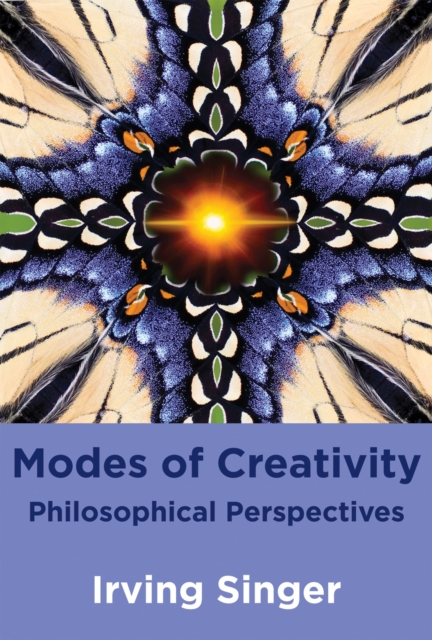
Modes of Creativity
In this philosophical exploration of creativity, Irving Singer describes the many different types of creativity and their varied manifestations within and across all the arts and sciences. Singer's approach is pluralistic rather than abstract or dogmatic. His reflections amplify recent discoveries in cognitive science and neurobiology by aligning them with the aesthetic, affective, and phenomenological framework of experience and behavior that characterizes the human quest for meaning. Creativity has long fascinated Singer, and in Modes of Creativity he carries forward investigations begun in earlier works. Marshaling a wealth of examples and anecdotes ranging from antiquity to the present, about persons as diverse as Albert Einstein and Sherlock Holmes, Singer describes the interactions of the creative and the imaginative, the inventive, the novel, and the original. He maintains that our preoccupation with creativity devolves from biological, psychological, and social bases of our material being; that creativity is not limited to any single aspect of human existence but rather inheres not only in art and the aesthetic but also in science, technology, moral practice, as well as ordinary daily experience.
eBook

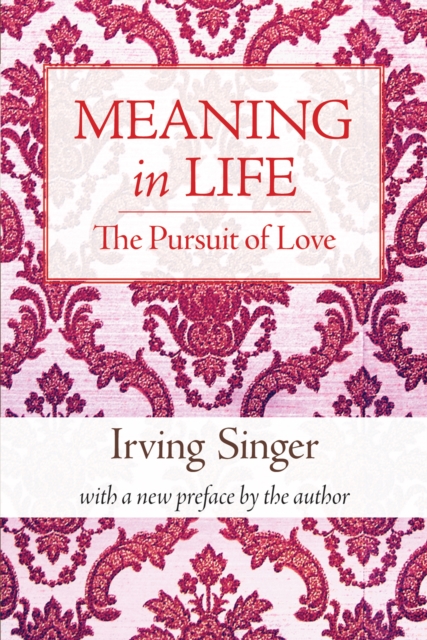
The pursuit of love
An acclaimed philosopher offers a systematic mapping of the various facets of love.In his widely acclaimed trilogy The Nature of Love, Irving Singer traced the development of the concept of love in history and literature from the Greeks to the twentieth century. In this second volume of his Meaning in Life trilogy, Singer returns to the subject of his earlier work, exploring a different approach. Without denying his previous emphasis on the role of imagination and creativity, in this book Singer investigates the ability of them both to make one's life meaningful. A \"systematic mapping\" of the various facets of love (including sexual love, love in society, and religious love), The Pursuit of Love is an extended essay that offers Singer's own philosophical and psychological theory of love.Rich in insight into literature, the history of ideas, and the complexities of our being, The Pursuit of Love is a thought-provoking inquiry into fundamental aspects of all human relationships.
eBook
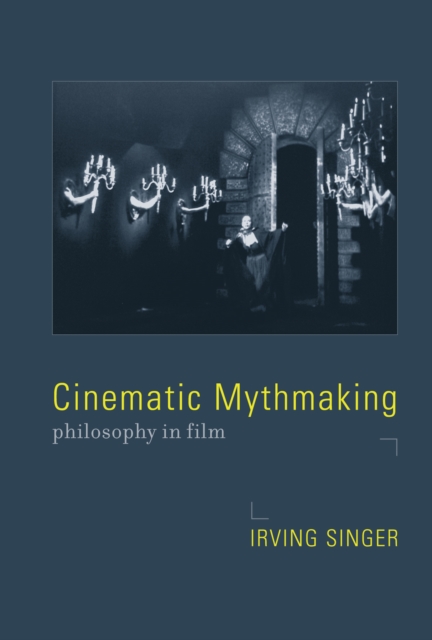
Cinematic Mythmaking
Film is the supreme medium for mythmaking. The gods and heroes of mythology are both larger than life and deeply human; they teach us about the world, and they tell us a good story. Similarly, our experience of film is both distant and intimate. Cinematic techniques--panning, tracking, zooming, and the other tools in the filmmaker's toolbox--create a world that is unlike reality and yet realistic at the same time. We are passive spectators, but we also have a personal relationship with the images we are seeing. In Cinematic Mythmaking, Irving Singer explores the hidden and overt use of myth in various films and, in general, the philosophical elements of a film's meaning. Mythological themes, Singer writes, perform a crucial role in cinematic art and even philosophy itself. Singer incisively disentangles the strands of different myths in the films he discusses. He finds in Preston Sturges's The Lady Eve that Barbara Stanwyck's character is not just the biblical Eve but a liberated woman of our times; Eliza Doolittle in the filmed versions of Shaw's Pygmalion is not just a statue brought to life but instead a heroic woman who must survive her own dark night of the soul. The protagonist of William Wyler's The Heiress and Anieszka Holland's Washington Square is both suffering Dido and an awakened Amazon. Singer reads Cocteau's films--including La Belle et la Bête, Orphée, and The Testament of Orpheus--as uniquely mythological cinematic poetry. He compares Kubrickean and Homeric epics and analyzes in depth the self-referential mythmaking of Federico Fellini in many of his movies, including 8½. The aesthetic and probing inventiveness in film, Singer shows us, restores and revives for audiences in the twenty-first century myths of creation, of the questing hero, and of ideals--both secular and religious--that have had enormous significance throughout the human search for love and meaning in life.
eBook
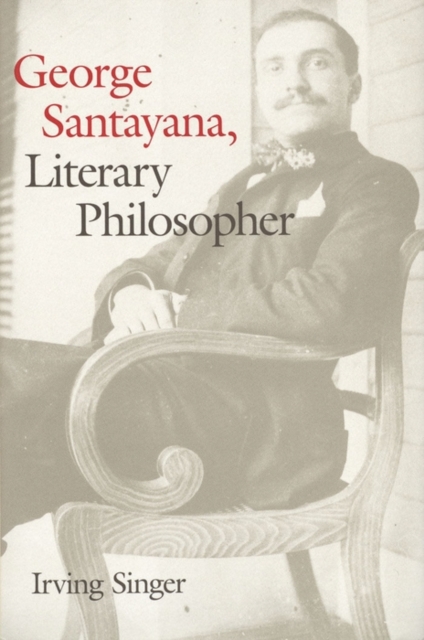
George Santayana
George Santayana was unique in his contribution to American culture. For almost sixty years before his death in 1952, he combined literary and philosophical talents, writing not only important works of philosophy but also a best-selling novel, volumes of poetry, and much literary criticism. In this fascinating portrait of Santayana's thought and complex personality, Irving Singer explores the full range of his harmonization of the literary and the philosophical.Singer shows how Santayana's genius consisted in his imaginative ability to turn various types of personal alienation into creative elements that recur throughout his books. Singer points out that Santayana was a professional philosopher who addressed immediate problems of existence, a materialist in philosophy who believed in both a life of spirit and a life of reason, a product of American pragmatism who nevertheless rebelled against it, a Spaniard who wrote only in English, an American author who spent the last forty years of his life in different European countries. Against the grain of most twentieth-century philosophy, Santayana kept in view questions that matter to us all in our search for meaningful and satisfying lives.
eBook

Meaning in Life, Volume 2
An acclaimed philosopher offers a systematic mapping of the various facets of love.
eBook
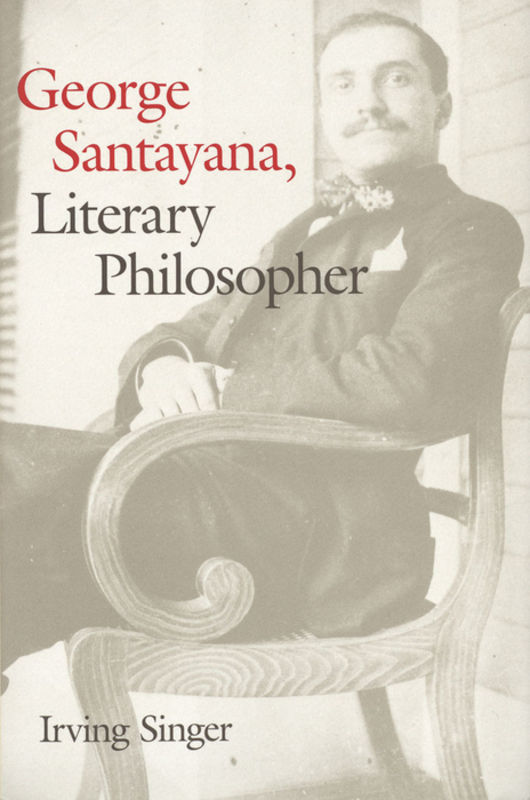
George Santayana
Unique in his contribution to American letters, George Santayana (1863-1952) combined literary and philosophical talents to produce a wide range of writings, among them important works of philosophy, a best-selling novel, volumes of poetry, and many studies in literary criticism. This book introduces the main currents of Santayana's thought, connecting his biography to his intellectual development and tracing the recurrent theme of alienation in his life and works.
eBook
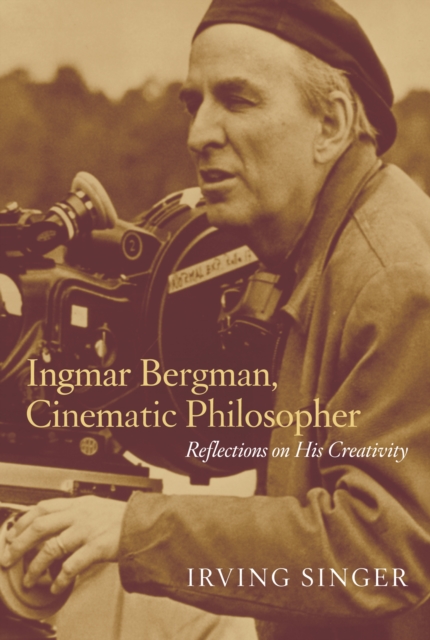
Ingmar Bergman, cinematic philosopher : reflections on his creativity
Known for their repeating motifs and signature tropes, the films of Ingmar Bergman also contain extensive variation and development. In these reflections on Bergman's artistry and thought, Irving Singer discerns distinctive themes in Bergman's filmmaking, from first intimations in the early work to consummate resolutions in the later movies. Singer demonstrates that while Bergman's output is not philosophy on celluloid, it attains an expressive and purely aesthetic truthfulness that can be considered philosophical in a broader sense. Through analysis of both narrative and filmic effects, Singer probes Bergman's mythmaking and his reliance upon the magic inherent in his cinematic techniques. Singer traces throughout the evolution of Bergman's ideas about life and death, and about the possibility of happiness and interpersonal love. In the overtly self-referential films that he wrote or directed (The Best Intentions, Fanny and Alexander, Sunday's Children) as well as the less obviously autobiographical ones (including Wild Strawberries, The Seventh Seal, and the triad that begins with Through a Glass Darkly) Bergman investigates problems in his existence and frequently reverts to childhood memories. In such movies as Smiles of a Summer Night, Scenes from a Marriage, and Saraband, Bergman draws upon his mature experience and depicts the troubled relationships between men who are often weak and women who are made to suffer by the damaged men with whom they live. In Persona, Cries and Whispers, and other works, his experiments with the camera are uniquely masterful. Inspecting the panorama of Bergman's art, Singer shows how the endless search for human contact motivates the content of his films and reflects Bergman's profound perspective on the world.
eBook
Meaning in Life
An acclaimed philosopher offers a systematic mapping of the various facets of love.
In his widely acclaimed trilogy The Nature of Love, Irving Singer traced the development of the concept of love in history and literature from the Greeks to the twentieth century. In this second volume of his Meaning in Life trilogy, Singer returns to the subject of his earlier work, exploring a different approach. Without denying his previous emphasis on the role of imagination and creativity, in this book Singer investigates the ability of them both to make one's life meaningful. A “systematic mapping” of the various facets of love (including sexual love, love in society, and religious love), The Pursuit of Love is an extended essay that offers Singer's own philosophical and psychological theory of love.
Rich in insight into literature, the history of ideas, and the complexities of our being, The Pursuit of Love is a thought-provoking inquiry into fundamental aspects of all human relationships.
eBook