
Catalogue Search | MBRL


Are you sure you want to remove the book from the shelf?

{{itemTitle}}
7
result(s) for
"Skelton, Amy"
Sort by:
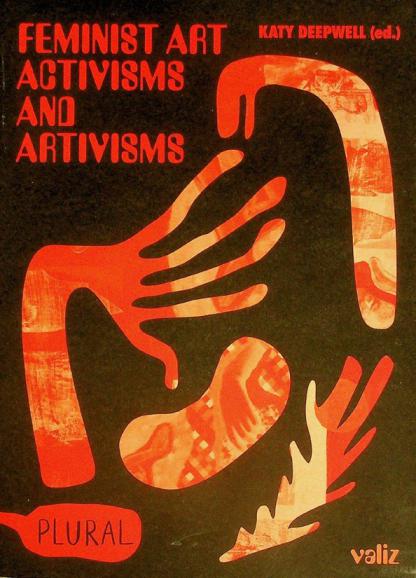
Feminist art activisms and artivisms
The first volume in the new Plural series, this publication seeks to critically dissect the term 'activism,' which today seems to have become a catchword for any woman's empowerment through the arts, and reveal the diversity of practices and realities that it comprises. Presenting a range of critical insights, perspectives, and practices from artists, activists, and academics, it reflects on the role of feminist interventions in the field of contemporary art, the public sphere, and politics. In the process, it touches upon broader questions of cultural difference, history, class, economic standing, ecological issues, and sexual orientation, as well as the ways in which these intersect.
Book

Suitability and Allocation of Protein-Containing Foods According to Protein Tolerance in PKU: A 2022 UK National Consensus
Introduction: There is little practical guidance about suitable food choices for higher natural protein tolerances in patients with phenylketonuria (PKU). This is particularly important to consider with the introduction of adjunct pharmaceutical treatments that may improve protein tolerance. Aim: To develop a set of guidelines for the introduction of higher protein foods into the diets of patients with PKU who tolerate >10 g/day of protein. Methods: In January 2022, a 26-item food group questionnaire, listing a range of foods containing protein from 5 to >20 g/100 g, was sent to all British Inherited Metabolic Disease Group (BIMDG) dietitians (n = 80; 26 Inherited Metabolic Disease [IMD] centres). They were asked to consider within their IMD dietetic team when they would recommend introducing each of the 26 protein-containing food groups into a patient’s diet who tolerated >10 g to 60 g/day of protein. The patient protein tolerance for each food group that received the majority vote from IMD dietetic teams was chosen as its tolerance threshold for introduction. A virtual meeting was held using Delphi methodology in March 2022 to discuss and agree final consensus. Results: Responses were received from dietitians from 22/26 IMD centres (85%) (11 paediatric, 11 adult). For patients tolerating protein ≥15 g/day, the following foods were agreed for inclusion: gluten-free pastas, gluten-free flours, regular bread, cheese spreads, soft cheese, and lentils in brine; for protein tolerance ≥20 g/day: nuts, hard cheeses, regular flours, meat/fish, and plant-based alternative products (containing 5–10 g/100 g protein), regular pasta, seeds, eggs, dried legumes, and yeast extract spreads were added; for protein tolerance ≥30 g/day: meat/fish and plant-based alternative products (containing >10–20 g/100 g protein) were added; and for protein tolerance ≥40 g/day: meat/fish and plant-based alternatives (containing >20 g/100 g protein) were added. Conclusion: This UK consensus by IMD dietitians from 22 UK centres describes for the first time the suitability and allocation of higher protein foods according to individual patient protein tolerance. It provides valuable guidance for health professionals to enable them to standardize practice and give rational advice to patients.
Journal Article

Suitability and Allocation of Protein-Containing Foods According to Protein Tolerance in PKU
Funding Information: No funding was required for this project. All work was conducted as part of routine service by all dietitians involved. Publisher Copyright: © 2022 by the authors.
Introduction: There is little practical guidance about suitable food choices for higher natural protein tolerances in patients with phenylketonuria (PKU). This is particularly important to consider with the introduction of adjunct pharmaceutical treatments that may improve protein tolerance. Aim: To develop a set of guidelines for the introduction of higher protein foods into the diets of patients with PKU who tolerate >10 g/day of protein. Methods: In January 2022, a 26-item food group questionnaire, listing a range of foods containing protein from 5 to >20 g/100 g, was sent to all British Inherited Metabolic Disease Group (BIMDG) dietitians (n = 80; 26 Inherited Metabolic Disease [IMD] centres). They were asked to consider within their IMD dietetic team when they would recommend introducing each of the 26 protein-containing food groups into a patient’s diet who tolerated >10 g to 60 g/day of protein. The patient protein tolerance for each food group that received the majority vote from IMD dietetic teams was chosen as its tolerance threshold for introduction. A virtual meeting was held using Delphi methodology in March 2022 to discuss and agree final consensus. Results: Responses were received from dietitians from 22/26 IMD centres (85%) (11 paediatric, 11 adult). For patients tolerating protein ≥15 g/day, the following foods were agreed for inclusion: gluten-free pastas, gluten-free flours, regular bread, cheese spreads, soft cheese, and lentils in brine; for protein tolerance ≥20 g/day: nuts, hard cheeses, regular flours, meat/fish, and plant-based alternative products (containing 5–10 g/100 g protein), regular pasta, seeds, eggs, dried legumes, and yeast extract spreads were added; for protein tolerance ≥30 g/day: meat/fish and plant-based alternative products (containing >10–20 g/100 g protein) were added; and for protein tolerance ≥40 g/day: meat/fish and plant-based alternatives (containing >20 g/100 g protein) were added. Conclusion: This UK consensus by IMD dietitians from 22 UK centres describes for the first time the suitability and allocation of higher protein foods according to individual patient protein tolerance. It provides valuable guidance for health professionals to enable them to standardize practice and give rational advice to patients.
Journal Article


PRECEPT AND PRACTICE
All qiet; a bright fire burning in the polishes stove; the pussy-cat purring sleepily on the velvet hearthrug; the clock ticking, like silver drops of water, upon the mantelshelf; and Mrs. Ives' needle glancing in and out of her work like a small ray of lightning. The children were all tucked saugly up in bed, for Mr. Julius Ives liked...
Magazine Article

Second outbreak of bird flu suspected in Fraser Valley
The flu strain at Loewen Acres was different from the strain in Asia that has led to human deaths. [Cornelius Kiley] said there is no indication at this point that the strain in Canada poses any risk to human health. Further testing on the outbreak at Loewen Acres indicated that the farm was a virus soup infected with mutating strains of avian flu. Five workers at Loewen Acres fell ill with mild flu and conjunctivitis, but tests showed avian flu was not to blame in three of those cases.
Newspaper Article
Police warn women of possible serial rapist
The most recent attack happened at 6 a.m. Sunday in Vancouver's West End as a woman was getting into her car at Cardero and Haro to pick up friends, said Vancouver police Constable Sarah Bloor. Bloor would not definitively say whether police believe the two attacks were committed by the same man. In both cases, the man used a weapon, although Bloor would not disclose what type of weapon. The descriptions of the suspect given by the two Vancouver women show some similarities, but Bloor said Sunday's victim was too traumatized to give a detailed description of her attacker. But she did say he was about 25 years old, had light brown skin and was between 165 centimetres (5'6\") and 175 centimetres (5'10\") tall.
Newspaper Article