
Catalogue Search | MBRL


Are you sure you want to remove the book from the shelf?

{{itemTitle}}
4
result(s) for
"Slobodchikoff, Michael O., author"
Sort by:

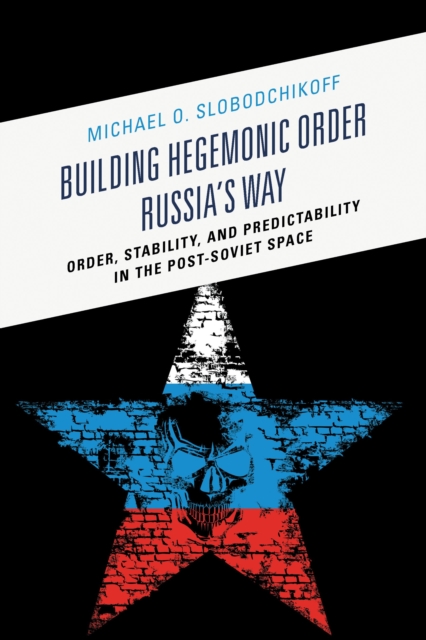
Building hegemonic order Russia's way : order, stability, and predictability in the post-Soviet space
This book examines Russia's emergence after the collapse of the Soviet Union and its creation of a security architecture in the post-Soviet space.Many scholars argue that Russia is a coercive power in the region that forces states to act in only its own interests.
eBook
Strategic cooperation
Power inequalities and mistrust have characterized many interstate relationships. Yet most international relations theories do not take into account power and mistrust when explaining cooperation. While some scholars argue that power relations inhibit cooperation between states, other scholars expect interstate cooperation regardless of the power relations and level of trust. Strategic Cooperation: Overcoming the Barriers of Global Anarchy argues that although states benefit from cooperation, they are also wary of the power relations between states, making cooperation difficult. Successful and cooperative bilateral relationships are formed between strong and weak states that are power asymmetric and have mistrust of one another, but they are built in such as way as to overcome the problem of power asymmetry and mistrust. This book answers how and why states that are in power asymmetry and have mistrust of one another are able to build a cooperative bilateral relationship. It argues that states forge a relationship due to strategic needs such as economic or security needs. Slobodchikoff has developed a database composed of the whole population of bilateral treaties between Russia and each of the former Soviet republics, and examines all of these bilateral relationships. He finds that Russia indeed forged relationships with the former republics based on its strategic interests. However, despite Russia's strategic interests, it had to build a bilateral relationship that would address the issues of mistrust and power asymmetry between the states. To achieve this, Russia and the former Soviet republics created treaty networks, which served to legitimize as well as legalize the independent status of each of the former republics while also increasing the cost to Russia of violating any of the treaties. This book argues that strong treaty networks account for a more cooperative relationship between states, allowing both states to cooperate by alleviating the problems of mistrust and power asymmetry.
eBook
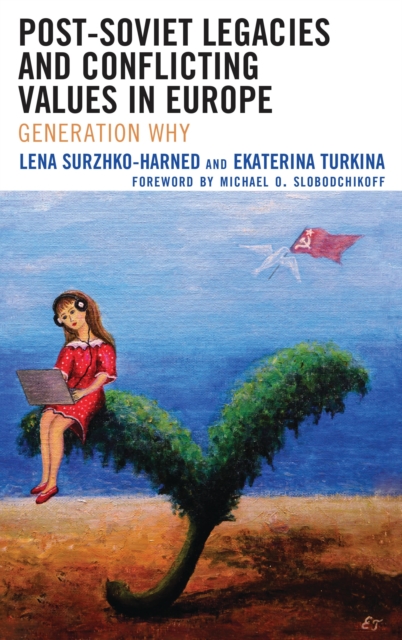
Post-soviet legacies and conflicting values in Europe
Generational conflicts occur in any society and prove to be both a puzzle and a rite of passage for every generation. Older generations often find it difficult to relate to the younger generations. Yet, as every generation comes of age, it leaves an impact on societal structures as a whole. Between baby boomers and millennials, societal norms and values transform in new and unexpected ways. While globalization has greatly contributed to the generational gaps world over, the post-communist transition, which occurred in the wake of the collapse of the USSR, left lasting and profound effects on these transitioning societies. This book investigates the generational conflict in the post-Soviet societies and argues that the generational divide runs deep. The post-Soviet generation, Generation WhY, has not dealt with the experience of old Soviet structures and they do not share the same values and norms as their parents and grandparents. Individualism, lack of trust in state institutions, independence, and entrepreneurial spirit run high among the members of the perestroika generation. Yet we still find differences between societies. While the Russian-Ukrainian conflict has its roots in a number of deeply seeded issues, this analysis shows that the generational gap is a part of the problem. This book also offers conclusive evidence to suggest that the members of the post-Soviet generation can be part of the solution.
eBook