
Catalogue Search | MBRL


Are you sure you want to remove the book from the shelf?

{{itemTitle}}
1,253
result(s) for
"Small, Robert"
Sort by:
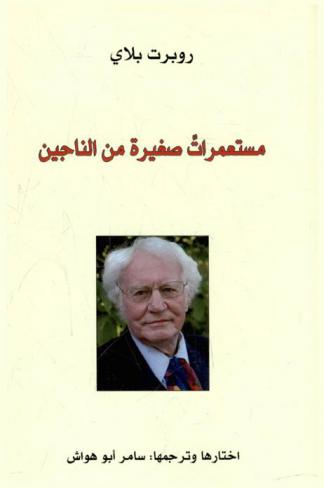
مستعمرات صغيرة من الناجين
أحد أكثر الأسماء حضورا وتأثيرا على ساحة الشعر الأميركي منذ نحو خمسة عقود، وتحديدا منذ 1962 سنة إصدار مجموعته الشعرية الأولى \"صمت في حقول الثلج\" التي نبهت النقاد إلى موهبته، منذ البداية اتخذ بلاي موقفاً مناهضا عنيفا، كما تقول الناقدة لورا روزنتال، من الإرث الشعري الأمريكي متمثلاً في شعراء جيل ما بعد الحرب العالمية الأولى أي عزرا باوند وتي إس إليوت ووليم كارلوس وليمز، حيث كتب في مقالة بعنوان \"منعطف خاطئ في الشعر الأمريكي\" مهاجما نظرة هؤلاء إلى الشعر بوصفه \"شعرا جمالياً موضوعياً منصبا على الخارج، لا يعير اهتمام اً للاوعي\".
Book

Estimating pulsatile ocular blood volume from intraocular pressure, ocular pulse amplitude, and axial length
The purpose of this study was to develop a method of estimating pulsatile ocular blood volume (POBV) from measurements taken during an ophthalmic exam, including axial length and using a tonometer capable of measuring intraocular pressure (IOP) and ocular pulse amplitude (OPA). Unpublished OPA data from a previous invasive study was used in the derivation, along with central corneal thickness (CCT) and axial length (AL), as well as IOP from the PASCAL dynamic contour tonometer (DCT) and intracameral (ICM) measurements of IOP for 60 cataract patients. Intracameral mean pressure was set to 15, 20, and 35 mmHg (randomized sequence) in the supine position, using a fluid-filled manometer. IOP and OPA measurements were acquired at each manometric setpoint (DCT and ICM simultaneously). In the current study, ocular rigidity (OR) was estimated using a published significant relationship of OR to the natural log of AL in which OR was invasively measured through fluid injection. Friedenwald’s original pressure volume relationship was then used to derive the estimated POBV, delivered to the choroid with each heartbeat as a function of OR, systolic IOP (IOP sys ), diastolic IOP (IOP dia ), and OPA, according to the derived equation POBV = log (IOP sys /IOP dia ) / OR. Linear regression analyses were performed comparing OPA to OR and calculated POBV at each of the three manometric setpoints. POBV was also compared to OPA/IOP dia with all data points combined. Significance threshold was p < 0.05. OR estimated from AL showed a significant positive relationship to OPA for both DCT (p < 0.011) and ICM (p < 0.006) at all three manometric pressure setpoints, with a greater slope for lower IOP. Calculated POBV also showed a significant positive relationship to OPA (p < 0.001) at all three setpoints with greater slope at lower IOP, and a significant negative relationship with IOP dia . In the combined analysis, POBV showed a significant positive relationship to OPA/ IOP dia (p < 0.001) in both ICM and DCT measurements with R 2 = 0.9685, and R 2 = 0.9589, respectively. POBV provides a straight-forward, clinically applicable method to estimate ocular blood supply noninvasively. Higher IOP in combination with lower OPA results in the lowest values of POBV. The simplified ratio, OPA/ IOP dia , may also provide a useful clinical tool for evaluating changes in ocular blood supply in diseases with a vascular component, such as diabetic retinopathy and normal tension glaucoma. Future studies are warranted.
Journal Article

التنظيم من أجل التعلم : أساليب صفية لمساعدة الطلاب في التفاعل ضمن مجموعات صغيرة /
يتناول كتاب (التنظيم من أجل التعلم : أساليب صفية لمساعدة الطلاب في التفاعل ضمن مجموعات صغيرة) والتي قامت بتأليفه (دينا سين) في حوالي (119) صفحة من القطع المتوسط موضوع (طرق التدريس) مستعرضا المحتويات التالية : الأسلوب التدريسي الأول مناقشات الشركاء، الأسلوب التدريسي الثاني إنشاء مجموعات من أجل معالجة فعالة، الأسلوب التدريسي الثالث الممارسة الثنائية، الأسلوب التدريسي الرابع التجميع المنظم، الأسلوب التدريسي الخامس المشاريع التعاوينة.
Book

Animal movement constraints improve resource selection inference in the presence of telemetry error
Multiple factors complicate the analysis of animal telemetry location data. Recent advancements address issues such as temporal autocorrelation and telemetry measurement error, but additional challenges remain. Difficulties introduced by complicated error structures or barriers to animal movement can weaken inference. We propose an approach for obtaining resource selection inference from animal location data that accounts for complicated error structures, movement constraints, and temporally autocorrelated observations. We specify a model for telemetry data observed with error conditional on unobserved true locations that reflects prior knowledge about constraints in the animal movement process. The observed telemetry data are modeled using a flexible distribution that accommodates extreme errors and complicated error structures. Although constraints to movement are often viewed as a nuisance, we use constraints to simultaneously estimate and account for telemetry error. We apply the model to simulated data, showing that it outperforms common ad hoc approaches used when confronted with measurement error and movement constraints. We then apply our framework to an Argos satellite telemetry data set on harbor seals (Phoca vitulina) in the Gulf of Alaska, a species that is constrained to move within the marine environment and adjacent coastlines.
Journal Article

On the use of nonparametric tests for comparing immunological Reverse Cumulative distribution curves (RCDCs)
Reverse Cumulative Distribution Curves (RCDCs) have proven to be a useful tool in summarizing immune response profiles in vaccine studies since their introduction by Reed, Meade, and Steinhoff (RMS) (1995). They are able to display virtually all of the treatment data and characterize summary statistics such as means or even their confidence intervals (CIs) that might be obscure. RMS mentioned their similarity to survival curves often used to summarize time-to-event data which are usually not normally distributed. The RCDCs, while intuitively pleasing and useful, contain important properties which allow for more powerful statistical applications. In this paper, we will suggest several widely used rank-based tests to compare the curves in the context of vaccine studies. These rank-based tests allow for comparisons between treatments, for stratified analyses, weighted analyses, and other modifications that make them the alternative of parametric analyses without the normality assumptions.
Clinical trial identification: NCT01712984 and NCT01230957.
Journal Article


The influence of sea ice on the detection of bowhead whale calls
Bowhead whales (
Balaena mysticetus
) face threats from diminishing sea ice and increasing anthropogenic activities in the Arctic. Passive acoustic monitoring is the most effective means for monitoring their distribution and population trends, based on the detection of their calls. Passive acoustic monitoring, however, is influenced by the sound propagation environment and ambient noise levels, which impact call detection probability. Modeling and simulations were used to estimate detection probability for bowhead whale frequency-modulated calls in the 80–180 Hz frequency band with and without sea ice cover and under various noise conditions. Sound transmission loss for bowhead calls is substantially greater during ice-covered conditions than during open-water conditions, making call detection ~ 3 times more likely in open-water. Estimates of daily acoustic detection probability were used to compensate acoustic detections for sound propagation and noise effects in two recording datasets in the northeast Chukchi Sea, on the outer shelf and continental slope, collected between 2012 and 2013. The compensated acoustic density suggests a decrease in whale presence with the retreat of sea ice at these recording sites. These results highlight the importance of accounting for effects of the environment on ambient noise and acoustic propagation when interpreting results of passive acoustic monitoring.
Journal Article

Model‐based clustering reveals patterns in central place use of a marine top predator
Satellite telemetry data are commonly used to quantify habitat selection, examine animal movements, and delineate home ranges. These data also contain valuable information concerning dens, nests, roosts, and other central places that are often associated with important life history events and may exhibit unique characteristics; however, using satellite telemetry data to study central places is complicated by common nuances like locational error and animal movement. We coupled a novel modeling framework that accounts for these nuances with an Argos satellite telemetry dataset to examine the spatiotemporal behavior associated with harbor seal haul‐out sites on Kodiak Island, Alaska, USA. The methodology incorporates an observation model that accommodates multiple sources of uncertainty in telemetry data and a flexible Bayesian nonparametric model to uncover latent clustering in the telemetry locations. We also contribute extensions to examine the effect of covariates on site selection and to obtain population‐level inference concerning central place use. Harbor seal haul‐out sites generally occurred in inlets and bays, areas that are isolated from the open water of the Gulf of Alaska. Most individuals selected haul‐out sites that were protected from wave exposure. The effects of bathymetry and shoreline complexity on haul‐out site selection were variable among individual seals, as were the effects of time of day, time since low tide, and day of year on temporal patterns of haul‐out use. As repositories of satellite telemetry data on a wide variety of species accumulate, so do opportunities for using this information to learn about the locations of central places, as well as the temporal patterns in their use. The model‐based approach we describe offers a practical and rigorous means for gaining insight concerning these sensitive locations, knowledge of which is important for the effective management and conservation of many species.
Journal Article
Leveraging constraints and biotelemetry data to pinpoint repetitively used spatial features
Satellite telemetry devices collect valuable information concerning the sites visited by animals, including the location of central places like dens, nests, rookeries, or haul-outs. Existing methods for estimating the location of central places from telemetry data require user-specified thresholds and ignore common nuances like measurement error. We present a fully model-based approach for locating central places from telemetry data that accounts for multiple sources of uncertainty and uses all of the available locational data. Our general framework consists of an observation model to account for large telemetry measurement error and animal movement, and a highly flexible mixture model specified using a Dirichlet process to identify the location of central places. We also quantify temporal patterns in central place use by incorporating ancillary behavioral data into the model; however, our framework is also suitable when no such behavioral data exist. We apply the model to a simulated data set as proof of concept. We then illustrate our framework by analyzing an Argos satellite telemetry data set on harbor seals (Phoca vitulina) in the Gulf of Alaska, a species that exhibits fidelity to terrestrial haul-out sites.
Journal Article

Effects of succinobucol (AGI-1067) after an acute coronary syndrome: a randomised, double-blind, placebo-controlled trial
Oxidative stress and inflammation are involved in the pathophysiology of atherosclerosis. Our aim was to assess the effects of the antioxidant succinobucol (AGI-1067) on cardiovascular outcomes in patients with recent acute coronary syndromes already managed with conventional treatments.
After an acute coronary syndrome occurring 14–365 days before recruitment, 6144 patients were randomly assigned with a computer-generated randomisation list, stratified by study site, to receive succinobucol (n=3078) or placebo (n=3066) in addition to standard of care. Enrolment began in July, 2003; this event-driven trial was stopped in August, 2006, after the prespecified number of primary outcome events had occurred. The composite primary endpoint was time to first occurrence of cardiovascular death, resuscitated cardiac arrest, myocardial infarction, stroke, unstable angina, or coronary revascularisation. Efficacy analyses were done by intention to treat. This trial is registered with
ClinicalTrials.gov, number
NCT00066898.
All randomised patients were included in the efficacy analyses. Succinobucol had no effect on the primary endpoint (530 events in succinobucol group
vs 529 in placebo group; hazard ratio 1·00, 95% CI 0·89–1·13, p=0·96). The composite secondary endpoint of cardiovascular death, cardiac arrest, myocardial infarction, or stroke occurred in fewer patients in the succinobucol group than in the placebo group (207
vs 252 events; 0·81, 0·68–0·98, p=0·029). The tertiary endpoint of new-onset diabetes developed in fewer patients without diabetes at baseline in the succinobucol group than in such patients in the placebo group (30 of 1923
vs 82 of 1950 patients; 0·37, 0·24–0·56, p<0·0001). New-onset atrial fibrillation occurred more often in the succinobucol group than in the placebo group (107 of 2818
vs 55 of 2787 patients; 1·87, 1·67–2·09, p=0·0002). Although the number of patients who reported any treatment emergent adverse event was much the same in the two groups, more patients in the succinobucol group than in the placebo group reported bleeding episodes or anaemia (32
vs 18 and 37
vs ten, respectively) as serious adverse events. Relative to treatment with placebo, succinobucol increased LDL cholesterol and systolic blood pressure, and decreased HDL cholesterol and glycated haemoglobin (p<0·0001 for all).
Although succinobucol had no effect on the primary endpoint, changes in the rates of other clinical outcomes—both beneficial and harmful—will need to be further assessed before succinobucol is used in patients with atherosclerosis or as an antidiabetic agent.
AtheroGenics Inc.
Journal Article