
Catalogue Search | MBRL


Are you sure you want to remove the book from the shelf?

{{itemTitle}}
149
result(s) for
"Smart, Neil"
Sort by:
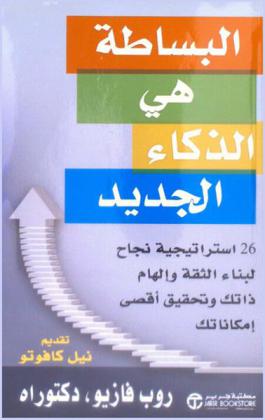
البساطة هي الذكاء الجديد : 26 استراتيجية نجاح لبناء الثقة وإلهام ذاتك وتحقيق أقصى إمكاناتك
هذا كتاب يتحدث عن النجاح إنه لا يتحدث عن نجاح أي شخص بل عن نجاحك أنت هناك العديد من العقبات التي تعيق النجاح صدقني لقد كنت صديقا مقربا لأكبر عقبات تحقيق النجاح أنا نفسي أحد الأسباب التي دفعتني للتغيير كانت معرفتي بأنك إذا كنت ناجحا وتستطيع مساعدة الآخرين على النجاح وذلك أشعل حماستي ليس بإمكاني أن أعدك بأن جميع أحلامك ستتحقق لكن بإمكاني أن أعدك بأنك إذا قرأت هذا الكتاب بعقل منفتح وتحديت نفسك لتطبيق ما تعلمته ستزيد احتمالية نجاحك وتقلل احتمالية وقوعك في أزمات.
Book

The Effect of Exercise Training on Blood Lipids: A Systematic Review and Meta-analysis
Dyslipidemia is a primary risk factor for cardiovascular disease (CVD). Exercise training (EXTr) improves some lipid markers but not others; the literature is dated and analyses may be underpowered.
To clarify which lipid markers are altered with ExTr and establish if information size had yet reached futility.
We conducted a systematic review/meta-analysis, with meta-regression, to establish expected effect size in lipid profile with aerobic (AT), resistance (RT) and combined (CT = AT + RT) ExTr. We conducted trial sequence analysis (TSA) to control for type I and II error and establish if information size had reached futility.
We included 148 relevant randomized controlled trials (RCTs) of ExTr, with 227 intervention groups, total 8673 participants; exercise 5273, sedentary control 3400. Total cholesterol (TC) MD - 5.90 mg/dL (95% confidence interval (CI) - 8.14, - 3.65), high-density lipoprotein cholesterol (HDL) 2.11 (95% CI 1.43, 2.79), low-density lipoprotein cholesterol (LDL) - 7.22 (95% CI - 9.08, - 5.35), triglycerides - 8.01 (95% CI - 10.45, - 5.58) and very low-density lipoprotein cholesterol (VLDL) - 3.85 (95% CI - 5.49, - 2.22) all showed significant but modest 3.5-11.7%, improvements following ExTr. TSA indicated all analyses exceeded minimum information size to reach futility. CT was optimal for dyslipidemia management. Meta-regression showed every extra weekly aerobic session reduced TC - 7.68 mg/dL and for every extra week of training by - 0.5 mg/dL. Each minute of session time produced an additional 2.11 mg/dL HDL increase.
TSA analysis revealed sufficient data exist to confirm ExTr will improve all five lipid outcomes. CT is optimal for lipid management. The modest effect observed may moderate dyslipidemia medication for primary prevention. Prediction intervals suggest TC, HDL, LDL and TGD are only improved in one-quarter of studies.
Journal Article

Isometric Exercise Training for Blood Pressure Management: A Systematic Review and Meta-analysis
To conduct a systematic review and meta-analysis quantifying the effects of isometric resistance training on the change in systolic blood pressure(SBP), diastolic blood pressure (DBP), and mean arterial pressure in subclinical populations and to examine whether the magnitude of change in SBP and DBP was different with respect to blood pressure classification.
We conducted a systematic review and meta-analysis of randomized controlled trials lasting 4 or more weeks that investigated the effects of isometric exercise on blood pressure in healthy adults (aged ≥18 years) and were published in a peer-reviewed journal. PubMed, CINAHL, and the Cochrane Central Register of Controlled Trials were searched for trials reported between January 1, 1966, and July 31, 2013. We included 9 randomized trials, 6 of which studied normotensive participants and 3 that studied hypertensive patients, that included a total of 223 participants (127 who underwent exercise training and 96 controls).
The following reductions were observed after isometric exercise training: SBP—mean difference (MD), −6.77 mm Hg (95% CI, −7.93 to −5.62 mm Hg; P<.001); DBP—MD, −3.96 mm Hg (95% CI, −4.80 to −3.12 mm Hg; P<.001); and mean arterial pressure—MD, −3.94 mm Hg (95% CI, −4.73 to −3.16 mm Hg; P<.001). A slight reduction in resting heart rate was also observed (MD, −0.79 beats/min; 95% CI, −1.23 to −0.36 beats/min; P=.003).
Isometric resistance training lowers SBP, DBP, and mean arterial pressure. The magnitude of effect is larger than that previously reported in dynamic aerobic or resistance training. Our data suggest that this form of training has the potential to produce significant and clinically meaningful blood pressure reductions and could serve as an adjunctive exercise modality.
Journal Article

Resistance training in heart failure patients: a systematic review and meta-analysis
Aerobic training (AT) has been the primary mode of exercise training in cardiac rehabilitation. Historically, the reason for the prescription of AT was that it was speculated that although RT may be beneficial for some clinical outcomes, it may have an adverse effect on ventricular structure and function. However, RT has now made its way into current cardiac rehabilitation guidelines, including those directed towards patients with HF, albeit differences exist across institutions and guidelines. A systematic search of PubMed, EMBASE and Cochrane Trials Register on April 30, 2021, was conducted for exercise-based rehabilitation trials in HF. Randomised and controlled trials that reported on resistance training versus usual care or trials that directly compared RT to an AT intervention were included. Resistance training versus controls improves parameters of lower (SMD 0.76 (95%CI 0.26, 1.25, p = 0.003] and upper extremity muscle strength (SMD 0.85 (95%CI 0.35, 1.35), p = 0.0009], both key parameters of physical function throughout the lifespan. Importantly, RT in isolation, versus control, improves VO2peak [MD: 2.64 ml/kg/min (95%CI 1.67, 3.60), p < 0.00001] and 6MWD [MD: 49.94 m (95%CI 34.59, 65.29), p < 0.00001], without any detrimental effect on left ventricular parameters. Resistance training in HF patients is safe and improves parameters of physical function and quality of life. Where people with HF are unable to, or are not inclined to, partake in aerobic activity, RT alone is appropriate to elicit meaningful benefit.
Journal Article

Isometric exercise training for blood pressure management: a systematic review and meta-analysis to optimize benefit
The objective of our study was to examine the effects of isometric resistance training (IRT) on resting blood pressure in adults. We conducted a systematic review and meta-analysis of randomized-controlled trials lasting ⩾2 weeks, investigating the effects of isometric exercise on blood pressure in healthy adults (aged ⩾18 years), published in a peer-reviewed journal between 1 January 1966 to 31 January 2015. We included 11 randomized trials, totaling 302 participants. The following reductions were observed after isometric exercise training; systolic blood pressure (SBP) mean difference (MD) -5.20 mm Hg (95% confidence interval (CI) -6.08 to -4.33, P<0.00001); diastolic blood pressure (DBP) MD -3.91 mm Hg (95% CI -5.68 to -2.14, P<0.0001); and mean arterial blood pressure (MAP) MD -3.33 mm Hg (95% CI -4.01 to -2.66, P<0.00001). Sub-analyses showed males tended to reduce MAP MD -4.13 mm Hg (95% CI -5.08 to -3.18) more than females. Subjects aged ⩾45 years demonstrated larger reductions in MAP MD -5.51 mm Hg (95% CI -6.95 to -4.06) than those <45 years. Subjects undertaking ⩾8 weeks of IRT demonstrated a larger reduction in SBP MD -7.26 mm Hg (95% CI -8.47 to -6.04) and MAP MD -4.22 mm Hg (95% CI -5.08 to -3.37) than those undertaking<8 weeks. Hypertensive participants in IRT demonstrated a larger reduction in MAP MD -5.91 mm Hg (95% CI -7.94 to -3.87) than normotensive participants MD -3.01 mm Hg (95% CI -3.73 to -2.29). Our study indicated that IRT lowers SBP, DBP and MAP. The magnitude of effect may be larger in hypertensive males aged ⩾45 years, using unilateral arm IRT for >8 weeks.
Journal Article
Exercise Training for Management of Peripheral Arterial Disease: A Systematic Review and Meta-Analysis
Background
Peripheral arterial disease (PAD), a chronic condition with debilitating clinical sequelae, leads to reduced walking activity and increased mortality risk.
Objective
We sought to quantify expected benefits elicited via exercise training in people with PAD and aimed to clarify which prescriptions were optimal.
Data sources
We conducted a systematic search (PubMed, CINAHL, Cochrane controlled trials registry; 1966–31 July 2013).
Study selection
We included randomized controlled trials (RCTs) of exercise training versus usual medical care in persons with PAD. Studies were assessed by two reviewers, 41 of 57 (72 %) of RCTs met selection criteria.
Data extraction and synthesis
Data extraction sheets were used to record data and two reviewers cross-checked data. Included study authors were asked for missing data.
Main outcomes and measures
Primary outcome: change in aerobic capacity (peak
V
O
2
). Secondary outcomes: ankle-brachial index (ABI), flow-mediated dilatation, 6-minute walk claudication distances (initial and absolute) and graded treadmill (initial and absolute) distances. The primary hypothesis was that peak
V
O
2
would increase with exercise training. Using sub-analyses, we also aimed to clarify what types of exercise prescription would provide patients with most benefit; hypotheses were developed a priori.
Results
Exercise training produced significant peak
V
O
2
improvements with mean difference (MD) 0.62 ml·kg
−1
·min
−1
(95 % CI 0.47–0.77;
p
< 0.00001); 6-minute walk initial claudication MD 52.7 m (95 % CI 24.7–80.6 m;
p
= 0.0002); total walking distance MD 34.9 m (95 % CI 25.6–44.1 m;
p
< 0.00001); graded treadmill initial claudication MD 68.8 m (95 % CI 54.4–83.2 m;
p
< 0.00001); absolute claudication distance MD 41.0 m (95 % CI 28.8–53.2 m;
p
< 0.00001)); but not ABI (
p
= 0.12) or flow mediated dilatation (FMD) (
p
= 0.96). Sub-analyses of change in peak
V
O
2
after arm cranking showed a MD of 1.91 ml·kg
−1
·min
−1
(95 % CI 1.28–2.54,
p
< 0.00001). Sub-analysis of peak
V
O
2
according to exercise training pain thresholds suggested that no-to-mild pain may be superior (MD 0.79 ml·kg
−1
·min
−1
[95 % CI 0.45–1.14,
p
< 0.00001]) to moderate-to-maximum training pain (MD 0.49 ml·kg
−1
·min
−1
[95 % CI 0.31–0.66,
p
< 0.00001]).
Conclusions and relevance
Exercise training improves cardio-respiratory fitness, pain-free and total flat-ground walking distances, as well as graded treadmill performance in PAD. Exercise prescriptions for PAD may consider arm cranking as well as lower limb exercise, possibly at short vigorous intensity intervals, but only to a threshold of mild pain.
Journal Article

Digital Problem-Based Learning in Health Professions: Systematic Review and Meta-Analysis by the Digital Health Education Collaboration
The use of digital education in problem-based learning, or digital problem-based learning (DPBL), is increasingly employed in health professions education. DPBL includes purely digitally delivered as well as blended problem-based learning, wherein digital and face-to-face learning are combined.
The aim of this review is to evaluate the effectiveness of DPBL in improving health professionals' knowledge, skills, attitudes, and satisfaction.
We used the gold-standard Cochrane methods to conduct a systematic review of randomized controlled trials (RCTs). We included studies that compared the effectiveness of DPBL with traditional learning methods or other forms of digital education in improving health professionals' knowledge, skills, attitudes, and satisfaction. Two authors independently screened studies, extracted data, and assessed the risk of bias. We contacted study authors for additional information, if necessary. We used the random-effects model in the meta-analyses.
Nine RCTs involving 890 preregistration health professionals were included. Digital technology was mostly employed for presentation of problems. In three studies, PBL was delivered fully online. Digital technology modalities spanned online learning, offline learning, virtual reality, and virtual patients. The control groups consisted of traditional PBL and traditional learning. The pooled analysis of seven studies comparing the effect of DPBL and traditional PBL reported little or no difference in postintervention knowledge outcomes (standardized mean difference [SMD] 0.19, 95% CI 0.00-0.38). The pooled analysis of three studies comparing the effect of DPBL to traditional learning on postintervention knowledge outcomes favored DPBL (SMD 0.67, 95% CI 0.14-1.19). For skill development, the pooled analysis of two studies comparing DPBL to traditional PBL favored DPBL (SMD 0.30, 95% CI 0.07-0.54). Findings on attitudes and satisfaction outcomes were mixed. The included studies mostly had an unclear risk of bias.
Our findings suggest that DPBL is as effective as traditional PBL and more effective than traditional learning in improving knowledge. DPBL may be more effective than traditional learning or traditional PBL in improving skills. Further studies should evaluate the use of digital technology for the delivery of other PBL components as well as PBL overall.
Journal Article

Exercise and sport science australia position stand update on exercise and hypertension
Hypertension is the most common circulatory system condition, accounting for >40% of the cardiovascular disease total burden. One-third of Australians aged over 18 years have hypertension and in 68% of these it is uncontrolled. Australian data show hypertension accounts for 6% of general practitioner (GP) consults. Recent evidence has confirmed exercise is an effective adjunct therapy for hypertension management and the objective of this document is to provide a contemporary, evidence-based guide for optimal delivery of an exercise programme for blood pressure management. This work is an update to the 2009 Exercise and Sport Science Australia (ESSA) position stand. In most cases, the first line treatment to reduce BP is initiation of lifestyle changes, of which regular aerobic exercise is a principal component. Aerobic and resistance activities remain the cornerstone of exercise-based management of blood pressure, but recent work has uncovered variations on traditional delivery of exercise, such as high intensity interval training (HIIT) and a new exercise modality, isometric resistance training (IRT) may offer alternative management regimens. Exercise Physiologists, as well as other health care professionals, play an important role in helping to achieve BP control in patients with hypertension by reinforcing healthy lifestyle habits and prescribing appropriate exercise.
Journal Article

Reported methods for handling missing change standard deviations in meta-analyses of exercise therapy interventions in patients with heart failure: A systematic review
Well-constructed systematic reviews and meta-analyses are key tools in evidenced-based healthcare. However, a common problem with performing a meta-analysis is missing data, such as standard deviations (SD). An increasing number of methods are utilised to calculate or impute missing SDs, allowing these studies to be included in analyses. The aim of this review was to investigate the methods reported and utilised for handling missing change SDs in meta-analyses, using the topic of exercise therapy in heart failure patients as a model.
A systematic search of PubMed, EMBASE and Cochrane Library from 1 January 2014 to 31st March 2018 was conducted for meta-analyses of exercise based trials in heart failure. Studies were eligible to be included if they performed a meta-analysis of change in exercise capacity in heart failure patients after a training intervention.
Twenty two publications performed a meta-analysis on the effect of exercise therapy on exercise capacity in heart failure patients. Eleven (50%) publications did not directly report the approach for dealing with missing change SDs. Approaches reported and utilised to deal with missing change SDs included imputation, actual and approximate algebraic recalculation using study level summary statistics and exclusion of studies.
Change SDs are often not reported in trial papers and while in the first instance meta-analysts should attempt to obtain missing data from trial authors, this information is frequently not forthcoming. Meta-analysts are then forced to make a decision on how these trials and missing data are to be handled. Whilst not one approach is favoured for dealing with this matter, authors need to clearly report the approach to be utilised for missing change SDs. Where change SDs are imputed meta-analyst are encouraged to explore several options and have a sound rationale as to the choice, and where data is imputed, sensitivity analysis should be conducted.
Journal Article