
Catalogue Search | MBRL


Are you sure you want to remove the book from the shelf?

{{itemTitle}}
7,448
result(s) for
"Smith, Stephanie"
Sort by:


Gaze Amplifies Value in Decision Making
When making decisions, people tend to choose the option they have looked at more. An unanswered question is how attention influences the choice process: whether it amplifies the subjective value of the looked-at option or instead adds a constant, value-independent bias. To address this, we examined choice data from six eye-tracking studies (Ns = 39, 44, 44, 36, 20, and 45, respectively) to characterize the interaction between value and gaze in the choice process. We found that the summed values of the options influenced response times in every data set and the gaze-choice correlation in most data sets, in line with an amplifying role of attention in the choice process. Our results suggest that this amplifying effect is more pronounced in tasks using large sets of familiar stimuli, compared with tasks using small sets of learned stimuli.
Journal Article

Recruitment, retention, and engagement of a millennial workforce
This book examines how to more successfully recruit, retain and engage millennial employees in various industries for increased job satisfaction and organizational performance. Experts in various areas of organizational communication share insight and best practices for working with millennials.
Book

Chronic Intermittent Hypoxia Exerts CNS Region-Specific Effects on Rat Microglial Inflammatory and TLR4 Gene Expression
Intermittent hypoxia (IH) during sleep is a hallmark of sleep apnea, causing significant neuronal apoptosis, and cognitive and behavioral deficits in CNS regions underlying memory processing and executive functions. IH-induced neuroinflammation is thought to contribute to cognitive deficits after IH. In the present studies, we tested the hypothesis that IH would differentially induce inflammatory factor gene expression in microglia in a CNS region-dependent manner, and that the effects of IH would differ temporally. To test this hypothesis, adult rats were exposed to intermittent hypoxia (2 min intervals of 10.5% O2) for 8 hours/day during their respective sleep cycles for 1, 3 or 14 days. Cortex, medulla and spinal cord tissues were dissected, microglia were immunomagnetically isolated and mRNA levels of the inflammatory genes iNOS, COX-2, TNFα, IL-1β and IL-6 and the innate immune receptor TLR4 were compared to levels in normoxia. Inflammatory gene expression was also assessed in tissue homogenates (containing all CNS cells). We found that microglia from different CNS regions responded to IH differently. Cortical microglia had longer lasting inflammatory gene expression whereas spinal microglial gene expression was rapid and transient. We also observed that inflammatory gene expression in microglia frequently differed from that in tissue homogenates from the same region, indicating that cells other than microglia also contribute to IH-induced neuroinflammation. Lastly, microglial TLR4 mRNA levels were strongly upregulated by IH in a region- and time-dependent manner, and the increase in TLR4 expression appeared to coincide with timing of peak inflammatory gene expression, suggesting that TLR4 may play a role in IH-induced neuroinflammation. Together, these data indicate that microglial-specific neuroinflammation may play distinct roles in the effects of intermittent hypoxia in different CNS regions.
Journal Article


Generation of political priority for global health initiatives: a framework and case study of maternal mortality
Why do some global health initiatives receive priority from international and national political leaders whereas others receive little attention? To analyse this question we propose a framework consisting of four categories: the strength of the actors involved in the initiative, the power of the ideas they use to portray the issue, the nature of the political contexts in which they operate, and characteristics of the issue itself. We apply this framework to the case of a global initiative to reduce maternal mortality, which was launched in 1987. We undertook archival research and interviewed people connected with the initiative, using a process-tracing method that is commonly employed in qualitative research. We report that despite two decades of effort the initiative remains in an early phase of development, hampered by difficulties in all these categories. However, the initiative's 20th year, 2007, presents opportunities to build political momentum. To generate political priority, advocates will need to address several challenges, including the creation of effective institutions to guide the initiative and the development of a public positioning of the issue to convince political leaders to act. We use the framework and case study to suggest areas for future research on the determinants of political priority for global health initiatives, which is a subject that has attracted much speculation but little scholarship.
Journal Article

On cinema
Glauber Rocha is known as the visionary Brazilian director of landmark films, Black God, White Devil, Entranced Earth and Antonio das Mortes. Less well-known outside Brazil is that he was also a brilliant film critic and innovative thinker on world cinema. 'On Cinema' brings together for the first time in the English language a comprehensive selection of Rocha's film writings, revealing for the first time to English-speaking readers the full critical power, inventiveness and vision of a great filmmaker. Rocha's writings, endowed with critical verve and humour, give insights into key moments of film history, as well as the politics of world cinema.
BOOK

Food choice, plate waste and nutrient intake of elementary- and middle-school students participating in the US National School Lunch Program
To (i) evaluate food choices and consumption patterns of elementary- and middle-school students who participate in the National School Lunch Program (NSLP) and (ii) compare students' average nutrient intake from lunch with NSLP standards.
Plate waste from elementary- and middle-school students' lunch trays was measured in autumn 2010 using a previously validated digital photography method. Percentage waste was estimated to the nearest 10 % for the entrée, canned fruit, fresh fruit, vegetable, grain and milk. Univariate ANOVA determined differences in percentage waste between schools, grades and genders. Daily nutrient intake was calculated using the district's menu analysis and percentage waste.
Elementary and middle schools in northern Colorado (USA).
Students, grades 1-8.
Plate waste was estimated from 899 lunch trays; 535 elementary- and 364 middle-school students. Only 45 % of elementary- and 34 % middle-school students selected a vegetable. Elementary-school students wasted more than a third of grain, fruit and vegetable menu items. Middle-school students left nearly 50 % of fresh fruit, 37 % of canned fruit and nearly a third of vegetables unconsumed. Less than half of the students met the national meal standards for vitamins A and C, or Fe.
Few students' lunch consumption met previous or new, strengthened NSLP lunch standards. Due to the relatively low intake of vegetables, intakes of vitamins A and C were of particular concern. Effective behavioural interventions, combined with marketing, communications and behavioural economics, will likely be necessary to encourage increased vegetable intake to meet the new meal standards.
Journal Article
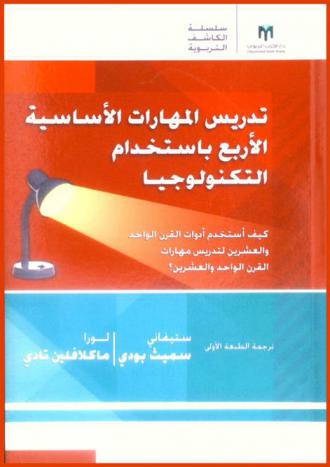
تدريس المهارات الأساسية الأربع باستخدام التكنولوجيا : كيف أستخدم أدوات القرن الواحد والعشرين لتدريس مهارات القرن الواحد والعشرين؟
يبين هذا الكتاب كيف يمكن للمعلمين أن يدمجوا التكنولوجيا بالتعليم بطريقة هادفة من أجل تيسير ممارسة وإتقان كل مهارة من المهارات الأساسية الأربع إضافة إلى أهداف تعلمية أخرى كما أن هذا الكتاب يزخر باستراتيجيات عملية وجذابة ستحدث تحولا جذريا في طريقة شعور الطلاب بالتعلم وسواء أكنت ترغب في تجريب شيء جديد في غرفة صفك أم في مناقشة أفكار كجزء من مجتمع تعلمي مهني فإنك ستجد الكثير في كتاب تدريس المهارات الأساسية الأربع باستخدام التكنولوجياوكيف استخدم أدوات القرن الواحد والعشرين لتدريس مهارات القرن الواحد والعشرين.
BOOK

Mental representations distinguish value-based decisions from perceptual decisions
In our daily lives, we make a wide variety of decisions. One major distinction that has been made is between perceptual decisions and value-based (economic) decisions. We argue that this distinction is ill-defined, because these decisions vary on multiple dimensions. We present an alternative way to categorize decisions, based on two dimensions: subjective versus objective criteria, and evaluation of a stimulus versus a representation. We experimentally study the decision-making process (with eye-tracking) in each of the four resulting categories, using the same stimulus set of food images. Using a combination of individual-level and group-level modeling, we find surprisingly consistent patterns of behavior across the categories. However, we find stronger similarities between the subjective and objective categories, and stronger differences between the stimulus and representation categories.
Journal Article