
Catalogue Search | MBRL


Are you sure you want to remove the book from the shelf?

{{itemTitle}}
775
result(s) for
"Snyder, Timothy"
Sort by:

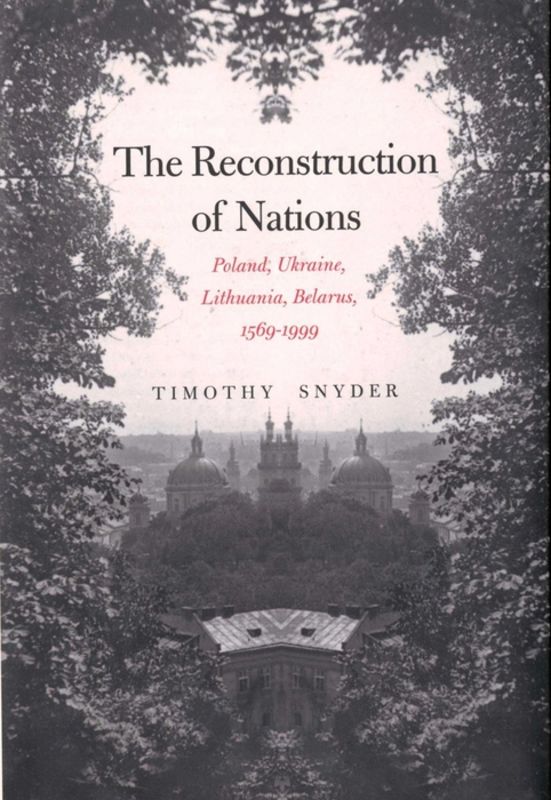
The Reconstruction of Nations
Modern nationalism in northeastern Europe has often led to violence and then reconciliation between nations with bloody pasts. In this fascinating book, Timothy Snyder traces the emergence of Polish, Ukrainian, Lithuanian, and Belarusian nationhood over four centuries, discusses various atrocities (including the first account of the massive Ukrainian-Polish ethnic cleansings of the 1940s), and examines Poland's recent successful negotiations with its newly independent Eastern neighbors, as it has channeled national interest toward peace.
eBook


A fibrin/hyaluronic acid hydrogel for the delivery of mesenchymal stem cells and potential for articular cartilage repair
Background
Osteoarthritis (OA) is a degenerative joint disease affecting approximately 27 million Americans, and even more worldwide. OA is characterized by degeneration of subchondral bone and articular cartilage. In this study, a chondrogenic fibrin/hyaluronic acid (HA)-based hydrogel seeded with bone marrow-derived mesenchymal stem cells (BMSCs) was investigated as a method of regenerating these tissues for OA therapy. This chondrogenic hydrogel system can be delivered in a minimally invasive manner through a small gauge needle, forming a three-dimensional (3D) network structure
in situ
. However, an ongoing problem with fibrin/HA-based biomaterials is poor mechanical strength. This was addressed by modifying HA with methacrylic anhydride (MA) (HA-MA), which reinforces the fibrin gel, thereby improving mechanical properties. In this study, a range of fibrinogen (the fibrin precursor) and HA-MA concentrations were explored to determine optimal conditions for increased mechanical strength, BMSC proliferation, and chondrogenesis potential
in vitro
.
Results
Increased mechanical strength was achieved by HA-MA reinforcement within fibrin hydrogels, and was directly correlated with increasing HA-MA concentration. Live/dead staining and metabolic assays confirmed that the crosslinked fibrin/HA-MA hydrogels provided a suitable 3D environment for BMSC proliferation. Quantitative polymerase chain reaction (qPCR) of BMSCs incubated in the fibrin/HA-MA hydrogel confirmed decreased expression of collagen type 1 alpha 1 mRNA with an increase in Sox9 mRNA expression especially in the presence of a platelet lysate, suggesting early chondrogenesis.
Conclusion
Fibrin/HA-MA hydrogel may be a suitable delivery method for BMSCs, inducing BMSC differentiation into chondrocytes and potentially aiding in articular cartilage repair for OA therapy.
Journal Article
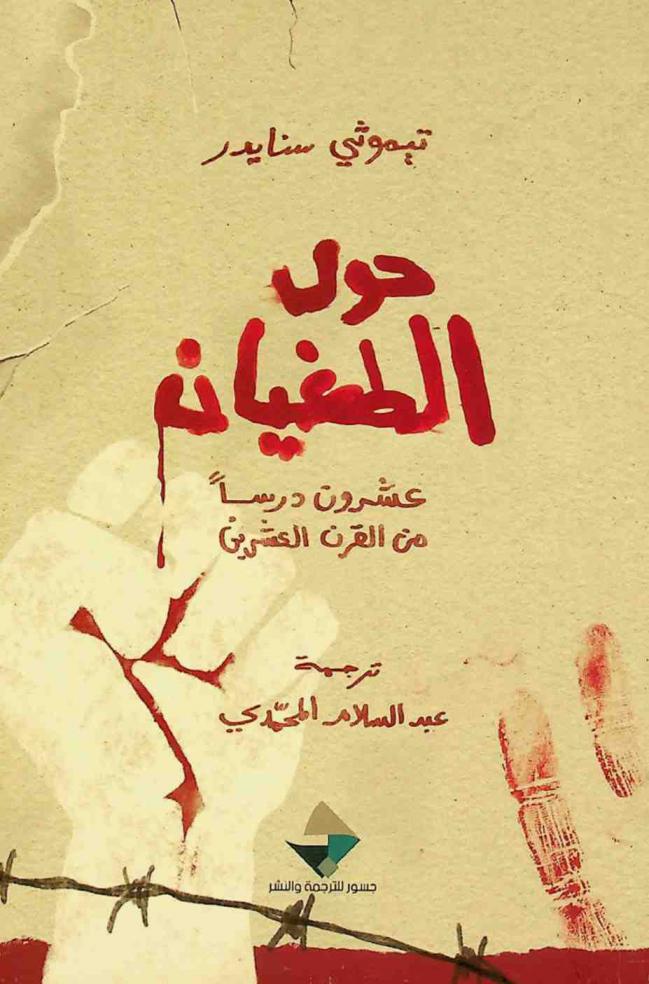
حول الطغيان : عشرون درسا من القرن العشرين
في أواخر القرن التاسع عشر تولد عن التوسع في التجارة العالمية توقعات وآمال بالتقدم، تماما كتلك التوقعات التي عمت في نهايات القرن العشرين. ثم إنه في بواكير القرن العشرين، كما هي الحال في أوائل القرن الحادي والعشرين، اصطدمت هذه الطموحات والآمال برؤى سياسية جماهيرية جديدة يدعي فيها رئيس ما أو حزب معين أنه من يمثل إرادة الشعب. وهكذا انهارت الديمقراطيات الأوروبية لتتحول إلى أنظمة شمولية وفاشية يمينية في عشرينيات القرن الماضي وثلاثينياته. وقام الاتحاد السوفياتي الشيوعي، الذي تأسس عام 1922، بتوسيع نموذجه داخل أوروبا في أربعينيات القرن العشرين.يكشف لنا تاريخ القرن العشرين لأوروبا أن المجتمعات ليست آمنة من التفكك، وأن الديمقراطيات يمكن لها أن تسقط، وأن الأخلاق قد تنهار وتتهاوى، وأن رجالا عاديين قد يجدون أنفسهم واقفين على شفير خنادق الموت والرشاشات في أيديهم. إنه لمن المفيد لنا اليوم أن نفهم كيف أن الطغيان يمثل استجابة للعولمة لمظاهر انعدام المساواة الحقيقية والمحسوسة التي خلقتها، وعجز الديمقراطيات الظاهر عن معالجتها. يقدم هذا الكتاب عشرين درسا من القرن العشرين، ملائما للظروف والملابسات التي نحياها في أيامنا هذه.
BOOK

Here in our Auschwitz and other stories
The most complete English-language collection of the prose of Tadeusz Borowski, the most challenging chronicler of Auschwitz, with a foreword by Timothy Snyder, author of On Tyranny In 1943, the twenty-year-old Polish poet Tadeusz Borowski was arrested and deported to Auschwitz as a political prisoner. What he experienced in the camp left him convinced that no one who survived Auschwitz was innocent. All were complicit; the camp regime depended on this. Borowski's tales present the horrors of the camp as reflections of basic human nature and impulse, stripped of the artificial boundaries of culture and custom. Inside the camp, the strongest of the prisoners form uneasy alliances with their captors and one another, watching unflinchingly as the weak scrabble and struggle against their inevitable fate. In the last analysis, suffering is never ennobling and goodness is tantamount to suicide. Bringing together for the first time in English Borowski's major writings and many previously uncollected works, this is the most complete collection of stories in a new, authoritative translation, with a substantial foreword by Timothy Snyder that speaks to its enduring relevance.
eBook

Sketches from a secret war : a Polish artist's mission to liberate Soviet Ukraine
No detailed description available for \"Sketches from a Secret War\".
eBook