
Catalogue Search | MBRL


Are you sure you want to remove the book from the shelf?

{{itemTitle}}
149
result(s) for
"Soares, Anthony"
Sort by:


Beyond Salt Mining: Urban Subsidence Hotspots Characterization in Maceió , 2016–2024
What are the main findings? City-wide SBAS-InSAR deformation map (Sentinel-1, 2016–2024) delineates ~55 km[sup.2] of anomalous ground motion, clustered into seven macro-areas (A1–A7) with distinct kinematics and potential for subsidence. Beyond the mining central bowl, elongated lagoonal anisotopic zones and diffuse coastal/peri-urban low-gradient zones are mapped and described. What are the implications of the main findings? Subsidence acts as a compound hazard, amplifying flood/coastal-erosion exposure; Monitoring and zoning must extend beyond the mining district. The workflow is reproducible/transferable for monitoring other low-lying coastal cities. Land subsidence in Maceió, Brazil, has triggered a significant urban crisis, resulting in widespread evacuations, population displacement, and, in some cases, the partial or complete destruction of neighborhoods. However, the full extent and underlying mechanisms beyond the mining epicenter have remained unclear. This study presents a comprehensive, city-wide subsidence assessment (2016–2024) that tests a multi-mechanistic hypothesis. SBAS-InSAR (Sentinel-1) ground-motion data are integrated with geological and geomorphological context, well-density mapping, and physical–environmental and morphological metrics to delineate and characterize subsiding zones. The results reveal several patterns of deformation: in addition to the central bowl associated with rock salt mining, a peripheral, elongated corridor extends along the Mundaú Lagoon shoreline, diffuse low-gradient zones occur within the coastal urban belt, and a peri-urban subsidence corridor is identified. The identifyed subsidence areas cover approximately 55 km[sup.2] (10.8% of the city), with about 5 km[sup.2] exhibiting rates exceeding 10 mm yr[sup.−1]. These patterns correspond to sedimentary plains and areas of intensive well use, extending far beyond the salt mining crisis zone. The primary contribution of this work is the identification of multiple subsidence mechanisms through an integrated analytical workflow, demonstrating that subsidence in Maceió constitutes a compound hazard that progressively increases city-wide risks of flooding, coastal and lagoonal erosion and slope instabilities, with direct consequences for structural integrity. The findings underscore the urgent need for risk-management strategies that address mining legacies, uncontrolled groundwater abstraction, and proper urban planning to prevent future crises.
Journal Article

Clozapine Rechallenge in Treatment-Resistant Schizophrenia: Clinical and Ethical Considerations After Ileus
Aims: Clozapine is the cornerstone of treatment for treatment-resistant schizophrenia. It primarily acts by inhibiting dopamine D2 receptors based on the hyperdopaminergic theory of psychosis. Additionally, second-generation antipsychotics (SGAs) interact with serotonin receptors (5-HT2A and 5-HT1A), mitigating extrapyramidal side effects. However, widespread activity on D2 receptors and additional anticholinergic effects can impact gastrointestinal motility, leading to complications such as paralytic ileus. Clozapine has potent anticholinergic activity and is associated with higher risks of paralytic ileus compared with other SGAs. Methods: A male in his late 40s with treatment-resistant schizophrenia, anxiety and panic attacks underwent an elective inguino-sacrotal hernia repair with mesh reconstruction. Psychiatric history was significant for past suicide attempts, including a self-defenestration leading to traumatic brain injury, aggression towards his elderly father and past clozapine-induced neutropenia. He was an ex-smoker. Medications included clozapine 100 mg twice daily, amisulpride 200 mg twice daily, lithium carbonate 625 mg once daily, and hyoscine hydrobromide 300 mcg twice daily. Postoperatively, the patient developed constipation and abdominal distension consistent with a paralytic ileus. He was placed nil by mouth and managed with nasogastric decompression. During a three-day lapse in antipsychotic treatment on the surgical ward, his mental health deteriorated, presenting with acute psychotic symptoms. The patient lacked insight into his mental health at this time. Given the failure of alternative antipsychotics previously, the multidisciplinary team (MDT) faced a complex risk-benefit analysis. The potential dangers of reintroducing clozapine, including worsening ileus, were weighed against its irreplaceable role in managing his psychosis, suicidality, and aggression. Ultimately, clozapine was restarted cautiously with haematological and gastrointestinal response closely monitored. Psychosis subsequently improved with no recurrence of ileus, allowing him to continue clozapine treatment. Results: This case highlights the complexities of managing antipsychotic treatment in patients with comorbid physical conditions. Clozapine’s advantage of reducing suicidality and violence were balanced with its potent anticholinergic activity, warranting caution in patients at risk of gastrointestinal complications. The decision to restart clozapine was made after evaluating the significant risks of psychotic relapse. Close MDT monitoring facilitated safe reintroduction, demonstrating necessary case-by-case risk assessments when managing antipsychotics in medically vulnerable patients. Conclusion: Rechallenging clozapine posed significant clinical and ethical challenges, requiring an evidence-based MDT approach. This case underscores the importance of balancing psychiatric needs with medical risks, particularly in treatment-resistant schizophrenia. It also highlights the role of ongoing monitoring and individualised treatment plans in managing complex psychopharmacological decisions. Further studies are warranted to explore safety of clozapine in patients with gastrointestinal-motility disorders.
Journal Article

Water quality and anthropogenic impact in the watersheds of service reservoirs in the Brazilian semi-arid region
The semi-arid region of Brazil is characterised by the irregular temporal and spatial distribution of the rainfall, which together with anthropogenic action causes degradation of the water quality. The aim of this study was to evaluate water quality in surface reservoirs in the Brazilian semi-arid region due to rainfall variability and the degree of anthropisation of the watersheds. Water samples were collected at the Orós, Trussu and Muquém reservoirs during August and December of 2012, April, October and December of 2013, and March and June of 2014 (dry and rainy periods). The following limnological attributes were analysed: electrical conductivity, pH, turbidity, transparency and chlorophyll-a, with the results evaluated using box plots, and the mean values compared by Student’s t-test. Anthropogenic data from the watersheds contributing to the reservoirs were used to correlate limnological attributes with the condition of the watersheds during the dry period of 2013. The rainfall was not sufficient to significantly improve the water quality of the reservoirs, and in the Orós Reservoir high levels of chlorophyll-a and turbidity occurred during both periods. Anthropisation of these areas has a direct influence on the water quality of the surface reservoirs of the Upper Jaguaribe, showing a correlation with the attributes of water quality, especially with pH. Total degradation of the surface waters of the Upper Jaguaribe Basin due to land use in the watersheds is just a matter of time.
Journal Article
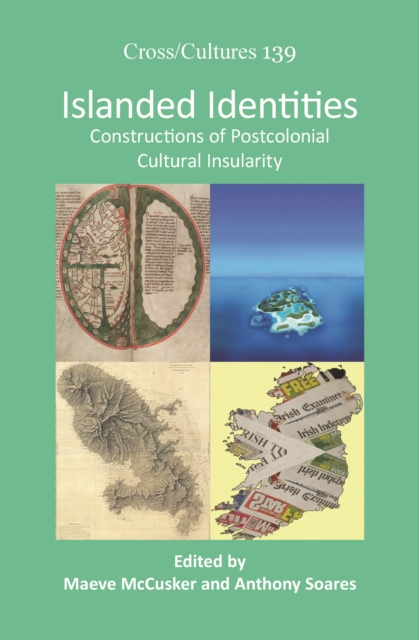
Islanded Identities
The island, because of its supposed isolation, and its apparent small scale, has historically been a privileged site of colonial aggression and acquisitiveness. Yet the island has also been imagined as a uniquely sovereign space, and thus one in which the colonial enterprise can be seen as especially egregious. 'Islandedness' takes on a particular charge in the early twenty-first century, in the supposedly postcolonial period. While contemporary media offer a simulacrum of proximity to others, the reality is that we are ever more distant, inhabiting islands both real and conceptual. Meanwhile migrants from today's 'postcolonial' islands are routinely denied access to the perceived 'mainland'. And, in islands freed from overt colonialism, but often beset by neocolonial forces of domination and control, identities are constructed so as to differentiate insider from outsider - even when the outsider comes from within. This is the first volume devoted explicitly to the postcolonial island, conceived in a broad geographical, historical, and metaphorical sense. Branching across disciplinary parameters (literary studies, anthropology, history, cultural studies), and analyzing a range of cultural forms (literature, dance, print journalism, and television), the volume attempts to focus critically on three areas: the current realities of formerly colonized island nations; the phenomenon of 'foreign' communities living within a dominant host community; and the existence of (local) practices and theoretical perspectives that complement, but are often critical of, prevailing theories of the postcolonial. The islands treated in the volume include Ireland, Montserrat, Martinique, Mauritius, and East Timor, and the collection includes more broadly conceived historical and theoretical essays. The volume should be required reading for scholars working in
postcolonial studies, in island studies, and for those working in and across a range of disciplines (literature, cultural studies, anthropology). Contributors: Ralph Crane, Matthew Boyd Goldie, Lyn Innes, Maeve McCusker, Paulo de Medeiros, Burkhard Schnepel, Cornelia Schnepel, Jonathan Skinner, Anthony Soares, Ritu Tyagi, Mark Wehrly.
eBook
Influence of land use/occupation on water quality in the Trussu river valley, Ceará, Brazil
The growing pressure on water resources has reduced its availability as regards quality. Data was investigated for two different periods, with the aim of evaluating the influence of the use and occupation of space on the temporal dynamics of the quality of surface and groundwater in the perennialised valley of the Trussu River in the State of Ceará, Brazil. The first period was from September 2002 to February 2004 and the second from April 2013 to April 2014. Twenty-two water samples were taken from nine sampling stations, five on the surface and four underground. The same stations were considered, monitoring 12 attributes of water quality for a total of 2,376 analyses. Temporal dynamics were characterised employing a technique of multivariate statistics: hierarchical cluster analysis (HCA). The three groups formed by the surface water were independent of collection time, indicating that there was no significant change at a level of 1%. The main differences between the periods of monitoring were seen in the groundwater, with a reduction in the values of EC, Na+, Cl- and HCO3-, and an increase in the concentrations of the PO43- and NO3- ions during the second period, forming two distinct groups: group 1 comprising the water collected during the first period, and group 2 the water collected from April 2013 to April 2014. These results reflect changes in the quality of the groundwater due to an increase in agricultural area, and show that the change in land use had a greater impact on the groundwater.
Journal Article

Living Within and Outside Unions: the Consequences of Brexit for Northern Ireland
This article considers the possible consequences of Brexit for Northern Ireland. It begins by analysing the political context leading up to the UK’s referendum on EU membership, which was preceded only weeks earlier by the elections to the Northern Ireland Assembly. It then offers an overview of the reaction of a divided Northern Ireland Executive to the UK’s decision to leave the EU, before considering some of the potential consequences for Northern Ireland of the UK’s departure from the EU. These include the future nature of the Northern Ireland-Ireland border, North-South relations, the possibility of retaining the Common Travel Area, the loss of EU funding for cross-border cooperation, as well as customs controls and trade. It concludes by suggesting how Northern Ireland could retain some degree of continuing relationship with the EU.
Journal Article

\Wake Up and Smell the Coffee\: Cultural (Re)Awakenings in Independent Timor-Leste
Este artigo examina o contexto da produção cultural no Timor-Leste contemporâneo. Começando com uma análise da relação íntima entre a literatura anti-colonial timorense e as suas circunstâncias materiais, esboça a amplitude que essa relação continua a ter na produção literária pós-colonial. Propõe que escritores contemporâneos timorenses reflectem a preocupação que a identidade cultural local, activamente reprimida durante o colonialismo, continua a ser ameaçada por forças externas. Instantes de conflicto no Timor-Leste independente não se relacionam apenas com o descontentamelo face à incapacidade das elites internas e externas de melhorar as vidas da maioria, mas também constituem graves obstáculos à actividade cultural; além disso, personalidades anti-institucionais liderando tais conflictos tornam-se mais facilmente heróis para os que desconhecem as vozes literárias que criticam a evolução da nação pós-colonial Contudo, o artigo conclui sublinhando iniciativas governamentais recentes, assim como as estratégias utilizadas por escritores contemporâneos para ultrapassar a invisbilidade à qual a produção cultural timorense tem vindo a ser remetida.
Journal Article

National Identity and National Unity in Contemporary East-Timorese Literature
Beginning with a panoramic analysis of the role played by East Timorese poets in the struggle for liberation from Portuguese and Indonesian colonial rule, this article examines the extent to which an East Timorese national identity and unity, repeatedly featured in the poetry of the 1970s and 80s, are represented in contemporary Timorese literary production. By reading the work of the novelist Luís Cardoso, and the poets Abé Barreto and Celso Oliveira, the article also assesses whether the independent nation envisioned earlier by those such as Borja da Costa, Fernando Sylvan and Xanana Gusmão has been realized. In doing so, critical attention is brought to bear on the intimate relationship between the specific material and political circumstances of East Timor and the literature produced in colonial and postcolonial moments in the nation's history. A começar por uma análise panorâmica do papel desempenhado pelos poetas de Timor-Leste na luta pela libertação do domínio colonial português e indonesiano, este ensaio examina em que medida uma identidade e unidade nacionais timorenses, que figuravam repetidas vezes na poesia dos anos 70 e 80, se encontram representadas na contemporânea produção literária timorense. Ao ler a obra do romancista Luís Cardoso, e dos poetas Abé Barreto e Celso Oliveira, o ensaio avalia também se a nação independente projectada previamente por Borja da Costa, Fernando Sylvan e Xanana Gusmão, por exemplo, efectivamente se realizou. Ao fazê-lo, a atenção crítica se debruça sobre a relação íntima entre as circunstâncias específicas de Timor-Leste, tanto materiais como políticas, e a literatura produzida em momentos coloniais e pós-coloniais da história da nação.
Journal Article