
Catalogue Search | MBRL


Are you sure you want to remove the book from the shelf?

{{itemTitle}}
35
result(s) for
"Sobin, Leslie H"
Sort by:

Gain-of-function PDGFRA mutations, earlier reported in gastrointestinal stromal tumors, are common in small intestinal inflammatory fibroid polyps. A study of 60 cases
The inflammatory fibroid polyp is a rare benign lesion occurring throughout the digestive tract. It usually forms a solitary mass, characterized by a proliferation of fibrovascular tissue infiltrated by a variable number of inflammatory cells. The etiology of this lesion is unknown and conflicting histogenetic theories have been proposed. Recently, mutations in platelet-derived growth factor receptor (
PDGFRA
) and PDGFRA expression were reported in gastric inflammatory fibroid polyps. In this study,
PDGFRA
exons 12, 14, and 18 were screened for activating mutations in 60 small intestinal inflammatory fibroid polyps. In addition, the PDGFRA expression was evaluated immunohistochemically. Mutations in
PDGFRA
were identified in 33 of 60 (55%) cases, whereas 95% expressed PDGFRA. There were 26 deletions, three deletion–insertions, duplication, and single nucleotide substitution in exon 12, and a single nucleotide substitution and deletion in exon 18. The majority (
n
=23) of exon 12 deletions were 1837_1851del leading to S566_E571delinsR. However, 1835_1852delinsCGC leading to the same S566_E571delinsR, were found in two tumors. Three inflammatory fibroid polyps had 1836_1850del leading to S566_E571delinsK. A complex deletion–insertion affecting a similar region (1837_1856delinsGATTGATGATC) and leading to S566_I573delinsRIDDL was identified once. In addition, duplication and single nucleotide substitution were found 5′ to the common inflammatory fibroid polyp mutational ‘hot spot’. These mutations consist of 1808_1828dup leading to I557_E563dup, and 1821T>A resulting in 561V>D substitution. A 2664A>T and 2663_2674del leading to 842D>V and D842_H845del, respectively, were identified in exon 18. Similar gain-of-function PDGFRA mutations reported in gastrointestinal stromal tumors have been considered to be a driving pathogenetic force. This study showed consistent expression and common mutational activation of PDGFRA in small intestinal inflammatory fibroid polyps as in their gastric counterparts, and these lesions should be considered PDGFRA-driven benign neoplasms. We also suggest that these polyps may develop from earlier described PDGFRA-positive mesenchymal cells distributed along the villus membrane after oncogenic PDGFRA activation.
Journal Article

The Staging of Cancer: A Retrospective and Prospective Appraisal
The tumor-node-metastasis (TNM) classification describes the anatomic extent of cancer. The ability to separately classify the individual T, N, and M elements and then group them into stages differs from other cancer staging classifications, which are primarily concerned with summarized groups. The objectives of the TNM system are to aid clinicians and investigators in planning treatment, assessing prognosis, stratifying patients for therapeutic studies, evaluating the results of treatment, and facilitating communication. The most important challenge facing TNM is how to interface the current taxonomy with the numerous nonanatomic prognostic factors currently in use or under study. As nonanatomic prognostic factors become widely used, TNM will remain a solid foundation on which to build prognostic classifications. There is, however, a risk that this system will be corrupted by a variety of irrelevant prognostic data. An anatomic extent of disease classification is needed to provide a standard against which to measure the importance of nonanatomic factors. Methods are needed to express overall prognosis without losing the vital anatomic content of TNM. These methods should be able to integrate multiple prognostic factors, including TNM, yet permit TNM to remain intact and distinct. [PUBLICATION ABSTRACT]
Journal Article

Diagnosis of Gastrointestinal Stromal Tumors:A Consensus Approach
As a result of major recent advances in understanding the biology of gastrointestinal stromal tumors (GIST), specifically recognition of the central role of activating KIT mutations and associated KIT protein expression in these lesions, and thedevelop-ment of novel and effective therapy for GISTs using thereceptor tyrosine kinase in hibitor STI-571, these tumors have become the focus of considerable attention among pathologists, clinicians, and patients. Stromal/mesenchymal tumors of the gastrointestinal tract have long been a sourceof confusion and controversy with regard to classification, line(s) of differentiation, and prognostication. Characterization of the KIT pathway and its phenotypic implications has helped to resolve some but not all of these issues. Given the now critical role of accurate and reproducible pathologic diagnosis in ensuring appropriate treatment for patients with GIST, the National Institutes of Health (NIH) convened a GIST workshop in April 2001 with the goal of developing a consensus approach to diagnosis and morphologic prognostication. Key elements of the consensus, as described herein, are the defining role of KIT immunopositivity indiagnosis and a proposed scheme for estimating metastatic riskin these lesions, based on tumor size and mitotic count, recognizing that it is probably unwise to use the definitive term benign for any GIST, at least at the present time.
Journal Article

A great majority of GISTs with PDGFRA mutations represent gastric tumors of low or no malignant potential
Gastrointestinal stromal tumors (GISTs) are KIT expressing spindle cell, epithelioid and rarely pleomorphic mesenchymal tumors. The majority of GISTs show gain-of-function KIT mutations. However, GISTs without KIT mutations and GISTs with weak or lack of immunohistochemical KIT expression have also been reported. Recently, gain-of-function mutations in exon 18 (activation loop) and exon 12 (juxtamembrane domain) of the PDGFRA were identified in such tumors. The purpose of this study was to test the hypothesis that PDGFRA mutation may define a specific clinicopathologic subgroup of GISTs. A total of 447 KIT exon 11 (juxtamembrane domain) mutation-negative GISTs were studied. DNA samples were obtained from formaldehyde-fixed paraffin-embedded tissues. Genomic sequences of PDGFRA exons 18 and 12 were evaluated for the mutations by PCR amplification and direct sequencing. PDGFRA exon 18 mutations were identified in 122 of 346 (35.3%) gastric GISTs and two of 75 (2.7%) intestinal GISTs. A great majority of these mutations represented simple T to A missense mutation at the codon 842 leading to substitution of the valine for aspartic acid (D842 V). However, in-frame deletions and deletions with point mutations clustering between codons 841–847 were found in approximately 23% of all exon 18 mutations. Mutations in PDGFRA exon 12 were found only in 10 of 170 (5.8%) gastric and one of 54 (1.9%) intestinal GISTs negative for KIT exon 11 and PDGFRA exon 18 mutations. There were seven substitutions of aspartic acid for valine at codon 561 (V561D) and four in-frame deletions with point mutations clustering between codons 566 and 571. The majority of GISTs with PDGFRA mutations had pure or predominant epithelioid morphology. Low mitotic activity, ≤5 mitoses/50HPF was detected in 81% of analyzed GISTs including larger, >5 cm tumors. Based on long-term follow-up (average 135 months), a majority (83.5%) of GISTs with PDGFRA mutations followed a benign course.
Journal Article
Evaluation of NF2 and NF1 Tumor Suppressor Genes in Distinctive Gastrointestinal Nerve Sheath Tumors Traditionally Diagnosed as Benign Schwannomas: A Study of 20 Cases
A significant percentage of conventional schwannomas, whether sporadic or associated with neurofibromatosis 2 (NF2), show loss of heterozygosity (LOH) at NF2 and/or NF2 inactivating mutations. Similarly, a significant percentage of neurofibromas show LOH at NF1 and/or NF1 inactivating mutations. There are no molecular genetic data on gastrointestinal (GI) nerve sheath tumors traditionally diagnosed as benign schwannomas, rare neoplasms possibly derived from the schwannian elements dispersed between the smooth muscle fibers. In this study, we analyzed 1 esophageal, 16 gastric, 1 small intestinal, and 2 colonic tumors of such type. Histologically, all were spindle cell neoplasms positive for S-100 protein, vimentin, and glial fibrillary acidic protein, and negative for smooth muscle markers, KIT, CD34, neurofilament proteins, and HMB45. Focal or extensive lymphoid cuffs, often containing germinal centers, were present in most cases. None of the patients had NF2 or NF1. Chromosomes 22 and 17, particularly NF2 and NF1 loci, were analyzed for LOH in all GI tumors and for comparative purposes in 10 conventional schwannomas. LOH on 22q was seen in 40% of conventional schwannomas but in only 5% (1 of 20) of GI schwannomas. PCR amplification followed by direct sequencing of PCR products failed to identify mutations in NF2 coding sequences (exons 1-15) in 13 cases, including a case with LOH on 22q. Losses on 17q involving NF1 were seen in both GI and conventional schwannomas in 50% and 33% of analyzed tumors, respectively. LOH at NF1 might be one of the genetic features seen in peripheral nerve sheath tumors from different locations and should be interpreted with caution. However, lack of NF2 alterations strongly supports the hypothesis that GI schwannomas represent a morphologically and genetically distinct group of peripheral nerve sheath tumors that are different from conventional schwannomas.
Journal Article

Carcinoma in Jejunal Pancreatic Heterotopia
Background. —Although heterotopic pancreas in the gastrointestinal tract is not uncommon, jejunal pancreatic heterotopia is a rare finding, and malignant transformation in such a location is very unusual. Methods. —We encountered a case of jejunal carcinoma in pancreatic heterotopia and because of its rarity, we reviewed the Armed Forces Institute of Pathology experience as well as the literature. The clinical, histopathologic, and immunohistochemical features were studied. Results. —In 109 patients diagnosed as having pancreatic heterotopia in the gastrointestinal tract between 1970 and 1997 at the Armed Forces Institute of Pathology, 67 cases (62%) occurred in the stomach, 42 (38%) in the small intestine, and none in the large intestine. We found 2 patients with adenocarcinoma arising in pancreatic heterotopia. The 2 cases arose in the jejunum. One was of the ductal type, while the other was an acinar cell carcinoma with focal ductular differentiation. In both cases the nontumoral pancreatic tissue contained ducts, acini, and islets. Review of the literature yielded 26 reports of 28 cases of carcinoma arising in heterotopic pancreas; of these, 18 were well documented. Only 1 occurred in the jejunum, and none was of the acinar type. Conclusions. —Carcinoma in pancreatic heterotopia is rare, and acinar cell carcinoma in pancreatic heterotopia is extremely rare. Recognition of carcinoma in pancreatic heterotopia is important to prevent its misinterpretation as a metastatic tumor.
Journal Article

Mutations in Exons 9 and 13 of KIT Gene Are Rare Events in Gastrointestinal Stromal Tumors : A Study of 200 Cases
Gastrointestinal stromal tumors (GISTs), the most common mesenchymal tumors of the gastrointestinal tract, typically express the KIT protein. Activating mutations in the juxtamembrane domain (exon 11) of the c-kit gene have been shown in a subset of GISTs. These mutations lead into ligand-independent activation of the tyrosine kinase of c-kit, and have a transforming effect in vitro. Several groups have studied the clinical implication of the c-kit mutation status of exon 11 in GISTs and a possible relationship between c-kit mutations and malignant behavior has been established. Recently, a 1530ins6 mutation in exon 9 and missense mutations, 1945A>G in exon 13 of the c-kit gene were reported. The frequency and clinical importance of these findings are unknown. In this study we evaluated 200 GISTs for the presence of mutations in exons 9 and 13 of c-kit. Six cases revealed 1530ins6 mutation in exon 9 and two cases 1945A>G mutation in exon 13. All tumors with mutations in exon 9 and 13 lacked mutations in exon 11 of c-kit. None of the analyzed tumors had more than one type of c-kit mutation. All but one of the eight tumors with mutations in exon 9 or 13 of the c-kit gene were histologically and clinically malignant. All four of six cases with exon 9 mutation of which location of primary tumor was known, were small intestinal, suggesting that this type of mutation could preferentially occur in small intestinal tumors. Exon 9 and 13 mutations seem to be rare, and they cover only a small portion (8%) of the balance of GISTs that do not have mutations in exon 11 of c-kit. This finding indicates that other genetic alterations may activate c-kit in GISTs, or that KIT is not activated by mutations in all cases.
Journal Article
Mesenchymal Tumors of Muscularis Mucosae of Colon and Rectum are Benign Leiomyomas that Should be Separated from Gastrointestinal Stromal Tumors—A Clinicopathologic and Immunohistochemical Study of Eighty-Eight Cases
Most mesenchymal tumors of the gastrointestinal tract are currently classified as specific gastrointestinal stromal tumors. However, true leiomyomas are more common in the esophagus, and they have been occasionally noted in the colon and rectum, but the small number of reported cases does not allow for clinicopathologic profiling. This study was undertaken to characterize 88 tumors of the muscularis mucosae of the colon and rectum. Seventy tumors were obtained form the files of AFIP and 18 cases from the Department of Pathology of the Haartman Institute of the University of Helsinki. The lesions, except one, were removed by snare polypectomy as incidental lesions at cancer or polyp surveillance; one small tumor was an incidental finding in the rectal resection specimen. The tumors had a significant male predominance in both institutions (overall 2.4:1). They occurred in age range of 38 to 85 years (median 62 years). The lesions were typically small (range 1 to 22 mm, median 4 mm) and located predominantly in the rectum and sigmoid (72%). All tumors were composed of well-differentiated, eosinophilic smooth muscle cells that were seen immediately beneath the mucosa obliterating the muscularis mucosae layer and merging with it. Two tumors had significant atypia (“symplastic leiomyoma”); mitotic activity was seen in one of these tumors, but not in others. The lesional cells were uniformly positive for smooth muscle actin and desmin and negative for CD34, CD117 and S100-protein, based on immunohistochemical studies on 20 to 24 cases with each marker. No gastrointestinal stromal tumors were identified among the tumors of muscularis mucosae, and no CD117-positive cells, except mast cells, were seen in the muscularis mucosae layer. None of the patients had morbidity related to the tumor. Based on follow-up data on 29 patients, leiomyomas of muscularis mucosae are benign. They should be separated from gastrointestinal stromal tumors that have a clinicopathologic spectrum including frequent disease-related mortality. Snare polypectomy is an adequate treatment, but ensuring the complete removal and follow-up are necessary precautions for tumors with any atypia or mitotic activity.
Journal Article

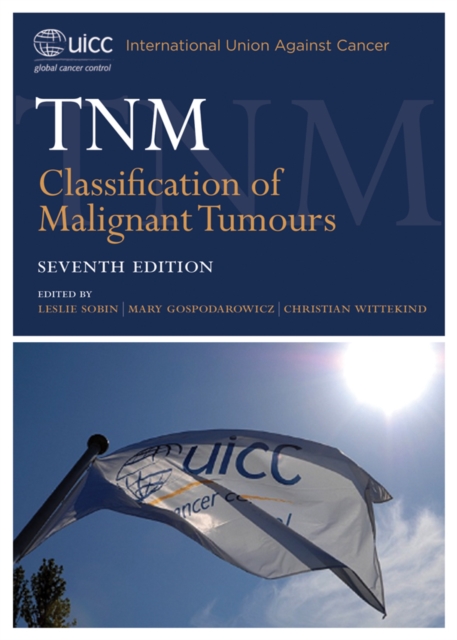
TNM classification of malignant tumours
TNM Classification of Malignant Tumours, 7th Edition provides the latest, internationally agreed-upon standards to describe and categorize cancer stages and progression. Published in affiliation with the International Union Against Cancer (UICC), this authoritative guide contains important updated organ-specific classifications that oncologists and other professionals who manage patients with cancer need to accurately classify tumours for staging, prognosis and treatment. The major alterations addressed in the 7th Edition concern carcinomas of the oesophagus and the gastroesophageal junction, stomach, lung, appendix, biliary tract, skin, and prostate. In addition, there are several entirely new classifications: gastrointestinal carcinoids (neuroendocrine tumours) gastrointestinal stromal tumour upper aerodigestive mucosal melanoma Merkel cell carcinoma uterine sarcomas intrahepatic cholangiocarcinoma adrenal cortical carcinoma. A new approach has also been adopted to separate anatomical stage groupings from prognostic groupings in which other prognostic factors are added to T, N, and M categories. These new prognostic groupings, as well as the traditional anatomical groupings, are presented for oesophageal and prostate carcinomas. Visit www.wileyanduicc.com for more information about the International Journal of Cancer and our other UICC book titles.
eBook