
Catalogue Search | MBRL


Are you sure you want to remove the book from the shelf?

{{itemTitle}}
591
result(s) for
"Sophocles"
Sort by:

Antigone
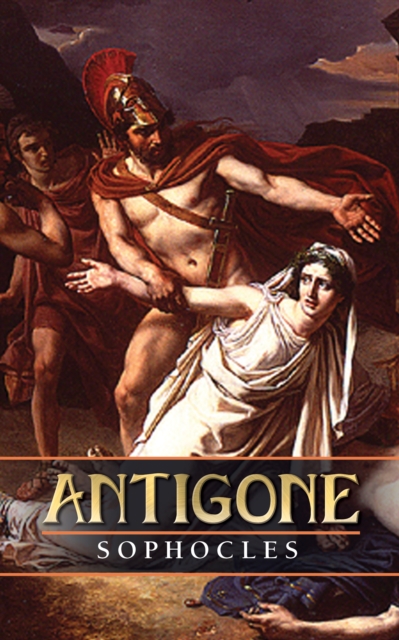
One of the few surviving plays by Sophocles, and one of the most frequently performed of classical Greek dramas of all time, Antigone raises issues of law and morality that are just as relevant today as in ancient times.Antigone will move you as few pieces of literature can. With its passionate speeches and sensitive probing of moral and philosophical issues, this powerful drama continues to enthrall us today as it did its ancient Athenian audiences.In Antigone, Sophocles reveals the fate that befalls the children of Oedipus. Polynices, son of Oedipus, has led a rebellious army against his brother, Eteocles, ruler of Thebes. Both have died in single combat. When Creon, their uncle, assumes rule, he commands that the body of the rebel Polynices be left unburied and unmourned, and warns that anyone who tampers with his decree will be put to death.Antigone, sister of Polynices, defies Creon's order and buries her brother, claiming that she honors first the laws of the gods. Enraged, Creon condemns her to be sealed in a cave and left to die. How the gods take their revenge on Creon provides the gripping denouement to this compelling tragedy.The curse placed on Oedipus lingers and haunts a younger generation. The daughter of Oedipus and Jocasta, Antigone is an unconventional heroine who pits her beliefs against the King of Thebes in a bloody test of wills that leaves few unharmed. Emotions fly as she challenges the king for the right to bury her own brother. Determined but doomed, Antigone shows her inner strength throughout the play.
eBook

Antigone
One of the few surviving plays by Sophocles, and one of the most frequently performed of classical Greek dramas of all time, Antigone raises issues of law and morality that are just as relevant today as in ancient times. Antigone will move you as few pieces of literature can. With its passionate speeches and sensitive probing of moral and philosophical issues, this powerful drama continues to enthrall us today as it did its ancient Athenian audiences.In Antigone, Sophocles reveals the fate that befalls the children of Oedipus. Polynices, son of Oedipus, has led a rebellious army against his brother, Eteocles, ruler of Thebes. Both have died in single combat. When Creon, their uncle, assumes rule, he commands that the body of the rebel Polynices be left unburied and unmourned, and warns that anyone who tampers with his decree will be put to death. Antigone, sister of Polynices, defies Creon's order and buries her brother, claiming that she honors first the laws of the gods. Enraged, Creon condemns her to be sealed in a cave and left to die. How the gods take their revenge on Creon provides the gripping denouement to this compelling tragedy.The curse placed on Oedipus lingers and haunts a younger generation. The daughter of Oedipus and Jocasta, Antigone is an unconventional heroine who pits her beliefs against the King of Thebes in a bloody test of wills that leaves few unharmed. Emotions fly as she challenges the king for the right to bury her own brother. Determined but doomed, Antigone shows her inner strength throughout the play.
eBook


Antigone
One of the few surviving plays by Sophocles, and one of the most frequently performed of classical Greek dramas of all time, Antigone raises issues of law and morality that are just as relevant today as in ancient times. Antigone will move you as few pieces of literature can. With its passionate speeches and sensitive probing of moral and philosophical issues, this powerful drama continues to enthrall us today as it did its ancient Athenian audiences. In Antigone, Sophocles reveals the fate that befalls the children of Oedipus. Polynices, son of Oedipus, has led a rebellious army against his brother, Eteocles, ruler of Thebes. Both have died in single combat. When Creon, their uncle, assumes rule, he commands that the body of the rebel Polynices be left unburied and unmourned, and warns that anyone who tampers with his decree will be put to death. Antigone, sister of Polynices, defies Creon's order and buries her brother, claiming that she honors first the laws of the gods. Enraged, Creon condemns her to be sealed in a cave and left to die. How the gods take their revenge on Creon provides the gripping denouement to this compelling tragedy. The curse placed on Oedipus lingers and haunts a younger generation. The daughter of Oedipus and Jocasta, Antigone is an unconventional heroine who pits her beliefs against the King of Thebes in a bloody test of wills that leaves few unharmed. Emotions fly as she challenges the king for the right to bury her own brother. Determined but doomed, Antigone shows her inner strength throughout the play.
eBook


Antigone
One of the few surviving plays by Sophocles, and one of the most frequently performed of classical Greek dramas of all time, Antigone raises issues of law and morality that are just as relevant today as in ancient times.
eBook


IDENTIFICATION AT THE ZERO LOWER BOUND
I show that the zero lower bound (ZLB) on interest rates can be used to identify the causal effects of monetary policy. Identification depends on the extent to which the ZLB limits the efficacy of monetary policy. I propose a simple way to test the efficacy of unconventional policies, modeled via a “shadow rate.” I apply this method to U.S. monetary policy using a three-equation structural vector autoregressive model of inflation, unemployment, and the Federal Funds rate. I reject the null hypothesis that unconventional monetary policy has no effect at the ZLB, but find some evidence that it is not as effective as conventional monetary policy.
Journal Article