
Catalogue Search | MBRL


Are you sure you want to remove the book from the shelf?

{{itemTitle}}
53
result(s) for
"Sparrow, Tom"
Sort by:

True detective and philosophy
Investigating the trail of philosophical leads in HBO s chilling True Detective series, an elite team of philosophers examine far-reaching riddles including human pessimism, Rust s anti-natalism, the problem of evil, and the flat circle .
eBook


A Method for Comparing the Fatigue Performance of Forged AZ80 Magnesium
A closed die forging process was developed to successfully forge an automotive suspension component from AZ80 Mg at a variety of different forging temperatures (300 °C, 450 °C). The properties of the forged component were compared and contrasted with other research works on forged AZ80 Mg at both an intermediate forging and full-scale component forging level. The monotonic response, as well as the stress and strain-controlled fatigue behaviours, were characterized for the forged materials. Stress, strain and energy-based fatigue data were used as a basis for comparison of the durability performance. The effects of the starting material, forging temperature, forging geometry/configuration were all studied and aided in developing a deeper understanding of the process-structure-properties relationship. In general, there is a larger improvement in the material properties due to forging with cast base material as the microstructural modification which enhances both the strength and ductility is more pronounced. In general, the optimum fatigue properties were achieved by using extruded base-material and forging using a closed-die process at higher strain rates and lower temperatures. The merits and drawbacks of various fatigue damage parameters (FDP’s) were investigated for predicting the fatigue behaviour of die-forged AZ80 Mg components, of those investigated, strain energy density (SED) proved to be the most robust method of comparison.
Journal Article

Disabled Bodies and Norms of Flourishing in the Human Engineering Debate
In this paper, I argue that Jonathan Glover, a prominent advocate of human genetic engineering, relies on a limited naturalistic account of normal human function in his defense of genetic engineering as a means of decreasing future instances of disability. I show that his concept of disability and the normative argument informed by it in his Choosing Children: Genes, Disability, and Design fails to incorporate the phenomenological dimension of embodiment, and that this dimension should be included in any account of disability and human flourishing. Such inclusion, however, requires us to consider seriously the counterintuitive view that racial minorities are constitutionally disabled in racist societies.
Journal Article
Ecological Risk: Climate Change as Abstract-Corporeal Problem
This essay uses Ulrich Beck’s concept of risk society to understand the threat of catastrophic climate change. It argues that this threat is “abstract-corporeal”, and therefore a special kind of threat that poses special kinds of epistemic and ecological challenges. At the center of these challenges is the problem of human vulnerability, which entails a complex form of trust that both sustains and threatens human survival.
Journal Article

Some Ways to Speculative Aesthetics
Continental philosophy is witnessing a global renaissance of speculative philosophy. And while some corners of this movement are gaining traction in art- and architecture-theoretical circles, its application to philosophical aesthetics has been forestalled in favor of metaphysical and, secondarily, epistemological inquiry. This essay tracks some of the ways that speculative aesthetics is emerging, and opening new pathways, within the renaissance. It accomplishes three primary tasks. First, it enumerates several of the ways that the name “speculative aesthetics” has been mobilized in contemporary speculative philosophy. Second, it presents and develops one approach to speculative aesthetics, namely Graham Harman’s, and highlights its indebtedness to Levinas. Third, it briefly endorses a particular way forward for speculative aesthetics, one that is object-oriented (like Harman’s) and articulated in a recent essay by N. Katherine Hayles, the work of Steven Shaviro, and my book Plastic Bodies.
Journal Article
Ecological Trust
This essay conceives ecological life as radically dependent, vulnerable, and horrific. Epistemologically speaking, we are quite ignorant of the web of dependency that sustains our lives. Our ecological condition often prevents us from locating and identifying our dependencies and the many ways our actions impact the environment. This is the terror and danger that plagues the Anthropocene. Our ignorance bears an ontological weight that can be drawn out with the concept of trust. Trust, I argue, is not a choice. Trust is a necessity to which we are riveted, and one that is always conditioned by our vulnerability and ignorance. The picture of ecological trust that I paint is not a hopeful one: it is dark, pessimistic, and urgent. It opposes visions of our future that are superstitious and optimistic about our ability to respond effectively to climate change.
Journal Article

Riesgo ecológico: cambio climático como problema corporal abstracto
Este ensayo utiliza el concepto de Ulrich Beck de la sociedad de riesgo para entender la amenaza del cambio climático catastrófico. Postula que esta amenaza es “abstracta-corpórea” y por ende un tipo de amenaza especial que plantea formas especiales de retos epistémicos y ecológicos. El centro de estos retos es el problema de la vulnerabilidad humana, la cual involucra una forma compleja de confianza que sostiene y amenaza la supervivencia humana.
This essay uses Ulrich Beck’s concept of risk society to understand the threat of catastrophic climate change. It argues that this threat is “abstract-corporeal”, and therefore a special kind of threat that poses special kinds of epistemic and ecological challenges. At the center of these challenges is the problem of human vulnerability, which entails a complex form of trust that both sustains and threatens human survival.
Journal Article
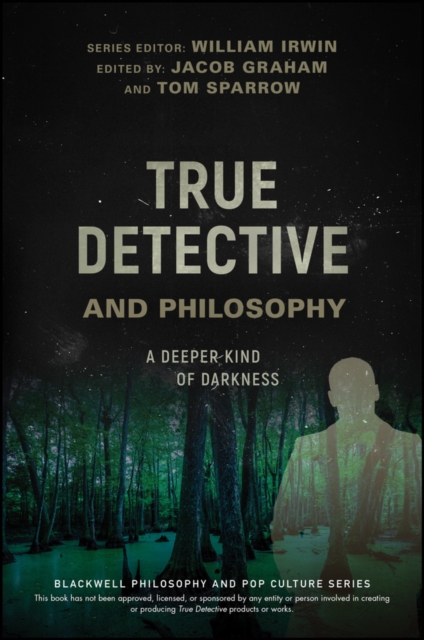
True detective and philosophy
Investigating the trail of philosophical leads in HBO's chilling True Detective series, an elite team of philosophers examine far-reaching riddles including human pessimism, Rust's anti-natalism, the problem of evil, and the 'flat circle'. The first book dedicated to exploring the far-reaching philosophical questions behind the darkly complex and Emmy-nominated HBO True Detective series Explores in a fun but insightful way the rich philosophical and existential experiences that arise from this gripping show Gives new perspectives on the characters in the series, its storylines, and its themes by investigating core questions such as: Why Life Rather Than Death? Cosmic Horror and Hopeful Pessimism, the Illusion of Self, Noir, Tragedy, Philosopher-Detectives, and much, much more Draws together an elite team of philosophers to shine new light on why this genre-expanding show has inspired such a fervently questioning fan-base
eBook