
Catalogue Search | MBRL


Are you sure you want to remove the book from the shelf?

{{itemTitle}}
17
result(s) for
"Spelman, Lucy H"
Sort by:


Extreme Conservation Leads to Recovery of the Virunga Mountain Gorillas
As wildlife populations are declining, conservationists are under increasing pressure to measure the effectiveness of different management strategies. Conventional conservation measures such as law enforcement and community development projects are typically designed to minimize negative human influences upon a species and its ecosystem. In contrast, we define \"extreme\" conservation as efforts targeted to deliberately increase positive human influences, including veterinary care and close monitoring of individual animals. Here we compare the impact of both conservation approaches upon the population growth rate of the critically endangered Virunga mountain gorillas (Gorilla beringei beringei), which increased by 50% since their nadir in 1981, from approximately 250 to nearly 400 gorillas. Using demographic data from 1967-2008, we show an annual decline of 0.7%±0.059% for unhabituated gorillas that received intensive levels of conventional conservation approaches, versus an increase 4.1%±0.088% for habituated gorillas that also received extreme conservation measures. Each group of habituated gorillas is now continuously guarded by a separate team of field staff during daylight hours and receives veterinary treatment for snares, respiratory disease, and other life-threatening conditions. These results suggest that conventional conservation efforts prevented a severe decline of the overall population, but additional extreme measures were needed to achieve positive growth. Demographic stochasticity and socioecological factors had minimal impact on variability in the growth rates. Veterinary interventions could account for up to 40% of the difference in growth rates between habituated versus unhabituated gorillas, with the remaining difference likely arising from greater protection against poachers. Thus, by increasing protection and facilitating veterinary treatment, the daily monitoring of each habituated group contributed to most of the difference in growth rates. Our results argue for wider consideration of extreme measures and offer a startling view of the enormous resources that may be needed to conserve some endangered species.
Journal Article

RESPIRATORY DISEASE IN MOUNTAIN GORILLAS (GORILLA BERINGEI BERINGEI) IN RWANDA, 1990–2010: OUTBREAKS, CLINICAL COURSE, AND MEDICAL MANAGEMENT
Between 1990 and 2010, 18 outbreaks of respiratory disease occurred in Rwanda's wild human-habituated mountain gorillas (Gorilla beringei beringei). An outbreak was defined as clinically observable respiratory illness involving at least one third of all the gorillas in a family group (>30% morbidity) over the course of at least 7 days. Outbreaks lasted 2 wk to 4 mo and affected up to five different gorilla family groups, either concurrently or sequentially. An outbreak was considered over if no further clinical illness was observed in the same or another group for at least 1 mo. Clinical signs varied from nasal discharge, sneezing, and mild intermittent coughing (mild), to spasmodic coughing, lethargy, and partial anorexia (moderate), to dyspnea, tachypnea, respiratory distress, weakness, complete anorexia, and occasionally death (severe). Nearly every mountain gorilla group habituated for tourism or research in Rwanda experienced at least one outbreak, and they may be increasing in frequency. In the first 15 yr of the review period 1990–2005, there were nine outbreaks involving 16 gorilla groups; in the last 5 yr of the review period, 2006–2010, there were nine outbreaks involving 11 groups. Although most gorillas recovered without treatment, 41 veterinary procedures were required to medically manage 35 severely ill individuals. Given the rise of mountain gorilla ecotourism in Rwanda, the possibility that respiratory disease results from contact with infected humans is of great concern, and both the etiology and epidemiology of this problem are active areas of research. The observed clinical signs, response to antimicrobial therapy among the sickest individuals, and postmortem findings are most consistent with viral upper respiratory tract infections complicated in some cases by secondary bacterial infections. The current gorilla visitation rules have been designed to minimize the risk of disease transmission between humans and wild human-habituated great apes.
Journal Article
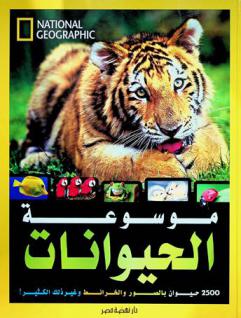
موسوعة الحيوانات : 2500 حيوان بالصور والخرائط وغير ذلك الكثير !
تعد هذة الموسوعة (موسوعة الحيوانات) هي أفضل موسوعة في موضوعها فهي تقدم 2500 نوع من الحيوانات وتستعرضها بشكل رائع ومذهل ؛ وتضم أفضل الصور الفوتوغرافية التي تنفرد بها ؛ فتلك اللقطات تأخذك إلي الغابة .
Book
REVERSIBLE ANESTHESIA OF CAPTIVE CALIFORNIA SEA LIONS (ZALOPHUS CALIFORNIANUS) WITH MEDETOMIDINE, MIDAZOLAM, BUTORPHANOL, AND ISOFLURANE
Two adult California sea lions (Zalophus californianus) were effectively anesthetized 13 times with medetomidine (0.010–0.013 mg/kg), midazolam (0.2–0.26 mg/kg), and butorphanol (0.2–0.4 mg/kg) by i.m. hand or pole syringe injection. For each anesthetic event, atropine (0.02 mg/kg, i.m.) was administered 6–20 min after initial injections, and oxygen administration via face mask or nasal insufflation began at the same time. Light anesthesia was induced in 8–22 min and lasted 13–78 min. During eight of the procedures, isoflurane (0.5–2.0%) was administered via face mask or endotracheal tube for an additional 30–120 min to facilitate longer procedures or surgery. Anesthesia was antagonized with atipamezole (0.05–0.06 mg/kg) and naltrexone (0.1 mg/kg) in seven events, with the addition of flumazenil (0.0002–0.002 mg/kg) in six events. The antagonists were administered by i.m. injection 42–149 min after administration of the induction agents. All sea lions recovered to mild sedation within 4–17 min after administration of the antagonists.
Journal Article
TREATMENT OF A SOLE ABSCESS IN AN ASIAN ELEPHANT (ELEPHAS MAXIMUS) USING REGIONAL DIGITAL INTRAVENOUS PERFUSION
Regional digital i.v. perfusion was used to treat a severe sole abscess associated with a wire foreign body in a 19-yr-old female Asian elephant (Elephas maximus) housed at the Paris Zoo. The cow presented with acute right forelimb lameness and swelling that persisted despite 4 days of anti-inflammatory therapy. Under anesthesia, a 10- × 0.5- × 0.5-cm wire was extracted from the sole of the right foot. There was a 2-cm-deep, 7-cm-diameter abscess pocket that was subsequently debrided. Regional digital i.v. perfusion was performed and repeated 15 days later, using cefoxitin and gentamicin on both occasions. Between treatments, the cow received trimethoprim–sulfamethoxazole and phenylbutazone orally. Within 2 days of administering anesthesia and the first perfusion treatment, the lameness improved dramatically. When phenylbutazone was discontinued 1 wk after the first treatment, the lameness had completely resolved. At the second treatment, there was no evidence of further soft tissue infection, and the abscess pocket had resolved.
Journal Article
DIAGNOSIS AND TREATMENT OF PRESUMPTIVE PYELONEPHRITIS IN AN ASIAN ELEPHANT (ELEPHAS MAXIMUS)
A 37-yr-old female Asian elephant (Elephas maximus) presented with anorexia, restlessness, and dark-colored urine. Urinalyses showed hematuria, leukocyturia, isosthenuria, proteinuria, granular casts, and no calcium oxalate crystals. Bloodwork revealed azotemia. Urine culture revealed a pure growth of Streptococcus zooepidemicus resistant to sulfamethoxazole–trimethoprim but susceptible to cephalosporins. A presumptive diagnosis of pyelonephritis was made based on bloodwork, urinalysis, and urine culture. The animal was treated with intravenous ceftiofur, and intravenous and per rectum fluids were given for hydration. The elephant's attitude and appetite returned to normal, the abnormal blood parameters resolved, and urinary calcium oxalate crystals reappeared after treatment, supporting presumptive diagnosis. Follow-up ultrasonography revealed an abnormal outline of both kidneys with parenchymal hyperechogenicity and multiple uterine leiomyomas.
Journal Article
CANINE DISTEMPER IN TERRESTRIAL CARNIVORES: A REVIEW
Canine distemper virus is a member of the genus Morbillivirus in the family Paramyxoviridae. Canine distemper has been recorded in domestic dogs for centuries. It is now recognized as a worldwide problem of carnivores and has the second highest fatality rate of any infectious disease, after rabies, in domestic dogs. The importance of this disease in nondomestic animals has become evident with vaccine-induced infections in a variety of species and large-scale epidemics in captive and free-ranging felids. To date, canine distemper has been reported in all families of terrestrial carnivores: Canidae, Felidae, Hyaenidae, Mustelidae, Procyonidae, Ursidae, and Viverridae. Veterinarians, including those working with nondomestic carnivores, should be familiar with the clinical signs, diagnosis, and clinical management of this disease.
Journal Article
HEMATOLOGY AND SERUM BIOCHEMISTRY PARAMETERS OF NORTH AMERICAN RIVER OTTERS (LONTRA CANADENSIS)
Blood samples were obtained from 155 North American river otters (Lontra canadensis; 94 adult males, 38 adult females, 10 juvenile males, and 13 juvenile females) to establish baseline hematology and from 50 adult river otters (40 males and 10 females) for baseline serum biochemistry parameters for the species. The otters were livetrapped from eastern North Carolina (USA) during a 4-yr period. Data for 14 routine hematologic parameters and 22 serum chemistry assays showed significant differences in total leukocyte count and absolute neutrophil and monocyte numbers for adults versus juveniles, red blood cell counts and hemoglobin between adult and juvenile males, and calcium and alkaline phosphatase values for adult males between years of the study and an increase in leukocyte counts and absolute neutrophils with increased degree of trap injury sustained.
Journal Article